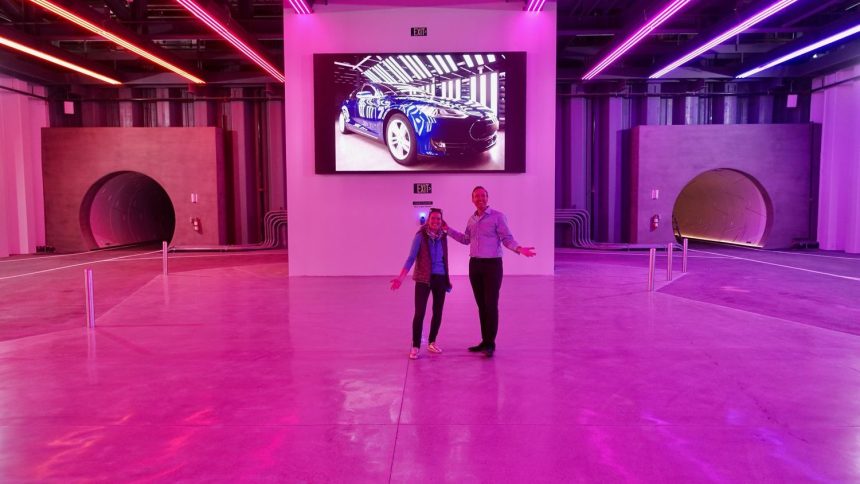

Clark County adds to Vegas Loop safety requirements as project expands – Image for illustrative purposes only (Image credits: upload.wikimedia.org)
Clark County commissioners have approved updated building codes for the Vegas Loop more than five years after the underground transit system first opened at the Las Vegas Convention Center. The changes come as the project moves into larger phases that will stretch across the Strip and beyond. Officials say the revisions address the realities of a much bigger network than the original circular tunnel.
Project Growth Prompts Code Updates
The Vegas Loop began as a limited demonstration at the convention center. County leaders now face a system expected to reach dozens of miles and more than 100 stations when complete. Fire Chief Billy Samuels briefed commissioners on the need for fresh standards that match the expanded scale. The original codes focused on a smaller footprint and did not fully cover the complexities of longer tunnels and multiple access points.
Key Safety Additions in the New Rules
The revised ordinance spells out clearer requirements for emergency response across all future phases. Among the main updates are:
- More frequent emergency exits and detailed evacuation plans to move passengers quickly during incidents.
- Water-based fire suppression systems along with improved detection and alarm technology.
- Enhanced ventilation to manage smoke and heat in extended tunnel sections.
- Better communication links between vehicles, passengers, and first responders.
These measures replace earlier guidelines that worked for the initial short loop but fell short for the full build-out.
Streamlining Construction While Raising Standards
County officials worked directly with The Boring Company to shape the new codes. The goal is to keep safety at the forefront without slowing the tunneling process. Commissioners noted that the company has already resolved earlier safety concerns raised during inspections. With the updated rules in place, planners expect permitting for additional stations and tunnel segments to move forward more smoothly in the coming months.