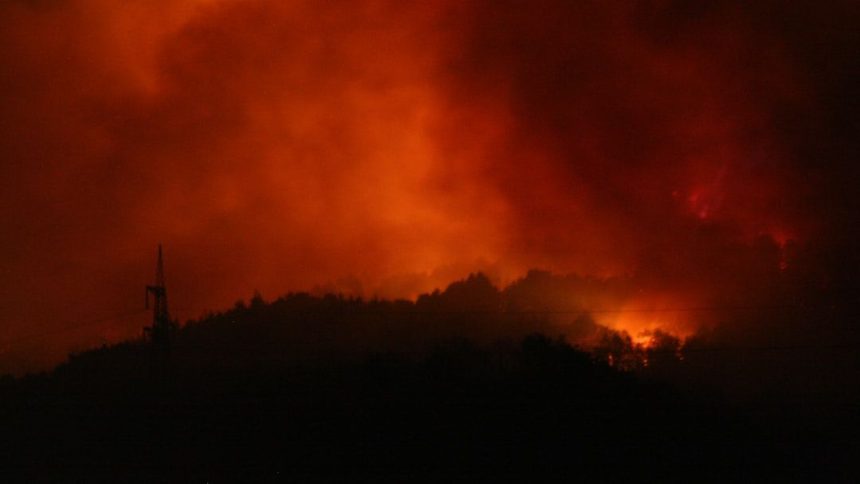
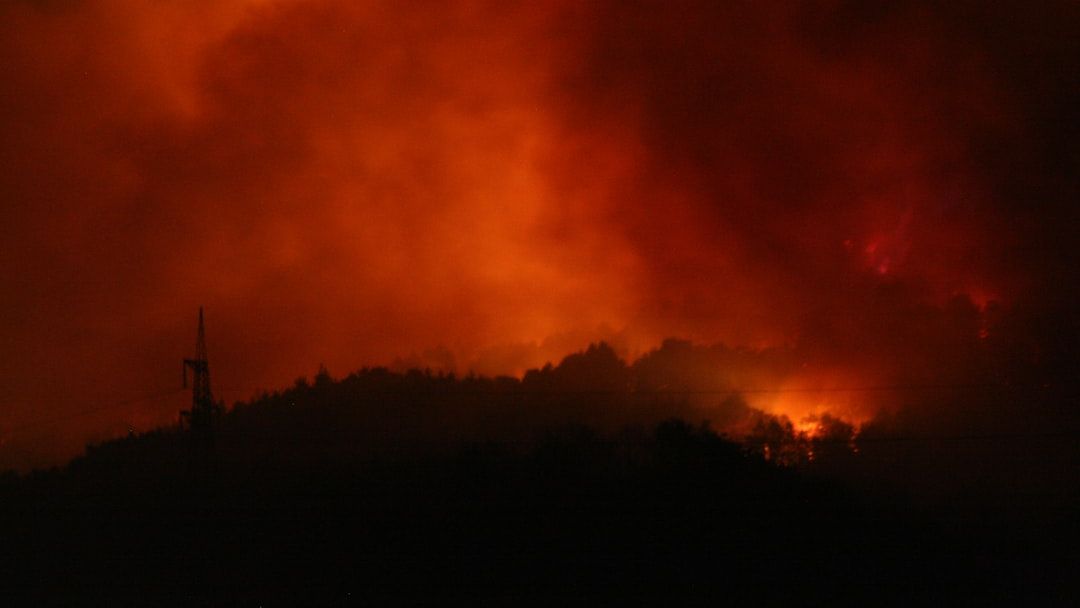
From Nighttime Pauses to Persistent Flames (Image Credits: Unsplash)
Washington — North American wildfires now burn later into the night and ignite earlier each morning, as human-driven climate change prolongs the hot, dry conditions that sustain flames. A recent study revealed that potential burning hours have surged 36% over the past 50 years, transforming what were once reliable nighttime lulls into extended periods of fire risk. This shift, detailed in Science Advances, underscores how warmer nights are rewriting the rules of wildfire behavior across the United States and Canada.
From Nighttime Pauses to Persistent Flames
Historically, wildfires diminished or extinguished at night when cooler temperatures and rising humidity quenched their intensity. Researchers found this pattern has eroded significantly. In regions like California, potential fire-favorable hours have increased by 550 annually since the mid-1970s. Southwestern New Mexico and central Arizona show even steeper rises, up to 2,000 additional hours per year.
The study examined weather conditions ripe for fire spread, though actual blazes did not ignite during every such window. Authors analyzed atmospheric factors including temperature, humidity, wind, and fuel moisture. They applied a model built from nearly 9,000 large fires between 2017 and 2023 to historical data stretching back to 1975 and projected forward to 2106. Fire-prone days have also grown by 44%, adding roughly 26 days to the annual calendar.
Notable Nighttime Fire Surges
Several high-profile blazes illustrate the dangers of overnight activity. The 2023 Lahaina fire in Maui sparked at 12:22 a.m., while 2024’s Jasper fire in Alberta and 2025 Los Angeles fires raged through the darkness. These events highlight how flames that persist past sunset gain momentum by dawn, complicating containment efforts.
“Fires normally slow down during the night, or they just stop,” said Xianli Wang, a fire scientist with the Canadian Forest Service and study co-author. “But under extreme fire hazard conditions, fire actually burns through the night or later into the night.” Such behavior stems primarily from warmer, drier nights accompanied by occasional gusts.
Partner offer
Warming Nights Drive the Change
Nighttime temperatures have risen faster than daytime highs, a trend linked to heat-trapping gases from fossil fuels. Increased cloud cover traps warmth near the surface, acting like a blanket. Since 1975, summer nighttime lows in the contiguous U.S. climbed 2.6 degrees Fahrenheit, outpacing daytime highs by 0.4 degrees, per National Oceanic and Atmospheric Administration data.
Humidity fails to recover as it once did, leaving vegetation parched. Droughts exacerbate this, creating a feedback loop where dry air draws even more moisture from fuels. “Humidity at night doesn’t rebound from its daytime dryness like it used to,” noted lead author Kaiwei Luo of the University of Alberta. Plants endure prolonged stress, delaying moisture recovery in dead fuels for weeks and heightening flammability.
Firefighting in the Dark
Overnight fires demand round-the-clock responses, stripping crews of crucial recovery time. John Abatzoglou, a fire scientist at the University of California, Merced, observed that nights no longer provide “more reliable breaks for wildfire.” Persistent flames build speed for the following day, overwhelming suppression tactics.
Wildland firefighter Nicholai Allen, who develops home fire prevention tools, described the hazards: reduced visibility amplifies risks from wildlife like bears and snakes, which flee flames more aggressively after dark. From 2016 to 2025, U.S. wildfires scorched an average 11,000 square miles yearly—2.6 times the 1980s average. Canada saw similar escalation, with recent burns 2.8 times larger.
- California: +550 fire-prone hours/year
- Southwest New Mexico/Arizona: +2,000 hours/year
- North America overall: +36% burning hours; +44% fire-prone days
A Sobering Outlook for Fire-Prone Lands
The research signals escalating fire potential throughout North America’s vulnerable ecosystems. Syracuse University fire scientist Jacob Bendix, unaffiliated with the study, described it as a “sobering reminder of climate change’s role.” As nights warm further, forests face unrelenting pressure, with drier fuels and extended exposure amplifying risks.
Wang warned that the atmosphere’s ongoing warming points to worsening trends. Fire managers must adapt to this new reality, where traditional downtime vanishes and blazes demand unceasing vigilance. The stakes grow higher as burn areas expand, testing response capacities across borders.
Partner offer
Planning a trip to Vegas?
Compare hotel rates and show tickets on VEGAS.com.