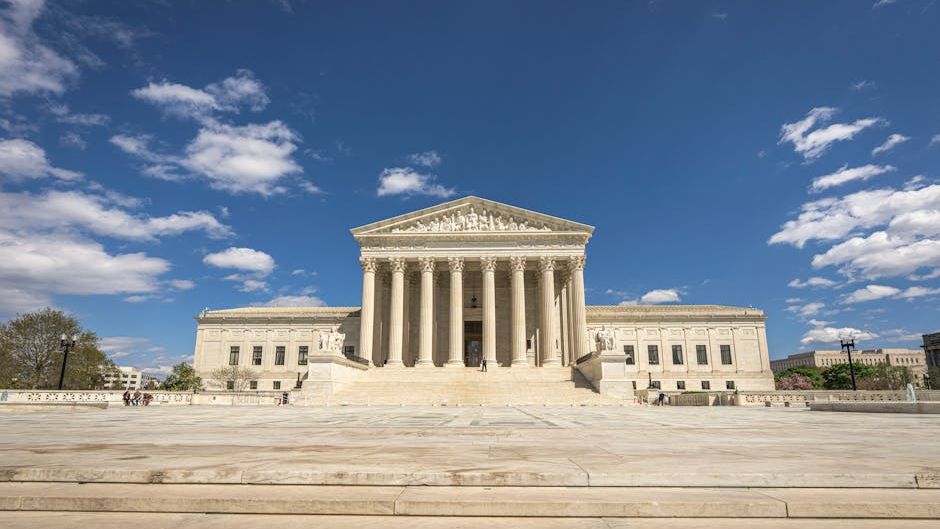

Opinion | When Americans stop trusting the rules themselves – Image for illustrative purposes only (Image credits: Pexels)
The Supreme Court’s latest decisions on redistricting have intensified concerns that core democratic processes are losing public confidence. These rulings arrive amid sharp partisan divisions that already strain the nation’s political system. Observers now question whether institutional safeguards can hold when both sides view the rules themselves as tools for advantage rather than neutral standards.
Why the Timing Matters
Recent court actions on how electoral maps are drawn have highlighted long-simmering worries about fairness in representation. Lawmakers and analysts note that these cases touch directly on how votes translate into seats, a foundation of any functioning democracy. When outcomes appear shaped more by litigation than by consistent principles, public trust erodes quickly.
Partisan battles have turned routine legal reviews into high-stakes contests. Each side accuses the other of manipulating boundaries for electoral gain. The result is a cycle where court involvement, rather than resolving disputes, often fuels further skepticism about the system’s impartiality.
Partisan Warfare and Institutional Strain
America’s political environment has grown more confrontational in recent years, with redistricting serving as one visible flashpoint. Both major parties have pursued aggressive map-drawing strategies when in power, leading to repeated legal challenges. The Supreme Court’s interventions, while intended to clarify boundaries, have instead underscored how fragile shared agreement on basic procedures has become.
Critics argue that repeated court involvement signals a deeper problem: the absence of broadly accepted norms for resolving electoral disputes. Supporters of the rulings maintain they simply apply existing law. Either way, the perception that rules bend under political pressure continues to spread.
What Matters Now
Public confidence in democratic institutions rests on the belief that rules apply evenly regardless of which party holds power. When that belief weakens, participation and acceptance of results can decline. The current redistricting cases illustrate how quickly such erosion can accelerate under sustained partisan pressure.
Future elections will test whether these rulings stabilize or further unsettle the process. Lawmakers face pressure to find durable solutions that reduce reliance on courts for every map dispute. Without progress on that front, the sense that democratic legitimacy is slipping may persist.
Looking Ahead
Restoring broad agreement on electoral rules will require more than individual court decisions. It will depend on sustained efforts across branches of government to demonstrate that procedures remain consistent and fair. The recent rulings serve as a reminder that legitimacy ultimately depends on public perception as much as on legal text.
Observers will watch closely how states and parties respond in the next round of map adjustments. Steady adherence to transparent standards could help rebuild confidence. Continued litigation and accusations, by contrast, risk deepening the very divisions the rulings were meant to address.