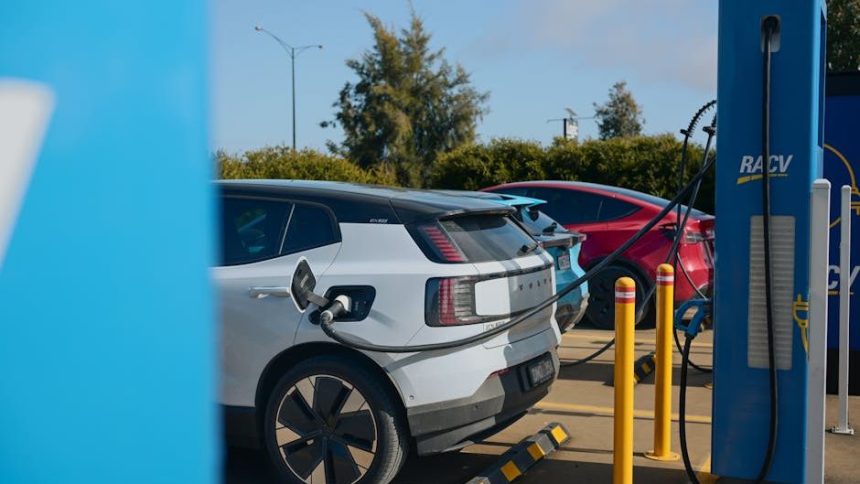

These countries embrace E.V.s to avoid oil price shocks – Image for illustrative purposes only (Image credits: Pexels)
Costa Rica emerged as a frontrunner in electric vehicle uptake across Latin America as fuel costs climbed sharply in early 2026.[1][2] Drivers in the country and peers in Asia and Africa turned to EVs amid geopolitical tensions that drove up gasoline and diesel prices. This shift highlighted a broader trend where emerging markets sought insulation from global oil swings.[1]
Costa Rica Sets the Pace in Latin America
Electric vehicles captured 18 percent of new car sales in Costa Rica during the first three months of 2026, placing the nation second only to Uruguay in the region.[1] This marked three times the penetration rate seen in the United States. By late 2025, monthly registrations consistently exceeded 800 units, with October hitting a record 25.6 percent market share.[2]
The total number of EVs on Costa Rican roads reached 31,500 by September 2025, with projections pointing to 35,000 by year’s end. Silvia Rojas, executive director of the Electric Mobility Association, noted the momentum. “The country aims for this kind of progress,” she said. “That growth curve will keep rising and speeding up.”[2]
Broader Momentum in Asia, Africa, and Beyond
Sales of electric vehicles in Latin America, Africa, and much of Asia surged 79 percent in March 2026 compared to the previous year, following a 48 percent rise for all of 2025.[1] These regions, often labeled the “rest of world” in industry analyses, encompassed billions of potential buyers sensitive to fuel price fluctuations. In Southeast Asia, electric car sales grew nearly 50 percent in 2024 to claim nine percent of the market, with Thailand and Vietnam leading.[3]
Africa saw electric car sales more than double in 2024, though they remained below one percent of total sales continent-wide. Brazil, the largest market in Latin America, doubled electric car sales to 125,000 units in 2024, achieving over six percent share.[3] The war in Iran exacerbated oil price spikes, prompting consumers in these areas to seek alternatives that insulated household budgets from imported fuel dependency.
Chinese EVs and Policy Incentives Fuel the Shift
Affordable models from Chinese manufacturers like BYD and Geely dominated the influx, with BYD alone exporting 3,200 units to Costa Rica in 2025 – nearly a third of imports.[4] Imports to the country jumped from 611 in 2020 to around 10,300 in 2025. Competition among over 10 Chinese brands drove prices down, making EVs competitive even as some tax exemptions faced partial rollbacks in 2025.[4]
Governments bolstered the trend through duty-free imports and other measures. Costa Rica extended exemptions since 2018, while regional peers offered similar lures. Chinese imports accounted for 75 percent of sales growth in emerging economies outside China. These factors combined with operational savings – EVs cost far less per kilometer than gasoline counterparts – to appeal to cost-conscious buyers.
Challenges Ahead and the Road Forward
Despite rapid gains, hurdles persisted. Costa Rica counted over 300 charging stations but only 77 public fast chargers, mostly in urban areas, raising concerns for long-distance travel.[4] Rojas emphasized the need for reliable infrastructure. “People need working stations without hassle when they plug in.” Broader policy gaps, such as limited incentives for transitioning existing fleets, slowed overall penetration to 2.5 percent of registered vehicles.
Still, the trajectory pointed upward, with 2024’s 16 percent sales share in Costa Rica projected to hit 20 percent in 2026.[4] As oil markets remained volatile, these nations positioned EVs not just as environmental choices but as practical buffers against economic shocks. The global push continued to displace oil demand, underscoring a pivotal shift in mobility.