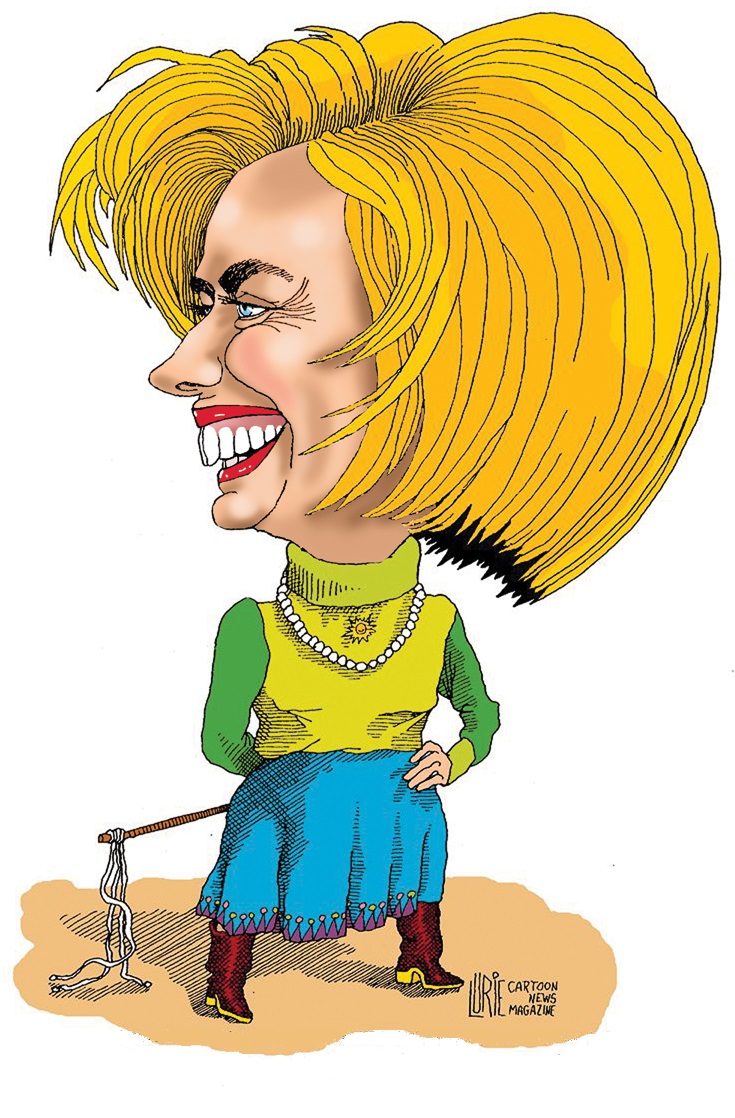
A Tense Session Under Scrutiny (Image Credits: Upload.wikimedia.org)
Las Vegas Review-Journal – Political cartoonists from across the United States turned their attention to former Secretary of State Hillary Clinton’s deposition before the House Oversight Committee on Jeffrey Epstein connections.[1]
A Tense Session Under Scrutiny
The House Oversight Committee subpoenaed Clinton in August 2025 as part of its probe into Epstein’s activities.[2] She testified in a closed-door session on February 26, 2026. Republicans released video footage of the deposition the following week, capturing heated exchanges.[3]
Clinton denied any knowledge of Epstein or Ghislaine Maxwell during the more than four-hour questioning. She grew irate after a Republican lawmaker leaked a photo from the session. Former President Bill Clinton also faced deposition, addressing topics like a controversial hot tub image.[4][5]
These moments fueled widespread commentary. Editorial artists quickly produced works that zeroed in on perceived gaps in Clinton’s responses.
Cartoonists Capture Public Skepticism
Bob Englehart of PoliticalCartoons.com contributed to the Las Vegas Review-Journal’s roundup published March 10.[1] Tom Stiglich also featured in the collection, which invited readers to view selections from the U.S. and abroad.[1]
Separately, The Week compiled five cartoons targeting the Clintons’ depositions. One by Clay Jones placed Clinton before a panel of suited elephants, underscoring partisan dynamics.[6] These pieces emerged amid national coverage of the videos.
Artists drew parallels to past political controversies. The timing aligned with ongoing interest in Epstein’s network and Clinton associations.
Partner offer

Recurring Motifs in the Satire
Omissions topped the list of targets. Cartoonists emphasized what Clinton avoided discussing, echoing the Review-Journal’s headline framing.[1]
Denials about Epstein ties appeared frequently. Heated reactions to leaked images provided another angle, with some works highlighting interruptions and defiance.
- Partisan clashes between Clinton and questioners like Rep. Lauren Boebert.
- Bill Clinton’s responses to personal allegations.
- Broader questions on Epstein’s influence in elite circles.
- Calls for similar scrutiny of other figures, including former President Trump.
- Juxtapositions of testimony with historical Clinton scandals.
These elements combined to critique transparency in high-profile probes.
Role of Cartoons in Political Discourse
Editorial cartoons have long amplified skepticism during congressional inquiries. The Epstein depositions revived this tradition, with outlets like the Review-Journal curating global examples.[1]
Publication dates clustered shortly after video releases on March 2. This rapid response underscored cartoons’ agility in capturing fleeting news cycles.[7]
| Publication | Date | Focus |
|---|---|---|
| Las Vegas Review-Journal | March 10, 2026 | Deposition omissions |
| The Week | Recent | Clintons’ joint depositions |
| PoliticalCartoons.com | Ongoing | Partisan satire |
Such compilations keep the story alive beyond initial headlines.
Key Takeaways
- Clinton denied Epstein knowledge amid tense questioning.
- Video release sparked immediate cartoon responses nationwide.
- Artists focused on unspoken details and partisan friction.
Editorial cartoons remind observers that depositions often leave more questions than answers. As the Epstein investigation continues, these sketches preserve the moment’s irony and doubt. What aspects of the testimony do you find most telling? Share in the comments.
Partner offer
Planning a trip to Vegas?
Compare hotel rates and show tickets on VEGAS.com.