Standing before a masterpiece in a hushed museum gallery, most visitors admire the brushwork, the colors, the composition. They walk away thinking they’ve seen everything. Yet many of the world’s most celebrated paintings contain layers of meaning invisible to the casual observer. Artists throughout history have embedded cryptic symbols, anatomical puzzles, and coded messages into their works, creating visual enigmas that continue to reveal new secrets centuries after the paint dried.
These hidden elements weren’t just decorative flourishes. They served as vehicles for dangerous ideas, personal statements, and philosophical beliefs that couldn’t be spoken aloud in their time. From Renaissance masters concealing scientific knowledge within religious frescoes to Baroque painters tucking self-portraits into reflections, these secrets transform familiar artworks into elaborate puzzles waiting to be decoded.
Leonardo da Vinci’s Musical Code in The Last Supper
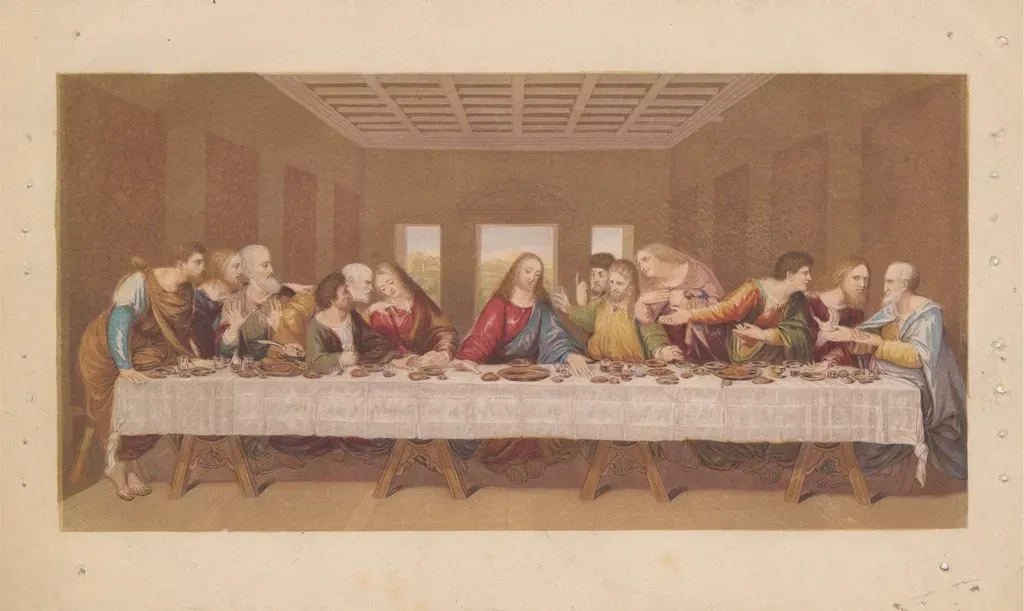
In 2007, Italian musician and computer technician Giovanni Maria Pala claimed to have uncovered musical notes encoded in Leonardo da Vinci’s “The Last Supper,” raising the possibility that the Renaissance genius might have left behind a somber composition to accompany the scene, describing it as sounding “like a requiem” and “like a soundtrack that emphasizes the passion of Jesus.” Pala discovered that by drawing the five lines of a musical staff across the painting, the loaves of bread on the table as well as the hands of Jesus and the Apostles could each represent a musical note. The melody remained nonsensical at first, until he played it backward.
At first, the notes appeared to be a random jumble until Pala played them in reverse, from right to left. The result is a 40-second “hymn to God” that sounds best on a pipe organ, the instrument most commonly used in Leonardo’s time for spiritual music. Alessandro Vezzosi, a Leonardo expert and director of a museum dedicated to the artist in his hometown of Vinci, said he had not seen Pala’s research but that the musician’s hypothesis “is plausible.” Vezzosi noted that “there’s always a risk of seeing something that is not there, but it’s certain that the spaces [in the painting] are divided harmonically,” adding “Where you have harmonic proportions, you can find music.”
Michelangelo’s Anatomical Secret in The Creation of Adam
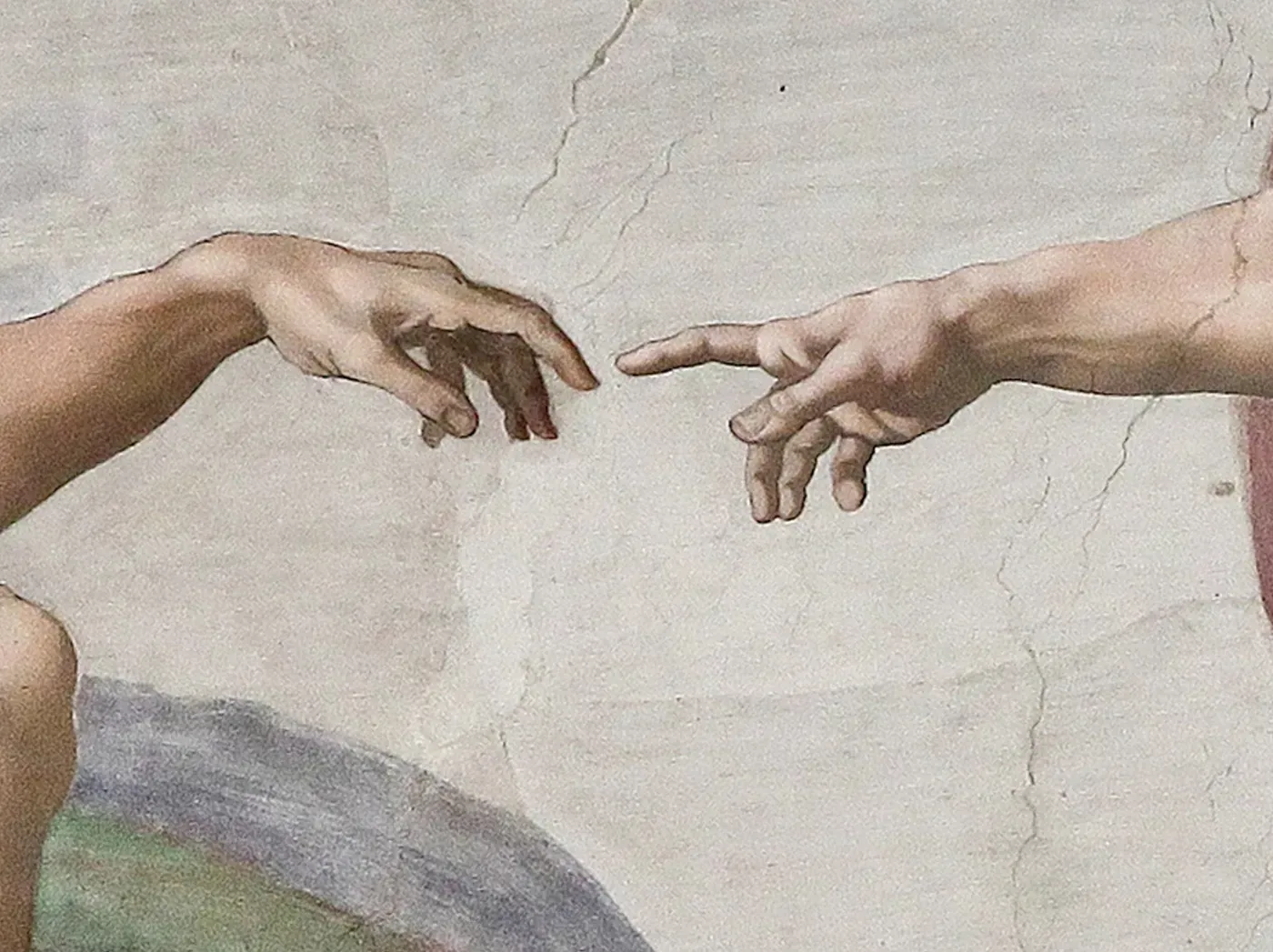
In 1990, physician Frank Meshberger published a paper in the Journal of the American Medical Association deciphering Michelangelo’s imagery with the stunning recognition that the depiction in God Creating Adam in the central panel on the ceiling was a perfect anatomical illustration of the human brain in cross section. The flowing reddish-brown cloak behind God and the angels is the exact same shape as a human brain. This wasn’t merely coincidence. Michelangelo was known to have dissected numerous cadavers starting in his teenage years, gaining profound anatomical knowledge.
Some interpret that God and the angels form a shape strikingly similar to a human brain, which some interpret as Michelangelo’s suggestion that intellect and divinity are interconnected. Researchers report that Michelangelo hid the human brain stem, eyes and optic nerve of man inside the figure of God directly above the altar in “Separation of Light From Darkness.” Art historians believe his work contains several hidden anatomical sketches, including an image of the human brain, which is believed to be a criticism of the Church’s attitudes to the science and discovery that was happening all around.
Jan van Eyck’s Mirror Mystery in The Arnolfini Portrait
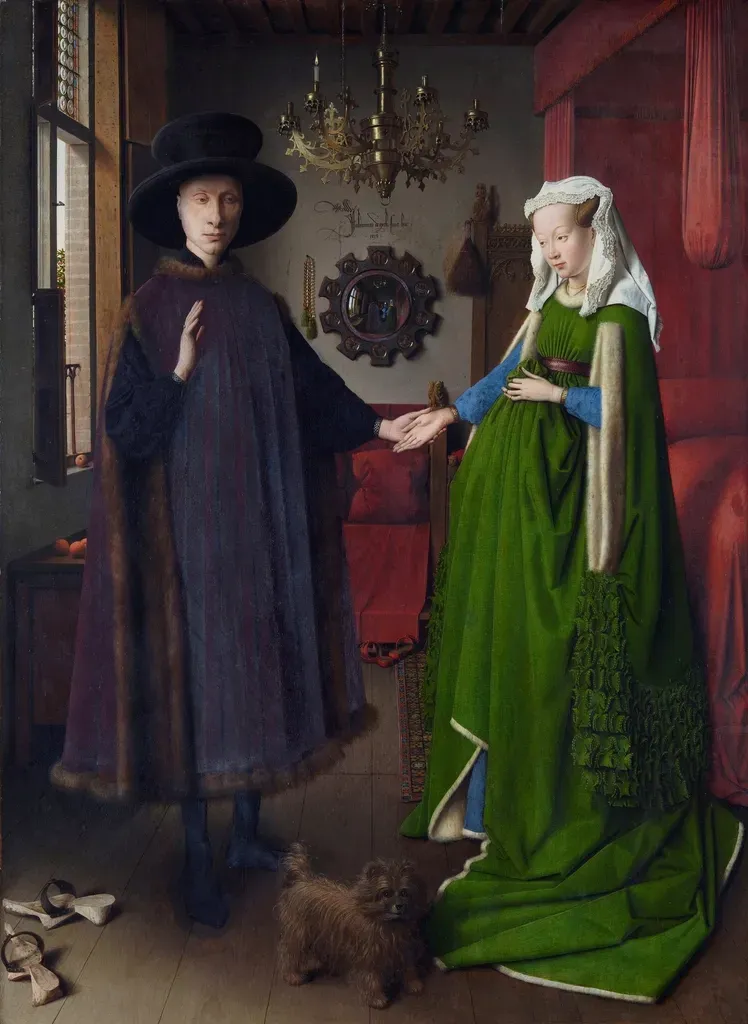
The Arnolfini Portrait is an oil painting on oak panel by Early Netherlandish painter Jan van Eyck, dated 1434 and now in the National Gallery, London, depicting the Italian merchant Giovanni di Nicolao Arnolfini and his wife, presumably in their residence at the Flemish city of Bruges, and is considered one of the most original and complex paintings in Western art because of its beauty, complex iconography, geometric orthogonal perspective, and expansion of the picture space with the use of a mirror. A large round mirror hangs right in the centre of the composition, its convex glass showing not just the compressed and contorted room but also two men coming in through a door behind us.
The painting is signed, inscribed and dated on the wall above the mirror: “Johannes de eyck fuit hic 1434” (“Jan van Eyck was here 1434”). The inscription above the mirror reads less like a signature and more like a legal or testimonial statement, closer to “I witnessed this” than “I painted this.” The single candle burning in the chandelier represents the all-seeing eye of God witnessing their union, the small dog at their feet symbolizes fidelity and loyalty, and the green of the woman’s dress suggests fertility, while the fruit on the windowsill represents wealth and prosperity. The convex mirror in the background reflects two additional figures, possibly witnessing the wedding ceremony, and the meticulous detailing of the convex mirror also includes a tiny image of the crucifixion, infusing the scene with spiritual significance.
Hans Holbein’s Anamorphic Skull in The Ambassadors
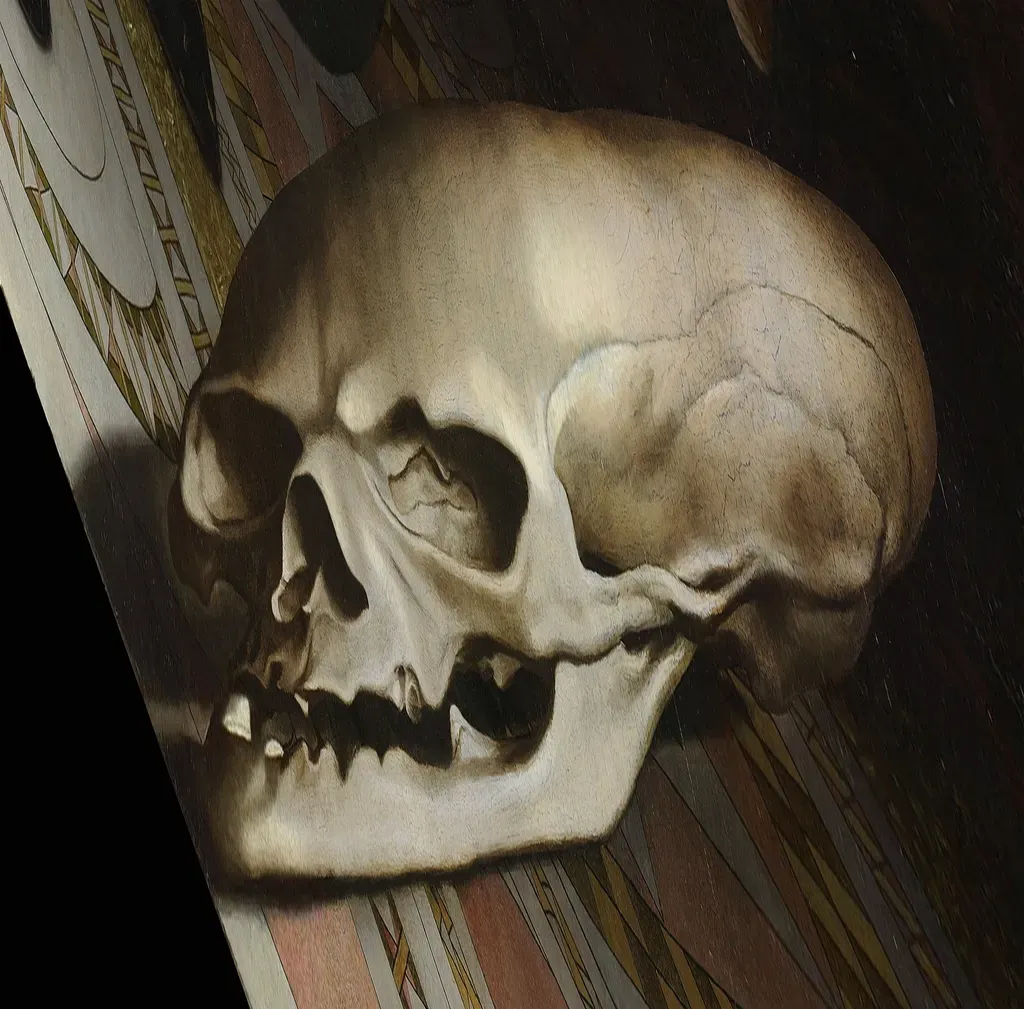
Hans Holbein’s The Ambassadors appears to be a straightforward portrait of two men, but it includes a peculiar detail – a distorted skull at the bottom, and when viewed from a specific angle, the skull becomes clear, serving as a memento mori, or reminder of mortality. The technique is called anamorphosis, a piece of visual trickery where an artist intentionally creates a distorted image that is “reconstituted” if looked at from the right perspective. The strange smear of white and black at the feet of the ambassadors transforms into a perfectly rendered skull when viewed from the correct vantage point.
The objects surrounding the men, such as scientific instruments and books, symbolize the fleeting nature of worldly knowledge and possessions, suggesting a deeper commentary on life’s impermanence. Analysis of the settings on the instruments suggests to some researchers that they refer to Good Friday, the formal date of the crucifixion in the Christian calendar – a further cryptic clue to the symbolic meanings of the painting. The painting serves as a sophisticated meditation on mortality, knowledge, and the vanity of earthly pursuits.
Hieronymus Bosch’s Musical Notation in Garden of Earthly Delights
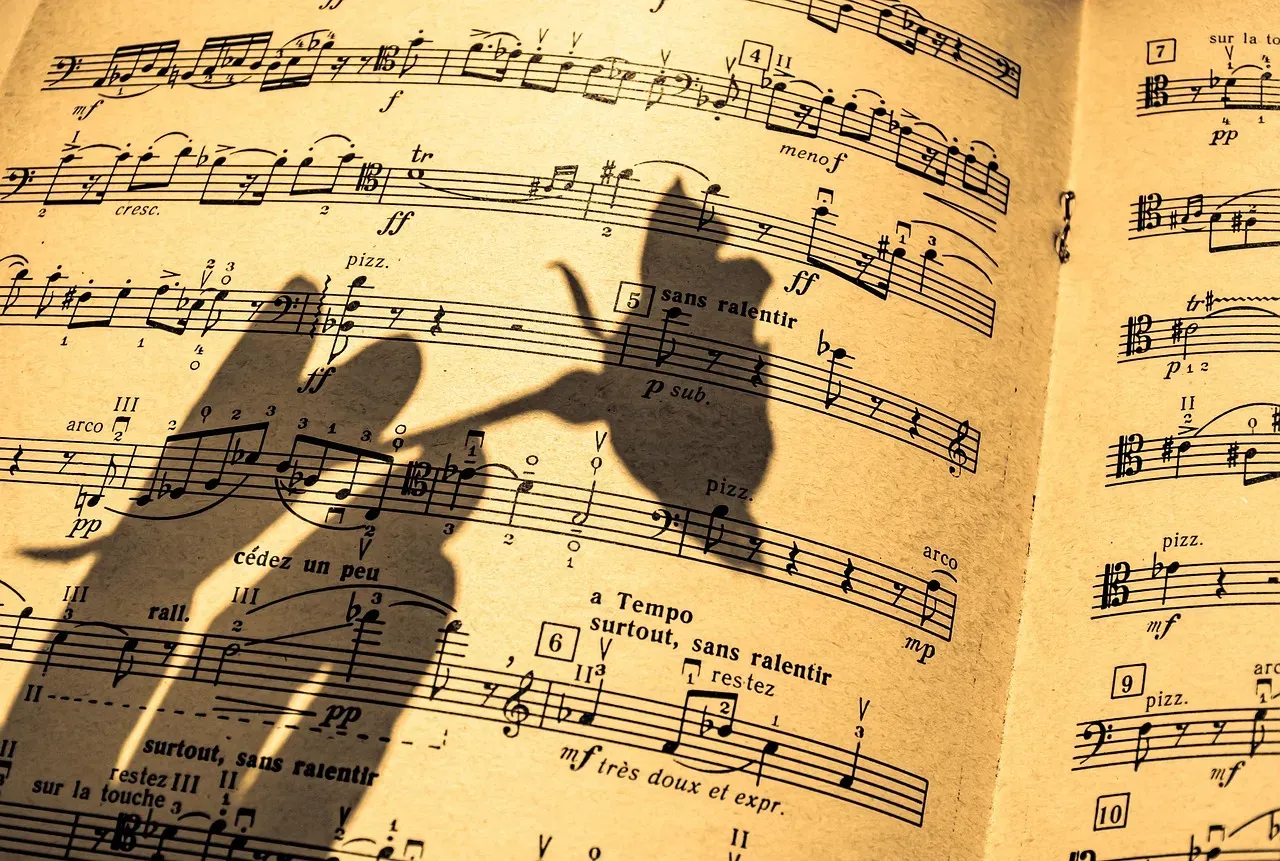
Hieronymus Bosch’s triptych The Garden of Earthly Delights is both visually captivating and perplexing, with scenes that represent heaven, earth, and hell, and the central panel is filled with bizarre and symbolic imagery that some interpret as warnings about the consequences of earthly pleasures, while hidden musical notes and obscure symbols continue to spark debate about the artist’s true intentions. In 2015, a music student named Amelia Hamrick noticed the music score hidden on a man’s rear end while studying Garden of Earthly Delights. The bizarre detail has sparked endless speculation about its meaning.
Some art enthusiasts think the musical notation might represent the idea of earthly pleasures or indulgence in sensual delights, which fits right in with the overall theme of the painting, while others speculate that it could symbolize the discordant and chaotic nature of worldly pursuits, contrasting with the harmony of celestial realms. Bosch’s Garden of Earthly Delights is a fever dream of temptation and doom, with naked hybrid creatures, surreal landscapes, and cryptic symbols filling the panels, likely a vision of creation and damnation, but its true meaning remains a mystery.
Vincent van Gogh’s Religious References in Café Terrace at Night
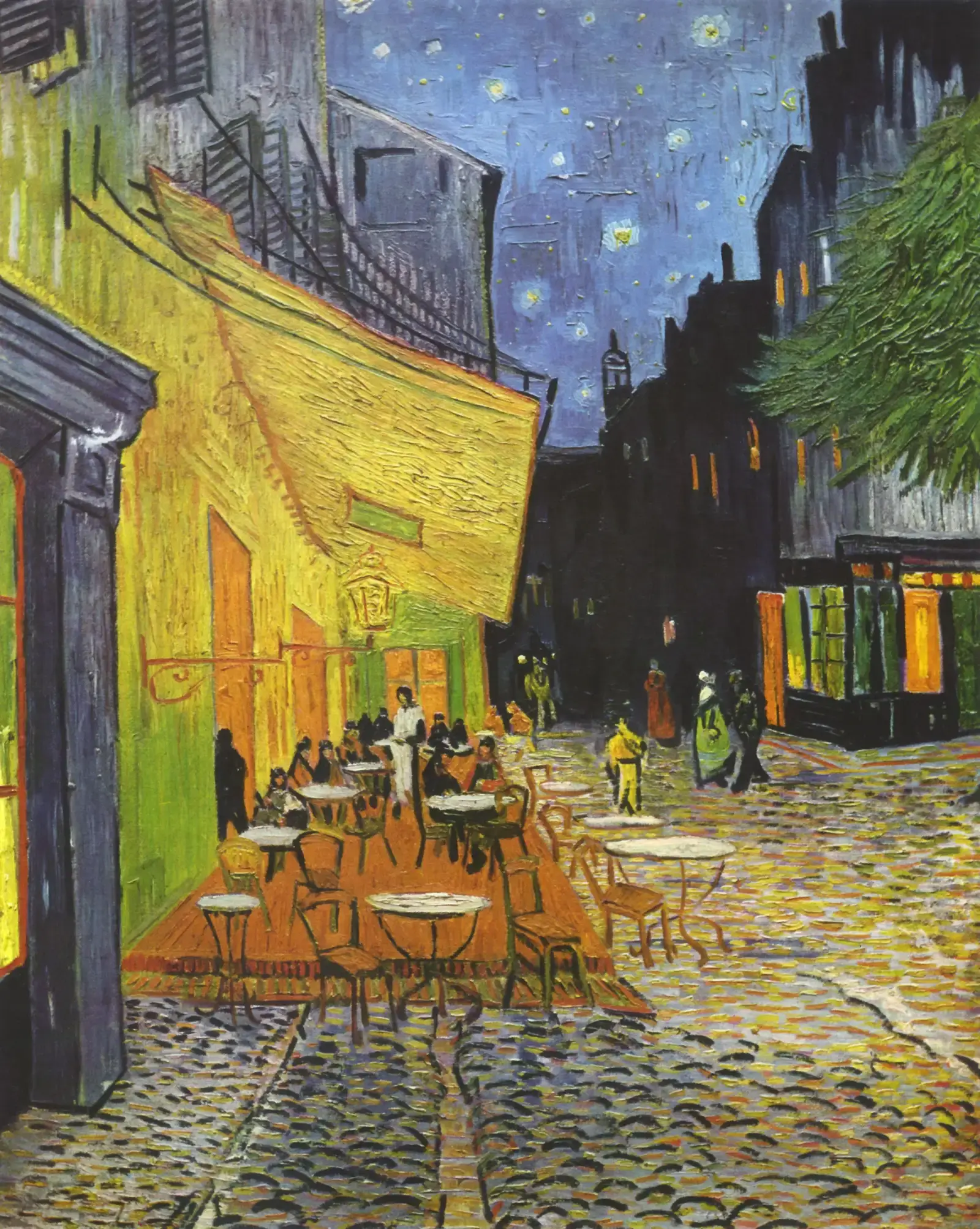
In 2015, art historian Jared Baxter theorized that the painting is actually Vincent Van Gogh’s version of “The Last Supper,” as when you look closely, there is one central figure with long hair surrounded by 12 people, with one of them slipping into the shadows, which could symbolize Judas. The image features exactly 12 people sitting at the café who surround a standing, long-haired figure who just so happens to be standing in front of a cross-like shape on the window. This interpretation adds profound religious dimension to what appears to be a simple street scene.
This theory isn’t too hard to believe, considering that Van Gogh tried to join the clergy and he had a passion for spreading the gospel, and around the time Vincent created that painting, he wrote in a letter to his brother Theo about having a “tremendous need for, shall I say the word – for religion.” The way Van Gogh used light in the painting enhances this symbolism, with the brightly lit café glowing warmly against the dark night sky creating a sense of intimacy and gathering, and this contrast between light and dark can be seen as a metaphor for the warmth of community versus the isolation of the outside world.
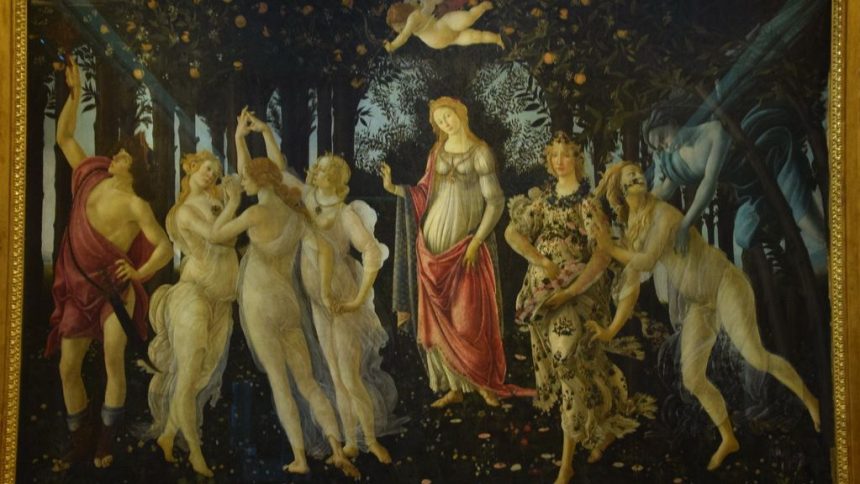
Sandro Botticelli’s Botanical Encyclopedia in Primavera
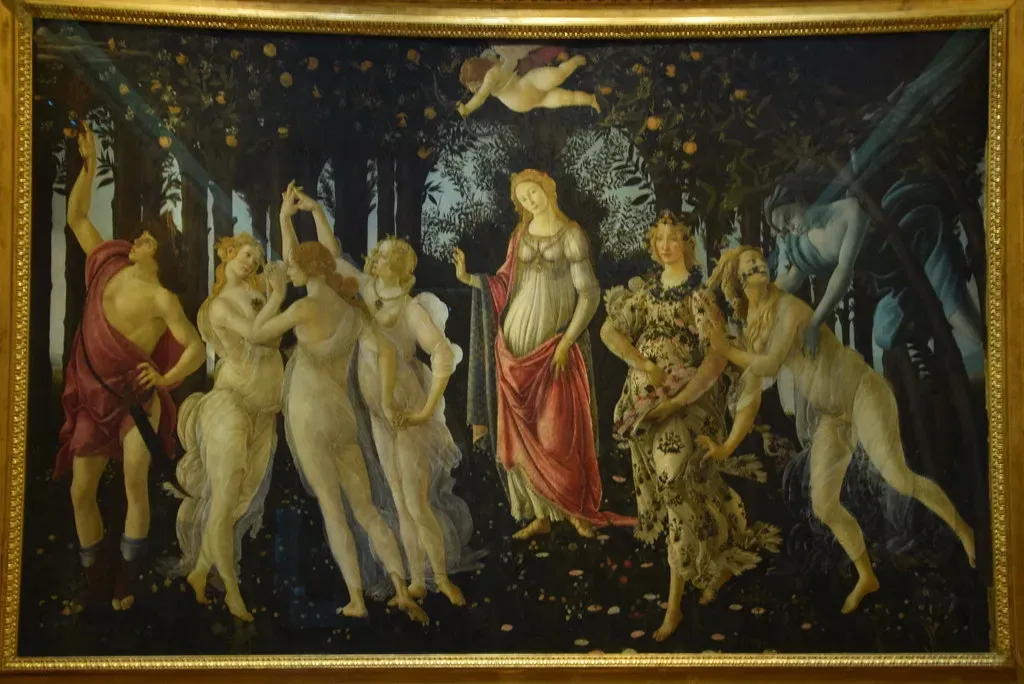
The artist best known for “The Birth of Venus” had quite the affinity for plants, and buried in another of his famous paintings, “Primavera,” you can find as many as 500 different plant species, all painted with enough scientific accuracy to make them recognizable, according to researchers. More than 500 types of plants have been discovered by art historians, each carefully selected to complement the themes of fertility, rebirth, and intellectual enlightenment. This botanical precision reflects the Renaissance fascination with natural philosophy and classical learning.
Venus in the center is not just a Roman goddess but a symbol of Neoplatonic love, an ideal of spiritual beauty that Renaissance thinkers idealized, with clouds dispersed about her by Mercury indicating the pursuit of reason rather than ignorance, and the Three Graces dance as one, perhaps a subtle reference to Medici ideals of civility and harmony. The painting functions simultaneously as an artistic masterpiece, a scientific catalog, and a philosophical statement about the relationship between nature, love, and human understanding.
Salvador Dalí’s Self-Portrait in The Persistence of Memory
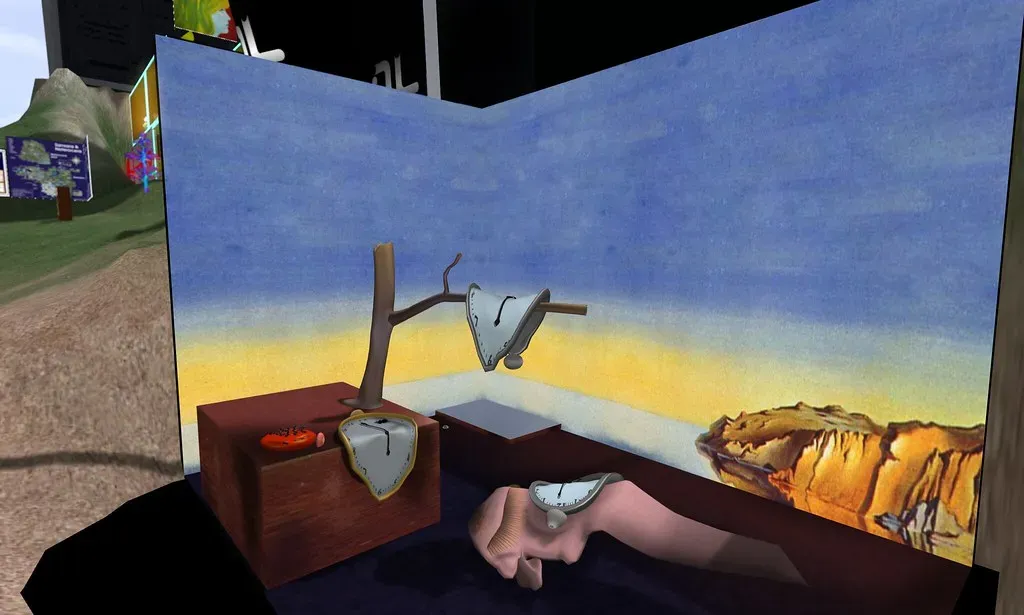
Salvador Dalí’s The Persistence of Memory, famous for its melting clocks, has fascinated viewers with its dreamlike, surreal quality, and is often interpreted as a representation of time’s fluidity, reflecting Dalí’s fascination with memory and the unconscious, while hidden within the landscape is an abstract self-portrait of Dalí, seen in the central “face” with a drooping nose and eye. The melting clocks symbolize the fluidity of time and the relativity of our perception, with Dalí’s use of the soft watches challenging the rigidity of conventional timekeeping.
The barren landscape and distorted timepieces create an atmosphere of dreams and subconscious exploration. The fleshy, distorted form lying on the ground contains subtle features that mirror the artist’s own face, suggesting the deeply personal nature of this meditation on memory and mortality. The painting transforms a simple exploration of time into a complex self-examination, demonstrating how Surrealist artists used symbolism to probe the depths of human psychology and perception.