
Every bookshelf has its heavy hitters. The classics everyone claims to have read, the modern bestsellers everyone actually has read. But tucked away in the dusty corners of literary history, there are incredible stories that somehow slipped through the cracks. These aren’t just good books that got overlooked. They’re extraordinary works that should be sitting alongside Fitzgerald and Hemingway.
Some fell victim to bad timing. Others were simply too ahead of their era. A few got buried under the avalanche of competing titles. Whatever the reason, these twelve forgotten masterpieces deserve another shot at the spotlight. Let’s dive in.
1. “Stoner” by John Williams (1965)


This novel spent decades in obscurity before a 2013 reissue finally gave it the recognition it deserved. It tells the story of William Stoner, an unremarkable English professor who lives an unremarkable life. Sounds boring, right? Yet Williams crafted something profound from this ordinary existence.
The prose is clean and direct. No flashy metaphors or linguistic gymnastics. Just honest storytelling about a man who faces disappointment after disappointment yet continues forward with quiet dignity. It’s the kind of book that sneaks up on you, leaving you thinking about it weeks after you’ve finished.
What makes it brilliant is how Williams finds meaning in the mundane. Stoner’s life might seem small, but the emotions are enormous. His failed marriage, his one great love affair, his battles with department politics – they all feel intensely real.
Critics have called it one of the greatest novels you’ve never heard of. That’s changing, slowly, but it still doesn’t get the shelf space it deserves in bookstores.
2. “The Man Who Loved Children” by Christina Stead (1940)


This Australian novel bombed when it first came out. Completely tanked. The critics didn’t know what to make of it, and readers stayed away. Fast forward to 1965, when poet Randall Jarrell wrote a passionate introduction for a reissue, calling it “as good a novel as any written in English in the twentieth century.”
Stead’s depiction of the Pollit family is brutal and unflinching. Sam Pollit, the father, is a narcissistic tyrant who thinks he’s a visionary. His wife Henny is trapped in misery, and their children suffer in the crossfire. The family dynamic is toxic in ways that feel disturbingly contemporary.
The dialogue crackles with tension. Every conversation feels like it might explode into violence or collapse into despair. Stead doesn’t flinch from showing you the ugliness of this household, but she also finds moments of dark humor in the chaos.
It’s a tough read emotionally. Not the kind of book you curl up with on a lazy Sunday. But if you want to understand how family dysfunction can twist people into unrecognizable shapes, this is essential reading.
3. “The Recognitions” by William Gaddis (1955)


Gaddis spent seven years writing this monster of a novel. Nearly a thousand pages exploring art, forgery, authenticity, and what it means to create something original in a world full of copies. The literary establishment responded by mostly ignoring it.
The book is dense, challenging, and absolutely worth the effort. It follows Wyatt Gwyon, a painter who becomes a master forger, along with dozens of other characters navigating the art world, religion, and their own crises of identity. The narrative jumps around, conversations overlap, and Gaddis demands your full attention.
What frustrated early readers is exactly what makes it remarkable. The structure mimics the fragmented, chaotic nature of modern life. Nothing is simple, nothing is clear-cut, and authenticity remains frustratingly elusive throughout.
Critics eventually came around, recognizing it as a landmark of postmodern literature. Still, it remains criminally underread. Probably because it’s genuinely difficult, and we live in an age that values easy consumption.
4. “Independent People” by Halldór Laxness (1934-1935)

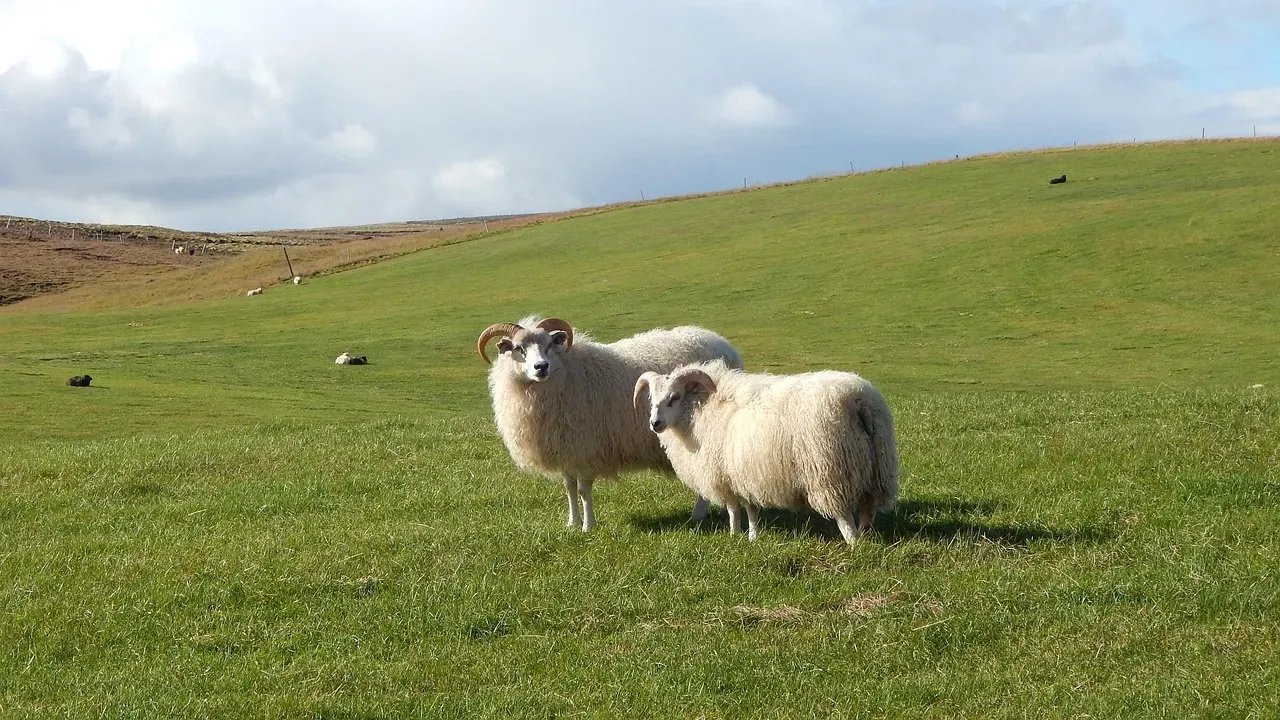
Laxness won the Nobel Prize in Literature in 1955, partly on the strength of this novel. Yet somehow it never penetrated the English-speaking world the way it should have. Maybe the Icelandic setting felt too remote. Maybe the harsh realism was too much for readers seeking escapism.
The story follows Bjartur, a stubborn sheep farmer determined to maintain his independence no matter the cost. He’s proud, difficult, and maddeningly principled. The Icelandic landscape is both beautiful and merciless, and Laxness captures both with equal skill.
This isn’t a feel-good tale of triumph over adversity. Bjartur’s stubbornness leads to tragedy after tragedy, yet you can’t help but admire his refusal to compromise. The novel raises uncomfortable questions about the price of independence and whether pride is a virtue or a fatal flaw.
The prose has a stark beauty that matches the landscape. Laxness doesn’t waste words, and every sentence carries weight. It’s a masterclass in how to write about place and character simultaneously.
5. “The Transit of Venus” by Shirley Hazzard (1980)


Hazzard’s novel about two Australian sisters navigating love and disappointment in post-war England received critical acclaim when it was published. It even won the National Book Critics Circle Award. Then it somehow faded from popular consciousness.
The writing is exquisite. Every sentence feels carefully constructed, yet nothing feels overwrought. Hazzard tracks the lives of Caroline and Grace Bell across decades, showing how choices made in youth ripple through entire lifetimes. The novel opens with an astronomical event – the transit of Venus – and uses it as a metaphor for rare, transformative moments in human experience.
Caroline’s love affair with the married astronomer Ted Tice forms the emotional core of the story. It’s a relationship marked by missed opportunities, miscommunication, and the cruelty of circumstance. Hazzard doesn’t offer easy resolutions or happy endings.
What makes it extraordinary is the psychological depth. These characters feel fully realized, with complex motivations and contradictions. You understand why they make terrible decisions, even as you wish they wouldn’t.
6. “The Stone Angel” by Margaret Laurence (1964)


This Canadian novel is beloved in Canada but barely known elsewhere. That’s a shame, because Laurence created one of literature’s most memorable stubborn old women in Hagar Shipley. At ninety, Hagar looks back on her life with unflinching honesty, examining her failures, regrets, and the pride that shaped everything.
Hagar is difficult. She’s judgmental, proud, and often cruel to the people who love her. Yet Laurence makes you understand her without excusing her. The novel moves between present and past, showing how the young woman Hagar was became the difficult old woman she is.
The prairie setting comes alive through Laurence’s descriptions. The landscape is harsh and beautiful, much like Hagar herself. There’s a particularly powerful scene where Hagar runs away to an abandoned cannery, seeking independence even as her body fails her.
It’s a meditation on aging, pride, and the ways we sabotage our own happiness. Not cheerful, but deeply moving. The kind of book that changes how you think about your own relationships with family.
7. “Speedboat” by Renata Adler (1976)


Adler’s experimental novel reads like a series of observations and fragments rather than a traditional narrative. The protagonist, Jen Fain, is a journalist whose thoughts jump from topic to topic, creating a mosaic of modern life in the 1970s. Critics were divided when it came out, and it never found a wide audience.
Partner offer

The structure is unconventional. Short paragraphs that feel like diary entries or overheard conversations. Jen’s observations are sharp, often funny, sometimes devastating. The lack of traditional plot might frustrate readers expecting beginning-middle-end storytelling.
What Adler captures brilliantly is how consciousness actually works. Our minds don’t move in straight lines. We jump from thought to thought, memory to observation, making connections that feel random but reveal deeper patterns. The fragmented style mirrors this perfectly.
The New York Review of Books reissued it in 2013, introducing it to new readers. It deserves even more attention. Adler was doing things with form and voice that still feel fresh decades later.
8. “The House of Hunger” by Dambudzo Marechera (1978)

Marechera was a Zimbabwean writer whose work exploded with rage and brilliance. This collection of stories and a novella won the Guardian Fiction Prize but remains largely unknown outside literary circles. The writing is fierce, experimental, and unlike anything else from that era.
The title novella follows a young man’s coming of age in Rhodesia during the final years before independence. The prose is violent, hallucinatory, and deeply unsettling. Marechera doesn’t give you comfortable distance from his characters’ suffering. He throws you into the middle of poverty, violence, and psychological disintegration.
His style draws from modernist experimentation, African oral tradition, and raw lived experience. The result is something completely original. You can feel the anger burning through every page, but it’s controlled, shaped into art rather than mere rant.
Marechera died young, at thirty-five, his potential only partially fulfilled. But what he left behind deserves far more recognition than it’s received. This is essential reading for understanding postcolonial literature.
9. “The Safety Net” by Heinrich Böll (1979)

Böll won the Nobel Prize in 1972, but this late novel never got the attention his earlier work received. It explores the psychological impact of terrorism on a wealthy German family whose patriarch has been targeted by radical leftists. The entire family lives under constant security, their lives transformed by the threat of violence.
The novel jumps between different family members’ perspectives, showing how fear reshapes relationships and daily existence. The security measures meant to protect them become a prison. Normal activities become fraught with danger. Trust erodes.
Böll was examining questions that feel even more relevant now: How do we balance security and freedom? What happens to society when fear becomes the dominant emotion? The family’s struggle to maintain normalcy under siege mirrors larger societal tensions.
The prose is measured and thoughtful, characteristic of Böll’s style. He doesn’t offer simple answers, instead presenting the human cost of political violence from multiple angles. It’s a novel that asks more questions than it answers, which might explain why it didn’t achieve bestseller status.
10. “Cassandra at the Wedding” by Dorothy Baker (1962)


This slim novel packs an incredible emotional punch. Cassandra Edwards, a brilliant graduate student, rushes home to sabotage her twin sister Judith’s wedding. The narrative unfolds over a single weekend, as Cassandra’s fragile mental state becomes increasingly apparent.
Baker’s portrayal of twin identity and mental illness was remarkably sophisticated for 1962. Cassandra’s voice is witty, self-aware, and deeply troubled. She knows she’s falling apart but can’t stop herself. The relationship between the twins is intense and suffocating.
What makes it special is how Baker refuses to romanticize mental illness. Cassandra is brilliant but also manipulative and destructive. Her love for her sister is genuine but toxic. The family’s attempts to help her are well-meaning but inadequate.
The ending is ambiguous, neither hopeful nor despairing. Baker leaves you wondering whether Cassandra will find stability or continue spiraling. It’s the kind of book that stays with you precisely because it doesn’t tie everything up neatly.
11. “The Quest for Christa T.” by Christa Wolf (1968)


Wolf’s novel was controversial in East Germany, where she lived and published. It tells the story of a woman who dies young from leukemia, narrated by a friend trying to understand who Christa T. really was. The Communist authorities didn’t like its implied criticism of conformity and state control.
The narrative structure is complex, moving between past and present, memory and imagination. The narrator admits she’s partly inventing Christa T., reconstructing her from fragments. This makes it both a meditation on memory and a subtle critique of how totalitarian systems try to control individual identity.
Wolf’s prose is introspective and philosophical. She’s interested in interior life, in how people maintain authenticity in oppressive circumstances. Christa T. is quiet, introspective, struggling to find meaning in a society that demands conformity.
The book’s influence on German literature was enormous, but English translations never found much of an audience. That’s a loss, because Wolf was asking crucial questions about individual freedom and social pressure that remain urgent.
12. “The Tartar Steppe” by Dino Buzzati (1940)


This Italian novel follows Giovanni Drogo, a young officer assigned to a remote fortress on the border of a desert supposedly inhabited by Tartars. He expects glory and adventure. Instead, he spends decades waiting for an invasion that never comes, watching his life slip away in meaningless routine.
Buzzati creates an atmosphere of existential dread that builds slowly over the course of the novel. The fortress becomes a metaphor for modern life – waiting for something significant to happen while days blur into years. Drogo keeps telling himself he’ll leave soon, but he never does.
The desert landscape is both beautiful and menacing. Buzzati’s descriptions give it an almost mystical quality. You can feel the weight of all that empty space pressing on the characters, the tedium of waiting for an enemy that might not exist.
Critics have compared it to Kafka, but Buzzati’s voice is distinctly his own. There’s a melancholy poetry to his prose that makes even the mundane feel profound. It’s about wasted potential, about how we squander our lives waiting for the right moment that never arrives.
Finding Hidden Treasures


These twelve books represent just a fraction of the literary masterpieces that history has overlooked. They didn’t fail because they were bad. They got buried under shifting literary trends, unlucky timing, or simple bad luck in publishing. Some were too challenging for their moment, others too quiet to compete with louder voices.
What they all share is genuine literary merit. These aren’t curiosities worth reading for historical interest alone. They’re living works that speak across decades, offering insights about human nature that remain as relevant now as when they were written. Each one takes risks with form, voice, or subject matter that still feel bold.
The beautiful thing about forgotten books is that rediscovering them feels like finding buried treasure. No one will spoil the ending for you at a dinner party because nobody’s read them. You get to experience them fresh, without the weight of cultural consensus telling you what to think.
So maybe skip the latest bestseller everyone’s talking about and pick up one of these instead. What hidden gem will speak to you? Let us know in the comments what forgotten books changed your reading life.
Partner offer
Planning a trip to Vegas?
Compare hotel rates and show tickets on VEGAS.com.