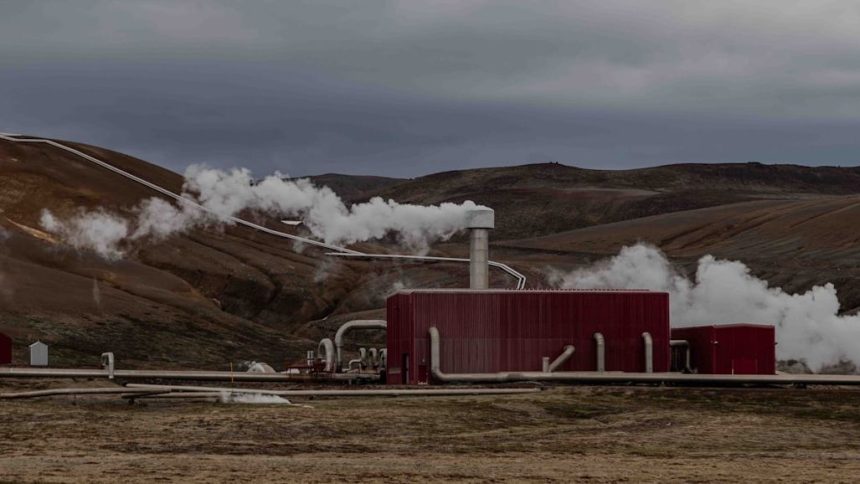

Can France be the first major economy to end fossil fuel use? – Image for illustrative purposes only (Image credits: Unsplash)
France already ranks among the world’s lowest users of fossil fuels as a share of primary energy, largely because nuclear plants built in the 1970s and 1980s now supply most of its electricity. At an international meeting in Santa Marta, Colombia, in late April, French officials went further than other participants by releasing a formal roadmap that aims to remove coal, oil, and fossil gas from all energy uses. The document sets firm end dates while outlining how electrification, efficiency gains, and new low-carbon fuels will replace them across transport, buildings, and industry.
Current Position and Remaining Dependence
Electricity generation in France is already 90 percent non-fossil, with wind and solar covering roughly one-fifth of demand. Outside the power sector, however, fossil fuels still account for 86 percent of final energy consumption, split evenly between transport and the combined needs of industry and homes. Bioenergy supplies the remaining 14 percent, leaving total molecular fuel demand at just over 4 exajoules a year against 6 exajoules of overall final energy use. The new strategy therefore concentrates on converting those non-electric services to electricity or other decarbonized options. It treats the power system as largely solved and focuses resources on the harder segments that still rely on liquid and gaseous fuels.
Sector-by-Sector Milestones
The roadmap breaks the transition into clear deadlines and measures for each major area of use. – Coal for energy purposes must end by 2030.
– Oil must be phased out by 2045.
– Fossil gas must be eliminated by 2050. Within those broad targets, the plan lists concrete steps for vehicles, heating, and manufacturing. Two-thirds of new car sales are to be electric by 2030, supported by a requirement that domestic manufacturers produce at least one million battery-electric vehicles annually by the same date. Public transport ridership is to rise 25 percent over the same period. In buildings, oil-fired boilers are to fall 85 percent in the tertiary sector and 60 percent in homes, with a complete ban on fossil oil for heating by 2035. Industry will see the 50 largest sites decarbonized through electrification, including electric arc furnaces for steel.
Transport and Heating Priorities
Passenger cars and home heating receive the most detailed treatment because they represent the largest near-term opportunities. The government intends to install one million heat pumps each year by 2030, building on the more than 600,000 units already added in 2022. For vehicles, policy will steer both buyers and producers toward battery-electric models while expanding charging infrastructure. Heavy-duty trucks and buses receive less specific guidance, with the text noting only that electrification should extend to these fleets. Aviation and international shipping fall outside the main scope, as they are governed by separate global agreements. Non-energy uses of fossil fuels, such as petrochemical feedstocks, bitumen, and lubricants, are also excluded from the targets.
Industrial and Broader Context
Industry receives attention through the focus on the country’s 50 largest sites, yet the document offers limited detail on how electric technologies will scale across the full range of processes. Hydrogen is positioned as a supporting fuel, with plans to deploy up to 8 gigawatts of electrolyzers by 2035. Current global electrolyzer capacity stands at roughly 2.5 gigawatts of operating plants, with another 1.5 to 3.8 gigawatts either under construction or at final investment decision. Shell’s 2026 Energy Security Scenarios, published in January, place these French goals in perspective. Its Horizon pathway shows France making strong progress toward net-zero emissions by 2050 but still requiring some industrial carbon removals and continued low levels of fossil use. The more dynamic Surge scenario indicates faster technological change overall, yet highlights persistent challenges in road freight, aviation growth, and certain industrial applications that could slow the final stages of the transition. France’s power sector is expected to be fully decarbonized well before 2050, and passenger vehicles and home heating should be largely electric. The remaining gaps in heavy transport, aviation, and parts of heavy industry will determine whether the country can claim the first complete exit from fossil fuels among major economies.