
Something quietly extraordinary has happened to education over the past two decades. A system that spent centuries tethered to physical buildings, fixed schedules, and the lucky geography of being born near a good university has started breaking free. Today, a student in rural Kenya and a working mother in Ohio can sit in the same virtual classroom. That’s not a metaphor. It’s the actual state of things in 2026.
The numbers behind this shift are staggering, the technology driving it is evolving almost weekly, and the implications for how we think about learning, careers, and human potential are only beginning to show themselves. So let’s get into it.
A Market Growing Faster Than Almost Anything Else

In 2024, there were approximately 73.8 million online learners globally, and the global e-learning market was expected to reach $400 billion by 2026. That kind of scale is almost hard to picture. Think of it this way: that’s more learners than the entire population of France clicking open a course, watching a lecture, or submitting an assignment digitally.
The global online education market is expected to grow at a compound annual growth rate of 11.68% from 2025 to 2033, and by 2033 the market is projected to reach an estimated value of $880.17 billion, up from $363.72 billion in 2025. Honestly, that trajectory rivals the growth of social media in its early years. Education has officially become one of the hottest economic sectors on the planet.
From 77% to 98%: Universities Go Digital

A remarkable 98% of universities now offer online courses, up from just 77% in 2019. That shift happened in less than a decade. To put it plainly, the ivory tower opened a browser tab, and it hasn’t looked back since. The pandemic accelerated things dramatically, but the trend had already begun long before COVID arrived.
Graduate enrollment in fully online study reached 45% in 2024 to 2025, outpacing traditional classroom formats. Meanwhile, more than 7.5 million U.S. students took at least one online course in 2024. The old idea that online education was a lesser, backup option for students who couldn’t get into “real” programs is fading fast. Graduate students, of all people, are leading the digital charge.
Why Students Are Actually Choosing It

Let’s be real. People don’t switch to online learning simply because it’s trendy. They do it because it solves actual problems in their lives. Studies show that roughly four in five learners prefer online learning because of the ability to learn at their own pace, and a similar proportion report that online learning helps improve their grades. That’s a compelling case on its own.
Retention rates for online learners can reach up to 60%, compared to just 8 to 10% in traditional face-to-face classrooms, and students report saving 40 to 60% of study time when learning online. Those are not marginal improvements. Those are transformative gains. If a hospital improved patient recovery rates by that margin, we’d call it a medical breakthrough.
The Rise of MOOCs: Learning for Millions

The global MOOC market is projected to realize an annual growth rate of nearly 38% from 2024 to 2030, and could reach $411.6 billion by 2030, up from $60.3 billion in 2024. Massive Open Online Courses have evolved from a quirky academic experiment into a genuine pillar of global education. Platforms like Coursera, edX, and Udemy now function as de facto universities for hundreds of millions of people.
Duolingo recorded over 130 million monthly active users in the first quarter of 2025, maintaining its position as the most popular online education platform, while Coursera attracted 60 million visits and Khan Academy gained nearly 37 million visits during the same period. These platforms have become household names in the same way Netflix or Spotify have. That’s not a coincidence. The design logic is similar: meet the user where they are, make it easy, and make it engaging.
Artificial Intelligence Is Rewriting the Rules
The global AI education market reached $7.57 billion in 2025 and is projected to exceed $112 billion by 2034. AI in education isn’t a future concept anymore. It’s here, it’s active, and teachers and students are already using it constantly. According to an October 2025 report by the Center for Democracy and Technology, 85% of teachers and 86% of students used AI in the preceding school year.
By 2026, adaptive learning platforms powered by AI are beginning to deliver truly personalized education at scale, adapting pace, style, and content to individual learners in ways that were previously impossible. Think of it like Netflix’s recommendation engine, only instead of suggesting a show, it’s suggesting the exact concept you need to revisit before your exam. The CDT report also noted that 69% of teachers said AI tools have improved their teaching methods, while 55% agreed it has given them more time to interact directly with students.
Micro-Credentials: The New Currency of the Workforce

Here’s the thing about traditional degrees: they take years, cost a fortune, and often teach skills that are already slightly outdated by graduation day. Micro-credentials are the answer to that problem. Micro-credentials are short, targeted learning certifications that formally recognize specific skills, knowledge, or competencies, and unlike traditional qualifications, they offer flexibility, stackability, and alignment with labor market needs.
Data from Coursera’s 2025 Micro-Credentials Impact Report shows that 90% of employers are willing to offer higher starting salaries to those with micro-credentials, with most offering 10 to 15% more for credit-bearing credentials. Even more striking, 92% of employers are more likely to hire a candidate with a GenAI micro-credential than one without. Micro-credentials aren’t just a nice-to-have on a resume anymore. For many employers, they’re becoming essential.
Corporate Training Gets a Digital Makeover

A full 90% of companies now offer online training, and companies using online learning programs see a 42% higher revenue per employee. The corporate world didn’t just adopt online learning out of necessity during the pandemic. It discovered that it actually works, and works well. Businesses also save between 50 and 70% by switching to online learning management systems. For a finance department, that kind of cost reduction is a very easy sell.
The World Economic Forum predicts that nearly 6 in 10 workers will require retraining by 2030 as technological disruptions, economic uncertainty, and demographic shifts transform the global labor market. That is an enormous challenge. The strategic response from learning and development teams is already taking shape, with 77% of employers planning to upskill workers and prepare them for AI. The office training room with a projector and stale coffee is giving way to something far more sophisticated and far more effective.
The Global Picture: Emerging Markets Take the Lead

The Asia Pacific digital education market is projected to experience the fastest compound annual growth rate of 33% from 2025 to 2030. Countries like India, Indonesia, and Vietnam are leapfrogging traditional educational infrastructure entirely, going straight to mobile-first digital learning. It’s a pattern that mirrors how parts of Africa skipped landlines and went straight to mobile banking.
Government programs like India’s SWAYAM and China’s Smart Education blueprint are transforming rural education, opening access for learners who previously had no realistic path to quality instruction. The European e-learning market is also showing remarkable momentum, with an estimated value of over 111 billion euros in 2025 and projections pointing toward 212 billion euros by 2033, representing around 30% of the global market. Every major region is accelerating at once, which tells you this isn’t a regional trend. It’s a global restructuring of how knowledge gets shared.
The Digital Divide: Education’s Unfinished Business

Despite all this growth, roughly 18 to 24% of learners express concerns about academic quality, lack of interaction, and difficulty staying motivated. Online learning is genuinely not for everyone in its current form. The isolation can be real. The lack of structured accountability can derail even well-intentioned learners. It’s hard to say for sure how much of this is a design problem versus a fundamental human preference, but it matters.
High-quality AI educational tools require reliable internet access and devices, and in communities without these resources, AI could widen rather than narrow educational gaps. This is perhaps the most uncomfortable truth in the whole story. A technology that promises to democratize education could, if poorly deployed, simply reinforce the advantages of the already-connected. Institutions are responding by integrating more interactive content, enhancing student support services, and creating hybrid learning opportunities to foster engagement and community. The work to close that gap is underway. Whether it keeps pace with the expansion itself remains to be seen.
What the Classroom of 2026 Actually Looks Like
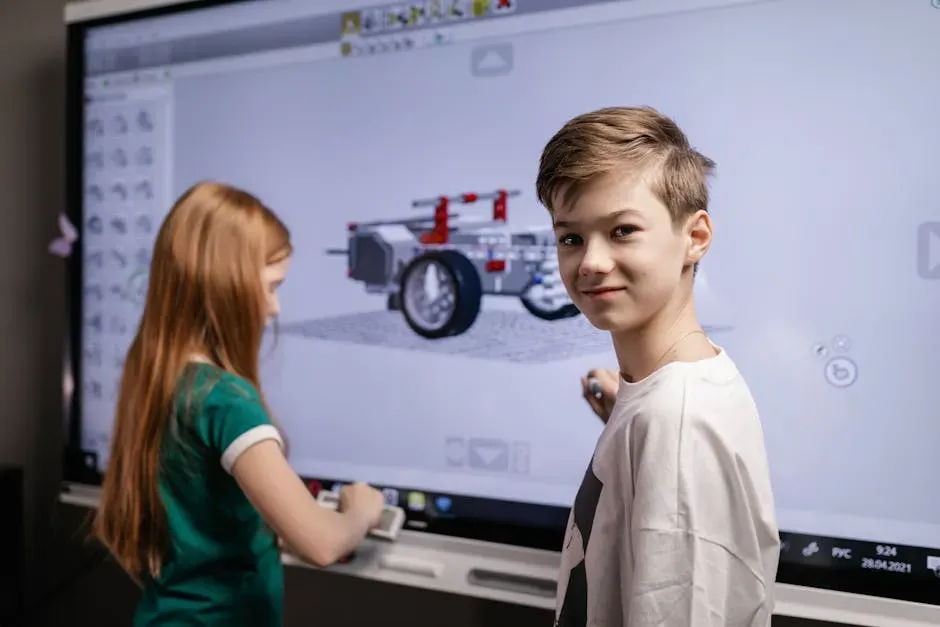
From AI-powered tutoring and automated administrative workflows to immersive career-connected learning and expanded cybersecurity frameworks, 2026 is poised to mark a transition from experimental adoption to system-wide integration. The hybrid model, a blend of in-person community and online flexibility, is becoming the new normal at institutions around the world. It’s not a compromise. Increasingly, it’s the preferred design.
Online education trends suggest that hybrid models will become the norm rather than the exception, with institutions blending in-person experiences with online tools to create dynamic, personalized, and scalable learning environments. The lecture hall isn’t disappearing. It’s evolving, becoming one tool among many rather than the default venue for all learning. Online education statistics also highlight a dramatic increase in professional development courses, bootcamps, and certificate programs aimed at reskilling the global workforce, and with the half-life of technical skills shrinking, ongoing education is no longer optional but essential.
Conclusion: The Biggest Classroom Ever Built

Education is in the middle of its most radical reinvention in centuries. The shift from lecture halls to online platforms isn’t just a logistical change. It’s a philosophical one, a recognition that learning doesn’t belong to any one building, schedule, or institution. It belongs to anyone with the curiosity to pursue it and, increasingly, the tools to access it.
The challenges are real: digital access gaps, quality concerns, motivation struggles, and the irreplaceable warmth of a great teacher in a room. None of those go away by adding an internet connection. Still, the trajectory is unmistakable. More people are learning more things in more flexible ways than at any point in human history. Whether you find that exciting or a little unsettling probably depends on how much you loved your old lecture hall. What do you think the future of education should look like? Share your thoughts in the comments.