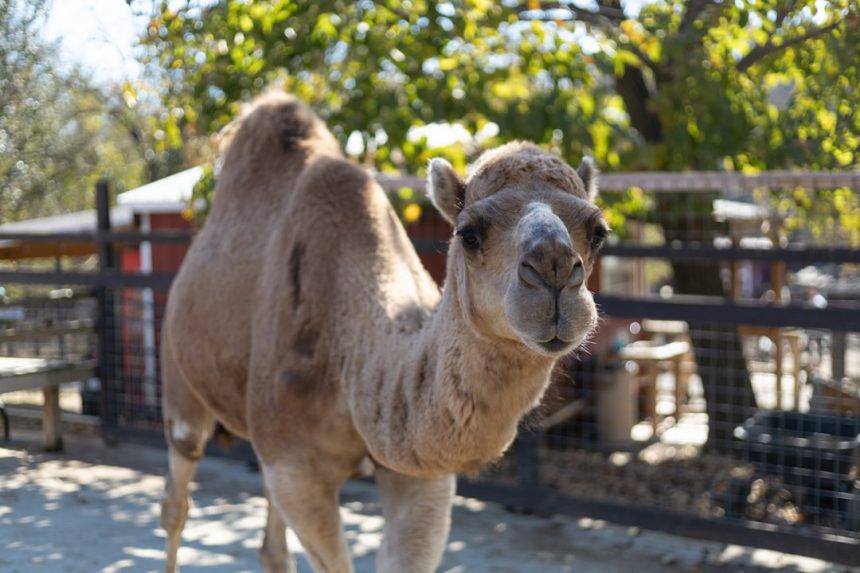


From Humble Beginnings to Valley Favorite (Image Credits: Unsplash)
Henderson – Nancy Rouas has operated Petting Zoo 2 U from her rural property for nearly 30 years, delivering joy to birthday parties, festivals and church events across the Las Vegas Valley. Her two dromedary camels, Moses and Abraham, have become local celebrities, drawing crowds at parks and senior centers with their gentle demeanor. Now, a classification dispute threatens to uproot them after a routine inspection escalated into a permit battle with city officials.[1][2]
From Humble Beginnings to Valley Favorite
Rouas launched Petting Zoo 2 U in 1997 with a handful of goats, chickens and rabbits. The mobile operation quickly expanded, transporting animals to schools, nativity scenes and community gatherings. Moses joined the fold in 2013 at six months old, standing today at 7 feet 4 inches tall after a journey from an Oklahoma seller. Abraham followed, completing the pair that now captivates visitors wherever they appear.[1][2]
Residents often spot the camels grazing peacefully on Rouas’ 1.5-acre Southeast Henderson lot. No neighbor complaints surfaced in the 13 years they resided there, underscoring their quiet integration into the community. Rouas releases pigeons for weddings and funerals alongside her petting zoo services, blending business with heartfelt traditions.[3]
The 2024 Inspection That Changed Everything
Trouble brewed in 2024 when a Henderson Animal Protection Services officer visited Rouas’ property. The officer deemed the camels exotic animals prohibited within city limits, aligning with U.S. Department of Agriculture guidelines the city follows. This marked a shift from years of uneventful operation, coinciding with a federal reclassification of camels.[2]
Rouas received a warning for exhibiting a camel without proper approvals, including a USDA exhibitor permit. City code bars wild or exotic animals – defined as warm-blooded, nondomesticated species found in the wild – unless owners secure special permissions. Camels, though not explicitly named, fall under this umbrella per officials.[1]
Partner offer

Domesticated Heritage Versus Modern Rules
Rouas contests the exotic label fiercely. “This is a domesticated species,” she argued, noting camels have coexisted with humans for millennia, providing labor, companionship and even biblical precedent. Unlike gorillas or giraffes, dromedaries hail from domestic U.S. farms with no wild populations, she emphasized.[1][4]
In October, Henderson City Council revised its animal code, incorporating feedback from Rouas to allow conditional use permits for mobile exhibitors and extra livestock in rural areas. Her application now seeks approval for the camels plus over 125 animals total, including 75 pigeons, 25 chickens, 12 goats, three cattle, eight horses, seven rabbits and three dogs. Officials review property suitability to ensure welfare standards.[2]
- 75 pigeons (released at events)
- 25 chickens
- 12 goats
- 3 head of cattle
- 8 horses
- 7 rabbits
- 3 dogs
- 2 camels (Moses and Abraham)
- Birds in enclosures
Community Mobilizes in Support
A petition launched March 18 urges the city to grant the permit, highlighting the camels’ issue-free tenure and community value. It surpassed 30,000 signatures by Thursday, spanning from Portugal to Pennsylvania. Locals like Steve Brincat affirm no complaints have ever arisen.[1][3]
Rouas anticipates a packed room at her April 16 Planning Commission hearing at 4 p.m. The city has collaborated without enforcement actions so far, but denial could force an appeal to council or relocation to unincorporated Clark County. She vows not to surrender her camels.[2]
Key Takeaways
- Rouas’ business thrived for 27 years without incident until the 2024 camel citation.
- Camels are community staples at events, with massive petition backing their stay.
- April 16 hearing could redefine local rules on domesticated livestock.
The saga underscores tensions between longstanding rural practices and evolving regulations aimed at animal welfare. As Henderson weighs tradition against code compliance, Moses and Abraham’s future hangs in the balance. What do you think – should camels count as domesticated in city limits? Share in the comments.
Partner offer
Planning a trip to Vegas?
Compare hotel rates and show tickets on VEGAS.com.