There is a specific kind of magic that only historical fiction can pull off. You open a book, and within a few pages you are no longer sitting in your living room. You are on a Mississippi river raft in 1840, or crouched in a wartime field hospital in Vietnam, or watching the walls of a medieval cathedral rise stone by stone. The best novels in this genre do not just teach you about the past. They make you live inside it. The historical fiction genre demonstrates a strong market presence, with readers and critics deeply engaging with a diverse array of titles, their success underscored by recognition in major literary awards and presence on best-of-the-year lists. The genre’s appeal lies in its ability to explore complex human experiences, social issues, and personal journeys against the backdrop of significant historical events. That pull is only getting stronger.
What Makes Historical Fiction Feel Genuinely Real


Great historical fiction feels real because the best authors immerse themselves in research. They dig through archives, read old letters, and study maps, clothing, and customs from the era they are writing about. This is not a light undertaking. It is months, sometimes years, of dedicated preparation before a single chapter is written. Authors of historical fiction often conduct extensive research to ensure accuracy in their portrayal of the time period, including details about social norms, cultural practices, political events, key figures, and technological advancements. However, they may also take creative liberties to fill in gaps or write entirely fictional storylines that complement the historical context.
Integrating real history into fiction writing is a powerful technique that adds depth, authenticity, and intrigue to a story. By weaving historical events, settings, and figures into a narrative, writers can create a rich tapestry that resonates with readers, offering them a window into the past while engaging them with compelling fictional elements. This blend of fact and fiction not only enhances the believability of the story but also immerses readers in a world that feels both real and fantastical. As the novelist E. L. Doctorow famously observed, “The historian will tell you what happened. The novelist will tell you what it felt like.” That emotional register is precisely where historical fiction earns its power.
The Women by Kristin Hannah: Vietnam Through a Female Lens


The Women by Kristin Hannah was the top-voted choice for the best historical fiction of 2024, receiving over 253,000 votes, highlighting a significant readership interest in war-themed narratives and strong female characters. The novel’s reach was extraordinary by any measure. The Women topped the New York Times bestseller lists when it was released in 2024, telling the story of a 20-year-old American woman who follows her brother to war in 1960s Vietnam.
The novel is an insightful meditation on courage, character, and women gone to war, introducing idealistic Army nurse Frances “Frankie” McGrath as she volunteers in Vietnam circa 1965. Incredibly, her life gets even more complicated when she returns to a dangerously divided America. The book shines a light on a topic not often focused on: the American women who served in Vietnam. In her author’s note, Hannah writes that the book “has been a true labour of love, years in the making.” The result is a novel that reads less like fiction and more like recovered memory.
James by Percival Everett: A Pulitzer-Winning Reconsideration of American History

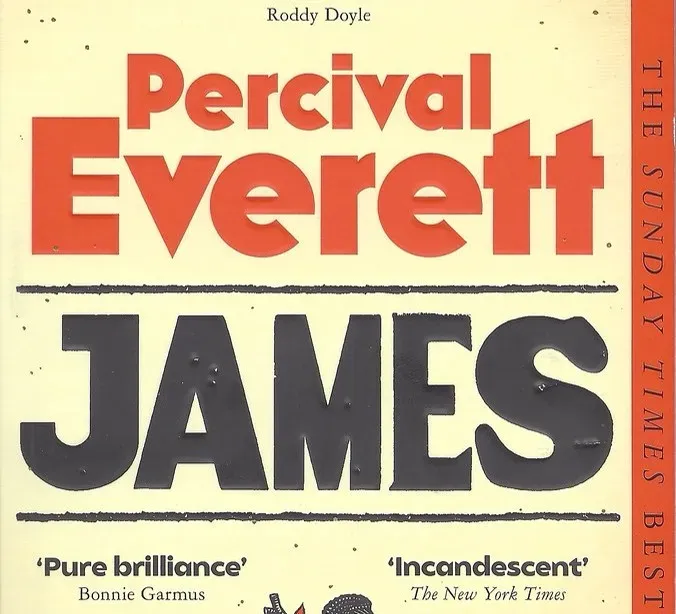
Percival Everett has been awarded the 2025 Pulitzer Prize for Fiction for his novel James, a bold and poignant reimagining of Mark Twain’s Adventures of Huckleberry Finn told from the perspective of Jim, the enslaved character. Published in March 2024 by Doubleday, James received a wave of national and international recognition, winning the National Book Award, the Kirkus Prize, and the Carnegie Medal for Excellence in Fiction. It was also a finalist for the Booker Prize and the PEN/Faulkner Award.
Unlike in Adventures of Huckleberry Finn, where Jim is depicted as simple and superstitious, Everett’s Jim is skeptical, deeply calculating, and secretly more literate and erudite than most of the white people around him. Indeed, Everett’s Jim is an ironic inversion of Twain’s, insofar as the near totality of Jim’s personality in Twain’s novel is revealed to be a self-preservationist act put on to avert white suspicion. Jim carefully performs the role expected of him by white society while finding his own covert ways to resist. In this Pulitzer Prize-winning novel, Percival Everett lays out a precise and painful depiction of the Antebellum South on the cusp of Civil War, shot through with his trademark dry humour and semantic flair.
The Walter Scott Prize and the Rise of Diverse Historical Voices


The judges of the Walter Scott Prize aim to highlight the very best new historical novels, and in 2024 they settled on a varied shortlist featuring a Trinidadian tragedy, a Vatican-based thriller, and a charming coming-of-age tale from 1960s Middle England. The award is one of the clearest indicators of where the genre is heading. In 2025, the six-book shortlist features historical novels set as widely apart as ancient Sicily, 16th-century England, and 20th-century Holland. Judge Katharine Grant talked through the selection.
Historical fiction remains strong, but the genre has evolved beyond traditional tales of war and romance. Readers are more interested in narratives that uncover hidden histories, especially those from marginalized groups, women, and people of color. Novels like The Nightingale and The Book Thief have set a new standard by blending personal stories with larger historical events. Historical fiction literary agents report an increase in demand for novels set in lesser-explored historical periods or featuring underrepresented voices, cultures, and perspectives. Authors bringing fresh, diverse approaches to historical storytelling often see improved opportunities for representation.
Multigenerational Epics That Span Centuries of Truth


Books like Pachinko by Min Jin Lee and Homegoing by Yaa Gyasi remain popular for their exploration of diaspora and legacy. These are novels that refuse to confine themselves to a single moment in history. They span generations and continents, building arguments about how the past echoes persistently into the present. Spanning four generations, Pachinko tells the story of a Korean family exiled in Japan, exploring issues of identity, love, loyalty, and survival during a time of war, occupation, and discrimination. Rich in historical context and emotional resonance, this novel sheds light on a less-explored cultural history with elegance and compassion.
Rather than focusing on grand historical events, authors are increasingly exploring the everyday lives of ordinary people. This is leading to more intimate and personal stories, with characters that feel real and relatable. That shift matters. When you follow a grandmother’s hands braiding her granddaughter’s hair in 1920s Korea, or watch a father board a ship he knows he may not return from, the machinery of history becomes human. Incorporating real history can introduce readers to lesser-known events or perspectives, enriching their understanding and appreciation of the past. It allows writers to explore various aspects of human nature and societal changes, creating a narrative that is both educational and entertaining.
What 2025 and 2026 Look Like for Historical Fiction


Historical fiction will see a surge in historical fantasy and speculative elements, with authors blending alternate history with magical realism. There will also be more emphasis on underrepresented parts of the world, particularly African, Indigenous, and Asian histories. These diverse perspectives will allow readers to engage with new and untold narratives, further enriching the genre. The pipeline of anticipated titles reflects exactly that ambition. The award-winning, bestselling author of Hamnet and The Marriage Portrait returns with a soaring historical novel set in Ireland in the years before and after the Great Hunger. Land is a novel about separation and reunion, tragedy and recovery, colonization and rebellion. It is a story of buried treasure, overlapping lives, ancient woodland, persistent ghosts, and how, when it comes to both land and history, nothing ever goes away.
Historical fiction remains a consistently popular genre, representing about 6 to 8 percent of adult fiction book sales in major publishing markets, with readers drawn by immersive settings and compelling storytelling rooted in authentic history. That figure, steady and reliable, speaks to a readership that keeps returning because it trusts the genre to deliver something no other form quite manages. Female authors are dominating international bestseller lists, contributing to strong fiction sales globally. The conversation about whose stories get told, and from whose perspective, continues to reshape the historical fiction landscape in ways that make the genre feel more alive than it has in decades. The best novels in this space do not merely recreate the past. They insist on it, stubbornly and beautifully, one honest page at a time.