Augustus Caesar – The Man Who Owned Rome
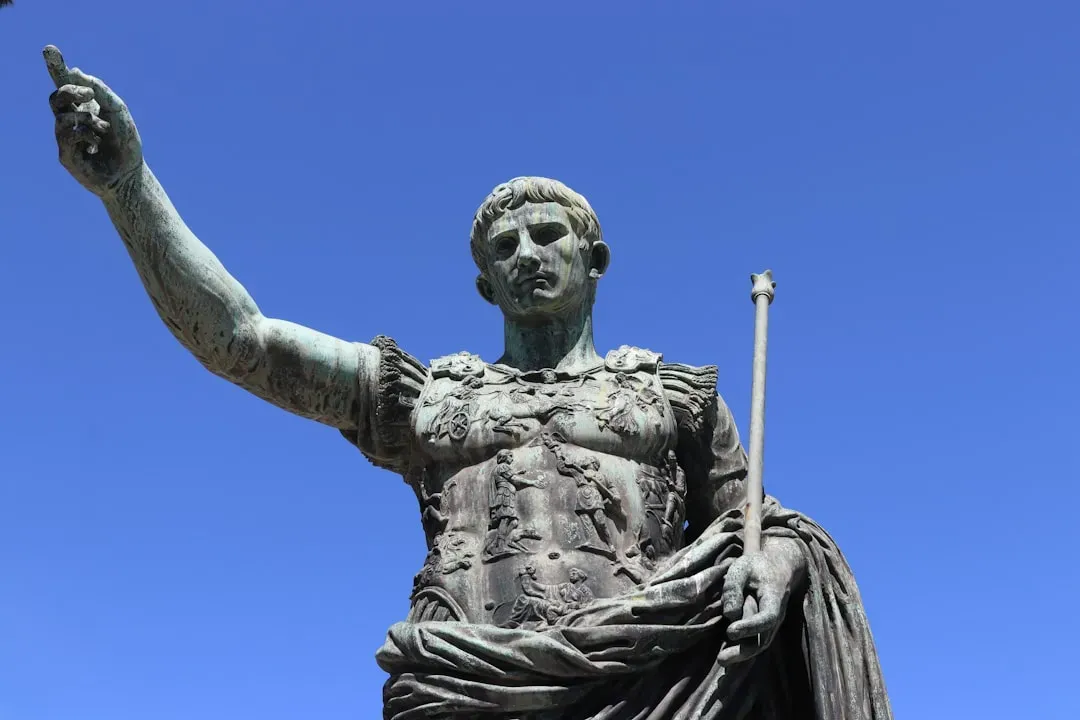
Imagine not just being wealthy but personally owning nearly one-fifth of your empire’s entire economy. Stanford professor Ian Morris claimed that Augustus was the sole owner of Egypt and was in charge of the Roman Empire which accounted for around twenty-five to thirty percent of the world’s economic output. That kind of economic control goes beyond what any modern billionaire could dream of.
His personal wealth was estimated to be worth 4.6 trillion dollars in today’s currency, making him one of the richest individuals in history. The wealth came not only from his inheritance from Julius Caesar but also through the spoils of war and the strategic annexation of Egypt, which gave Augustus direct control over Egypt’s abundant resources, turning the region into his personal estate. Here’s the thing: modern tycoons possess vast private wealth, but they don’t command taxation systems, entire state treasuries, or claim personal ownership of entire nations.
Economic researchers note that ancient leaders were far more proficient at extracting wealth from their society than modern elites, making them far more powerful economically, with pre-modern societies able to extract nearly seventy-six percent of the maximum amount of wealth before people slipped below subsistence levels. Augustus embodied this extraction power at its peak.
Akbar the Great – Master of Global GDP

Medieval India’s wealth concentration reached staggering heights under Mughal Emperor Akbar, who ruled from 1556 to 1605. According to historical records, Akbar once controlled a mind-boggling twenty-five percent, or one-fourth of the total global GDP. Think about that for a moment: a single ruler commanding a quarter of the world’s entire economic output.
India under Mughal rule produced about twenty-eight percent of the world’s industrial output up until the eighteenth century with significant exports in textiles, shipbuilding, and steel, driving a strong export-driven economy. The Mughal treasury swelled under Akbar’s leadership, benefiting from strong trade relations and reforms in the tax system, with his reform of the tax regime ensuring a continuous influx of wealth. Akbar earned an annual revenue of some £17.5 million, and at that time India’s share of global GDP had been relatively stable at twenty-five percent for around two hundred years.
In today’s terms, Emperor Akbar’s wealth would be equal to a staggering twenty-one trillion dollars, though many historians acknowledge such figures remain speculative. Some reports estimate his wealth adjusted for inflation would be over twenty-one trillion dollars, but the majority agree to leave the legendary ruler’s net worth at impossible to calculate.
Why Comparing Ancient and Modern Wealth Is Nearly Impossible
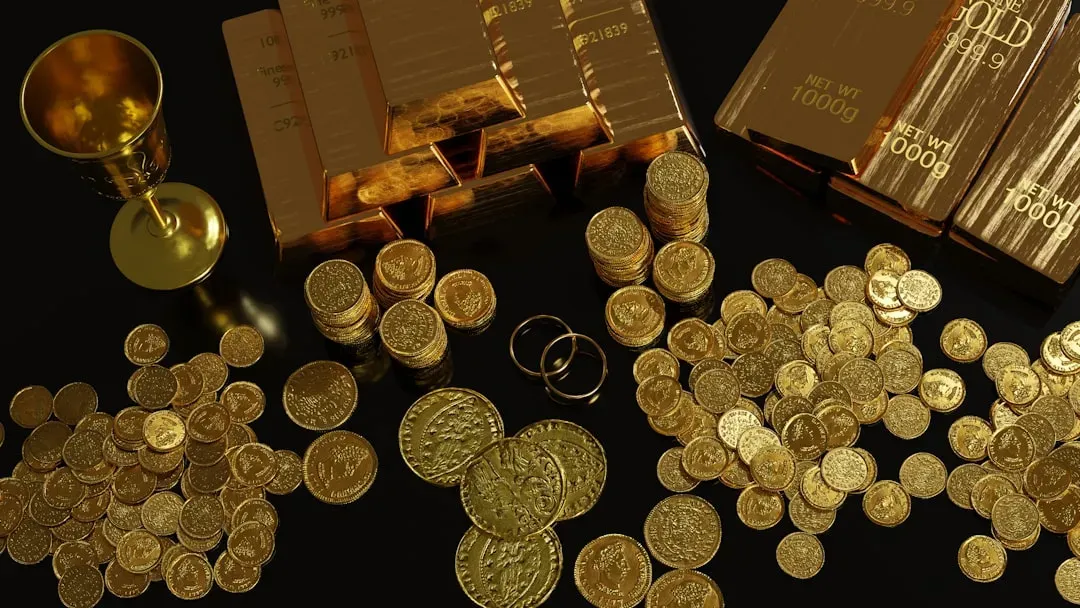
When comparing wealth across history, we run into enormous challenges, and it’s not just a matter of adjusting for inflation since coinage and currency is a relatively recent invention, with much of pre-modern wealth held in stuff and commodity prices having drastically fluctuated across history. How do you compare a Roman emperor who owned gold mines, controlled armies, and commanded taxation systems to someone whose wealth exists in stock valuations?
For this reason, the most accurate list of the richest people to ever live based on economic power would likely include almost exclusively pre-modern rulers. Modern billionaires like Musk derive their fortunes from companies whose values shift daily based on market sentiment. When we speak of wealth, we’re generally using money as a substitute for economic power, and power is both relative and sensitive to time and place, with the typical American potentially having access to more resources than a Roman emperor but none having the same kind of economic influence that can reshape societies.
Honestly, trying to create precise dollar comparisons between medieval gold reserves and twenty-first-century tech stocks is an exercise in creative accounting. Historians use share of GDP, purchasing power parity, and resource control as proxies, but each method yields wildly different results. It’s hard to say for sure, but the methodology matters as much as the numbers themselves.
Tsar Nicholas II – When State and Personal Wealth Blur
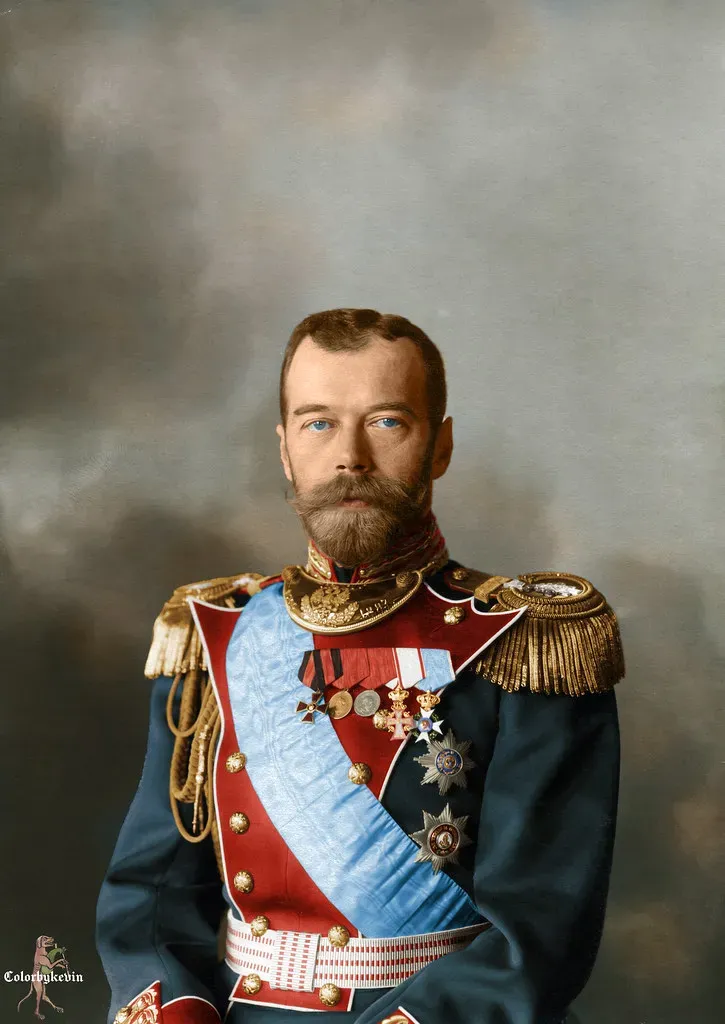
Nicholas Romanov ruled over the Russian Empire from 1894 to 1917, during which time he amassed a huge fortune, with a 1916 estimate of the Tsar’s fortune translating to four hundred eight billion dollars in today’s money. Yet separating his personal assets from state resources presents a challenge for economic historians.
Nicholas II, through his capacity as Emperor of All Russia, amassed vast personal wealth prior to his downfall, with modern estimates placing his fortune in 1916 in the vicinity of three hundred billion in 2018 terms. The Russian royal family controlled enormous land holdings, mineral rights, industrial enterprises, and the imperial treasury itself. Where does the state end and personal fortune begin? This ambiguity plagues attempts to rank historical wealth accurately.
The tragic end of the Romanov family in 1918 following the Bolshevik Revolution serves as a reminder that concentrated wealth and political power can vanish overnight, regardless of the numbers attached to it.
Gold-Based Empires and Economic Dominance

There’s a pattern among history’s wealthiest: control of precious metal production or strategic trade routes. Mali sat on some of the world’s largest gold deposits, and Musa controlled nearly half of the global gold supply during his reign. This gave rulers like Mansa Musa disproportionate economic power compared to modern fiat-currency economies.
Gold’s role as both commodity and currency created unique wealth dynamics. When a single ruler controlled major gold-producing regions, they essentially controlled monetary supply for vast trading networks. Modern central banks attempt similar influence through interest rates and money printing, but no individual possesses that kind of direct resource control today.
Under Mansa Musa’s rule, the Mali Empire expanded its borders and, through the use of taxes on mined salt and gold, added significantly to its massive reserves of gold. Salt trade added another dimension since salt was nearly as valuable as gold in certain regions and eras. Controlling both meant controlling life’s essentials and luxury simultaneously.
The Methodological Nightmare of Historical Wealth Rankings
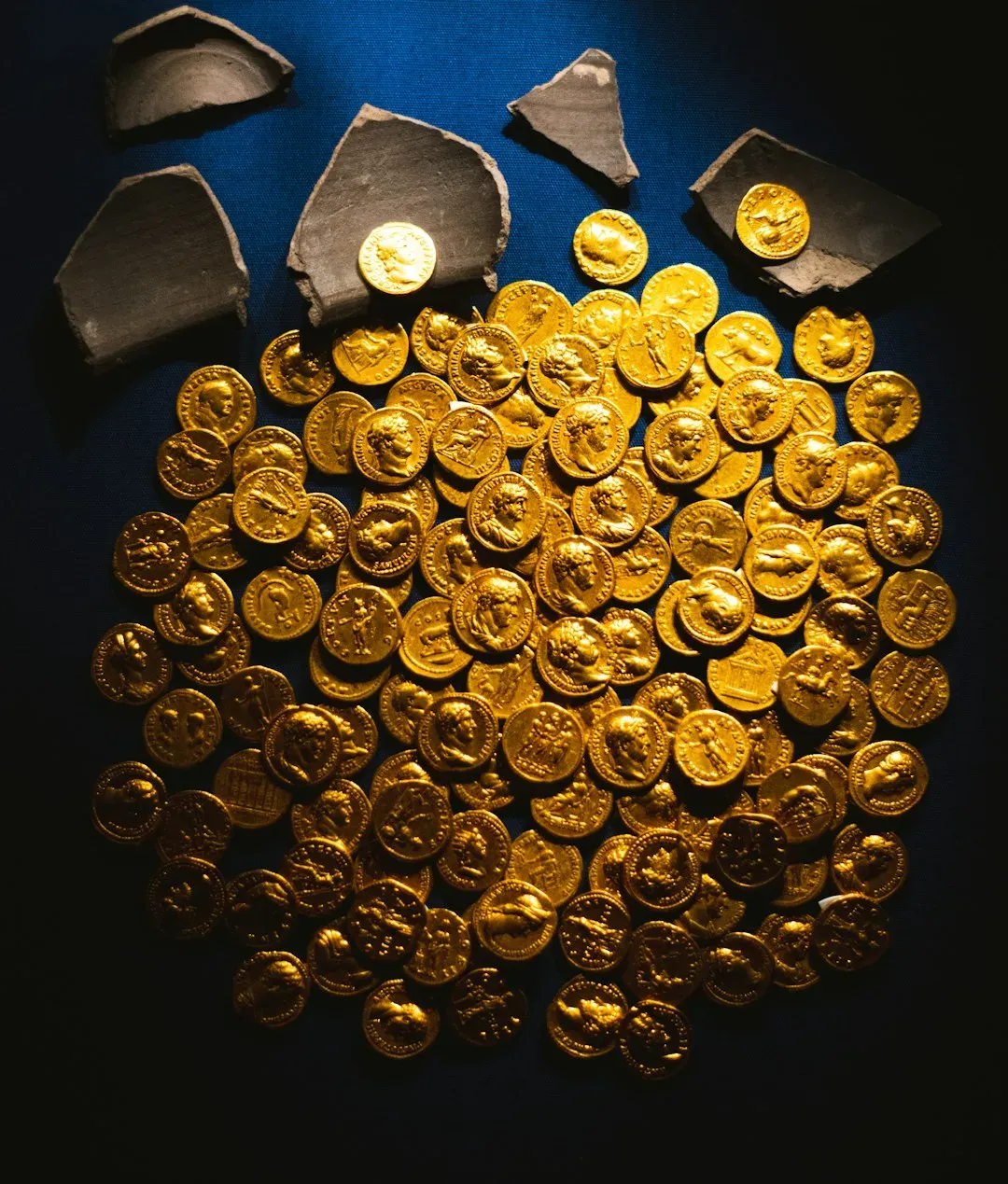
Records kept from ancient eras are scarce, exaggerated, or based on legends and oral histories, and characters like King Solomon or Mansa Musa are described as immeasurably rich, so trying to put their wealth in modern context is fun but certainly not guaranteed to be historically accurate. Economists and historians face enormous obstacles when ranking historical fortunes.
Wealth and conversion rates can be approached in different ways, and someone like Crassus in the Roman Republic who had a peak fortune of two hundred million sesterces could be worth anywhere from two hundred million to 169.8 billion dollars depending on how calculations are done. Do you measure by gold weight, by purchasing power for basic goods, by share of contemporary GDP, or by comparative economic influence?
Each methodology produces dramatically different results. A loaf of bread cost vastly different amounts of labor in different eras. The standard of living has changed so radically that comparisons become almost philosophical rather than mathematical. Let’s be real: these rankings are educated guesses dressed up in scholarly language.
Why Modern Billionaires Lack True Historical Comparability
Here’s where the comparison breaks down entirely. A truly correct international comparison would require knowing each person’s wealth as a percentage of global GDP, and old global economic data is even harder to come by. Modern billionaires operate within democratic systems with property rights, tax obligations, and legal constraints that didn’t exist for ancient monarchs.
Elon Musk can’t unilaterally declare war, levy taxes on millions of subjects, or claim divine right to rule. His wealth exists on paper through stock ownership in publicly traded companies. Musk does not receive a salary from Tesla and agreed with the board in 2018 to a compensation plan that ties his personal earnings to Tesla’s valuation and revenue, with the deal stipulating that he only received compensation if Tesla reached certain market values. His fortune depends on market confidence and shareholder approval.
Ancient rulers faced no such constraints. They were the market, the state, and often considered semi-divine figures whose word was law. That fundamental difference in power structure makes true comparison problematic.
The Power Musk Can’t Buy
Despite his immense wealth, Musk lacks the sovereign authority that historical rulers wielded. He can’t conscript armies, impose tariffs, or execute rivals without legal consequences. Around seventy-five percent of Musk’s wealth was derived from Tesla stock in November 2020, a proportion that fell to about thirty-seven percent as of December 2022 after selling nearly forty billion dollars in company shares. His fortune fluctuates with market sentiment.
Ancient monarchs didn’t worry about quarterly earnings reports or shareholder lawsuits. Their wealth came from control over land, resources, and people rather than innovation or market disruption. When Augustus wanted something, he took it through military conquest or imperial decree. Musk must negotiate, persuade, and operate within legal frameworks.
This distinction matters enormously when asking who was truly “richer.” If wealth means the ability to reshape the world according to your vision without constraint, no modern billionaire approaches the power of history’s greatest rulers. Market volatility alone demonstrates this difference – Musk’s net worth can drop by tens of billions in a single day based on stock price movements.
The Verdict on Historical Wealth
So By almost any historical measure, several dozen pre-modern rulers commanded greater economic power and controlled larger shares of global wealth. Mansa Musa, Augustus Caesar, and Akbar the Great certainly wielded influence and resources that dwarf modern fortunes when properly contextualized.
The real answer depends on how we define “rich.” In absolute purchasing power for modern goods, today’s middle-class citizens enjoy advantages unavailable to ancient kings. But in terms of economic dominance, resource control, and unconstrained power, history’s wealthiest rulers remain unmatched. The average American burns through something like 230,000 kilocalories per day, nearly eight times Romans and twenty-three times ancient agricultural ancestors, making us all rich in that sense.
The comparison ultimately reveals more about how we think about wealth and power than about actual dollar amounts. Musk’s fortune is historically unprecedented in numerical terms yet fundamentally constrained by modern institutions. Ancient rulers possessed less in material goods but infinitely more in sovereignty and control. What’s more valuable: six hundred billion dollars you can’t freely spend, or absolute dominion over an empire representing a quarter of global GDP? The question itself may be unanswerable, which perhaps tells us everything we need to know about comparing wealth across millennia. What do you think defines true wealth – absolute numbers or absolute power?