There’s something beautifully electric about science fiction. It doesn’t just entertain – it challenges us, expands our understanding, and sometimes even predicts the future. With the genre experiencing explosive growth in recent years, readers are spoilt for choice. Sales of science fiction and fantasy books skyrocketed in 2024, with the value of the market surging by 41.3% compared to the previous year. In the UK, the Science-Fiction & Fantasy category generated nearly £25 million more in value sales compared to 2023, proving that the appetite for these immersive stories has never been stronger.
Whether you’re drawn to hard science that makes your brain work overtime or sweeping space operas that make you forget your own reality, the books on this list deliver transformative reading experiences. Let’s dive into eleven novels that’ll catapult your imagination beyond Earth’s atmosphere.
Dune by Frank Herbert

Let’s be honest, any conversation about transformative sci-fi begins and ends with this epic. Dune is regarded as one of the greatest science fiction novels and is one of the most popular, having sold almost 20 million copies and been translated into more than 20 languages. Set on the desert planet Arrakis, Herbert constructed a universe so intricate, so politically charged, that it feels more like history than fiction. The story follows Paul Atreides, a young nobleman thrust into a cosmic power struggle over the galaxy’s most valuable resource – the spice melange.
It is considered one of the most influential science fiction novels of all time, with numerous modern science fiction works owing their existence to Dune. What makes this book genuinely mind-blowing isn’t just the sandworms or the mystical powers – it’s how Herbert weaves ecology, religion, politics, and philosophy into something that feels urgently relevant. Reading Dune is like stepping into another civilization entirely. The world-building is so thorough, so considered, that you’ll find yourself thinking about desert survival tactics weeks after you’ve turned the final page.
Project Hail Mary by Andy Weir
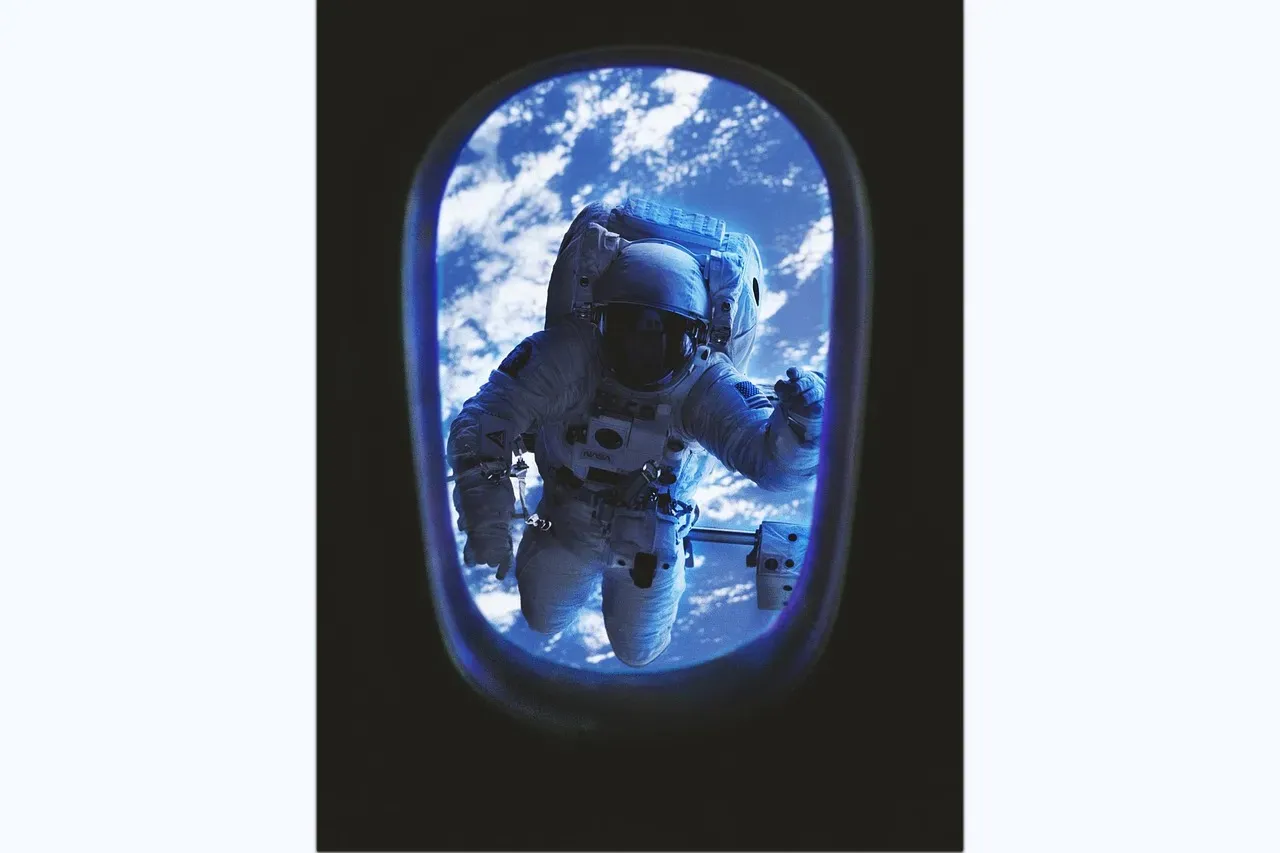
If you loved The Martian, buckle up. Andy Weir’s old-school hard sci-fi novel Project Hail Mary occupies the top spot on Goodreads’ most popular sci-fi novels of recent years, and honestly, it deserves every bit of praise. Ryland Grace wakes up alone on a spacecraft millions of miles from home with no memory of who he is or why he’s there. Gradually, he pieces together a terrifying truth: he’s humanity’s last hope to prevent extinction.
Project Hail Mary received generally positive reviews, and it was a finalist for the 2022 Hugo Award for Best Novel. What sets this apart from typical save-the-world stories is the friendship at its heart and Weir’s genius for making complex science feel like the most thrilling adventure imaginable. It’s got humour, heart, and enough scientific problem-solving to make your neurons fire in ways you didn’t expect. This book is proof that science fiction can be intellectually rigorous and emotionally devastating at the same time.
The Three-Body Problem by Cixin Liu
Sometimes a book arrives that fundamentally shifts how you think about humanity’s place in the universe. This is that book. Chinese author Cixin Liu crafted something truly unique – a first-contact story that begins during China’s Cultural Revolution and spirals into mind-bending territory involving alien civilizations, virtual reality, and physics that’ll make you question everything.
The novel won the Hugo Award and introduced Western readers to Chinese science fiction in a massive way. Liu doesn’t hold your hand through the complex scientific concepts; he trusts you to keep up. The result is a reading experience that feels genuinely alien, genuinely challenging, and genuinely unlike anything else on your shelf. It asks uncomfortable questions about whether humanity deserves to survive, and the answers it proposes are far from comforting.
The Left Hand of Darkness by Ursula K. Le Guin
Here’s the thing about Le Guin – she could build worlds that felt lived-in and cultures that felt authentic in ways that most writers can only dream about. This 1969 masterpiece remains staggeringly relevant because it explores gender, identity, and what it means to be human through the lens of an ice-bound planet called Gethen, whose inhabitants are ambisexual.
An envoy from Earth arrives to convince Gethen to join an interstellar collective, navigating political intrigue and brutal landscapes while grappling with a society that fundamentally challenges his assumptions about gender. Le Guin’s prose is elegant, her world-building meticulous, and her interrogation of human nature unrelenting. This isn’t action-packed space opera – it’s thoughtful, literary science fiction that transports you intellectually as much as imaginatively.
Neuromancer by William Gibson

If you want to understand where The Matrix, cyberpunk aesthetics, and basically every hacker story came from, start here. Gibson coined the term “cyberspace” in this 1984 novel, imagining a future of corporate espionage, artificial intelligence, and digital consciousness that felt wildly futuristic then and eerily prescient now.
Case is a washed-up computer hacker given one last chance at redemption by a mysterious employer. What follows is a neon-soaked journey through virtual reality, body modification, and digital heists. Gibson’s writing style is dense, atmospheric, and absolutely mesmerizing. Reading Neuromancer feels like jacking into the matrix itself – disorienting at first, then utterly immersive. It’s the book that launched a thousand imitators but remains unmatched in its visionary scope.
Partner offer
Hyperion by Dan Simmons
Think of this as The Canterbury Tales meets space opera, except far stranger and more ambitious. Simmons structures the novel around seven pilgrims travelling to the distant world of Hyperion, each telling their story of why they’ve been chosen for this potentially suicidal journey. Each tale is written in a different style, from detective noir to military thriller to tragic romance.
What emerges is a mosaic of human experience set against a backdrop of galactic empires, time-travelling threats, and existential dread. The Shrike – a mysterious, virtually unstoppable creature – lurks at the story’s edges, part nightmare, part myth. Hyperion won the Hugo Award and spawned a beloved series, but this first book stands alone as a towering achievement in speculative fiction. It’s dense, literary, and rewards patience with moments of genuine transcendence.
The Expanse Series by James S.A. Corey
If you want a series that captures the gritty reality of space colonization while delivering political intrigue and heart-pounding action, look no further. The Expanse begins with Leviathan Wakes, introducing us to a future where humanity has colonized the solar system, creating distinct cultures on Earth, Mars, and the asteroid belt.
What starts as a missing-person case explodes into a conspiracy that threatens all of human civilization. Corey (actually a pen name for collaborators Daniel Abraham and Ty Franck) understands that space is vast, hostile, and unforgiving. The physics feel real, the politics feel lived-in, and the characters – from cynical ship captain Holden to hardboiled detective Miller – feel genuinely three-dimensional. The series spans nine books, and yes, it’s worth committing to the whole journey.
Station Eleven by Emily St. John Mandel
Reading this post-apocalyptic novel during or after the pandemic hits differently, I’ll tell you that. A flu pandemic wipes out most of humanity, and twenty years later, a travelling Shakespearean theatre troupe moves between the small settlements that remain. Mandel weaves together multiple timelines, showing us the world before, during, and after the collapse.
What makes Station Eleven transcendent is its meditation on art, memory, and what we choose to preserve when civilization crumbles. It’s about connection, about beauty, about why a travelling symphony matters in a world without electricity. The prose is gorgeous, the structure intricate, and the emotional payoff devastating in the best possible way. This is science fiction as literary fiction, proving the genres were never as separate as some people claimed.
Ancillary Justice by Ann Leckie
Here’s a book that’ll make your brain work in unexpected ways from page one. The protagonist is Breq, the sole surviving fragment of a starship’s artificial intelligence, now trapped in a single human body and hell-bent on revenge. Oh, and the entire novel uses female pronouns for every character, regardless of gender, because that’s how Breq’s culture works.
Leckie won basically every major award for this debut – Hugo, Nebula, Arthur C. Clarke – and it’s easy to see why. She created a space opera that interrogates colonialism, identity, and consciousness while delivering a propulsive revenge thriller. The world-building is staggering, from the teacup obsessed Radch empire to the mechanics of how a distributed consciousness experiences reality. It’s ambitious, intelligent, and unlike anything you’ve read before.
Foundation by Isaac Asimov
Let’s talk about one of the OGs. Asimov’s Foundation series, beginning with this 1951 novel, introduced the concept of psychohistory – a mathematical science that can predict the future of large populations. When mathematician Hari Seldon foresees the collapse of the Galactic Empire and thirty thousand years of barbarism, he sets in motion a plan to preserve knowledge and shorten the dark age to a mere millennium.
What follows is a multigenerational saga about the Foundation’s struggles to survive in a fragmenting galaxy. Asimov’s genius lies in scope; he thinks in terms of centuries and civilizations rather than individual heroes. The ideas here influenced countless works, from Dune to Star Wars. Reading Foundation is like watching history unfold in fast-forward, and the sheer ambition of Asimov’s vision remains breathtaking over seven decades later.
Children of Time by Adrian Tchaikovsky

Want your mind properly blown? Try a book where the heroes are sentient, rapidly evolving spiders. Humanity has destroyed Earth and sent out ark ships to find new homes. One such world was terraformed and seeded with monkeys engineered to evolve intelligence, guided by a nanovirus. Except the monkeys died, and the spiders got the virus instead.
Tchaikovsky brilliantly alternates between the desperate humans aboard a deteriorating ark ship and the spider civilization developing over countless generations. You’ll find yourself rooting for the spiders, marveling at their alien yet comprehensible culture, their wars and scientific breakthroughs and philosophical debates. It’s a stunning examination of what intelligence means, how civilizations develop, and what happens when two radically different species must share one world. This won the Arthur C. Clarke Award, and every page shows why.
Partner offer
Planning a trip to Vegas?
Compare hotel rates and show tickets on VEGAS.com.