I have enough solid research now to write a comprehensive, well-cited article.
The problem streaming platforms are actually solving
Streaming services face a specific bottleneck: too much content, too little time, and a viewer who decides fast. Studies indicate that if users don’t find something interesting within 90 seconds, they tend to lose interest. That’s an incredibly narrow window to convince someone to press play, especially when a catalog holds thousands of titles competing for the same handful of seconds of attention.
A thumbnail is often the only piece of information a viewer processes before scrolling past. The Netflix personalized recommendation system helps members discover great content, and that doesn’t just mean recommending the right titles, but also displaying the right imagery that captures something compelling to the viewer. Get the image wrong and a great show can sit ignored in a catalog row for months.
Why static movie posters stopped being good enough
For years, streaming platforms simply used whatever poster or DVD cover art a studio’s marketing department produced. Up until around 2015, there was a very basic way Netflix primarily advertised programming via thumbnail, using movie posters and DVD cover art, but using officially sanctioned art wasn’t necessarily as helpful as it might seem. Billboard art and grid layouts are different problems entirely.
The original marketing art had never been designed with a phone screen or a scrolling grid in mind. Some images were intended for roadside billboards where they don’t live alongside other titles, while other images were sourced from DVD cover art which doesn’t work well in a grid layout across multiple form factors like TV and mobile. That mismatch pushed engineers toward building something purpose made for how people actually browse now.
From batch data to real time learning

The earliest personalization systems worked in slow motion by today’s standards. Originally, Netflix created algorithms primarily through batch data, looking at batches of users’ viewing habits, learning what they could over a period of time, and then building an algorithm around the data. That approach worked, but it lagged behind what a viewer was doing right now.
The shift toward faster, more responsive systems changed the pace considerably. More recently, Netflix began utilizing online machine learning known as contextual bandits, which works more actively and consistently by using both previous data and what a viewer is looking at in more or less real time. That’s the reason a show you finished last week might already be wearing new artwork the next time it appears in your queue.
What contextual bandits actually are
The term sounds odd out of context, but it describes a very specific kind of decision making system. The problem is framed as online learning with contextual multi-arm bandits, where the context could be based on profile attributes like geo-localization and previous plays, the device, time, and other factors that might affect the optimal image to choose in each session. Each viewing session becomes a small experiment feeding back into the model.
This approach replaced an earlier, simpler method. Rather than waiting to collect a full batch of data, train a model, and run an A/B test, engineers moved to contextual bandits after previous multi-armed bandit algorithms had found the single best artwork for a title that earned the most plays overall, when what they really wanted was the best artwork for each individual member. The distinction between one winning image and many personalized winners turned out to matter enormously.
Breaking every frame down into data
Before any image can be personalized, the underlying video has to be understood by a machine at the frame level. In a process called Frame Annotation, Netflix tags each frame based on face detection, identifying which characters are featured, whether they’re a star or supporting player, and what emotion they’re conveying, along with camera shot detection and motion estimation. This turns raw footage into structured information the recommendation system can actually reason about.
This automated tagging is what makes personalization possible at catalog scale. Manually selecting frames for thousands of titles across dozens of profile segments would be impossible for any human team, however large. Computer vision handles the grunt work of scanning footage, while the ranking system decides which tagged frame gets shown to which viewer.
The psychology hiding inside the image choice

The frames chosen aren’t picked at random from the pool of tagged options. Recognizable faces, strong emotion, and visual contrast all tend to perform better in testing. Familiarity bias means a thumbnail containing an actor you’ve seen in other shows makes you more likely to click, emotional expressions like laughter or fear tend to perform better, and bold colors with asymmetrical composition capture attention. None of this is guesswork; it’s measured against real click and watch behavior at scale.
The system also tracks smaller signals than a full click. Netflix internal teams continuously study how micro-decisions like hovering on a thumbnail translate to engagement metrics such as watch time or completion. A half second hover can carry almost as much predictive weight as an actual play in some models.
Same show, completely different cover depending on who’s watching
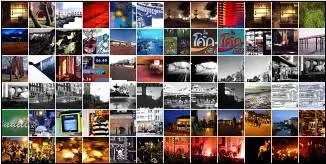
The most visible proof of this system is watching how one title splits across different viewer profiles. Someone who watched a lot of romantic dramas might see a thumbnail of a couple embracing, while someone who watches crime thrillers sees the same show represented by a dark, gritty image of a police chase. Same title, same runtime, same cast, entirely different pitch.
This isn’t limited to obvious genre splits either. Users who prefer romantic content may like the artwork emphasizing emotional warmth between the characters, while those who prefer action thrillers may find high-intensity action scenes more compelling for the exact same production. A prestige drama with a large ensemble cast might rotate through a dozen different lead actor combinations depending on who’s browsing.
The scale most people don’t realize is involved

This isn’t a small side feature running on spare server capacity. At peak, over 20 million personalized image requests per second need to be handled with low latency. That number reflects a system operating essentially in real time across a massive, constantly shifting global audience.
The underlying subscriber base makes the scale even more apparent. Artwork personalization has been deployed on over 130 million users and has proved effective for the discovery of lesser known titles. Smaller shows without built in name recognition benefit disproportionately, since the right image can do the work a marketing campaign might otherwise need to do.
Where large language models are entering the picture

The technology behind this system is still actively evolving heading into 2026. Researchers have started testing whether large language models can outperform the existing production system. Experiments with Llama 3.1 8B, post trained with supervised fine tuning and reasoning distillation from a larger model, achieved performance improvements of five percent and three percent respectively on a held out user set compared to the existing production model. That’s a meaningful jump for a system already operating at this level of refinement.
The ambition behind this research extends past thumbnails alone. These results suggest a promising path for using LLMs in fine grained, personalized content recommendations covering artwork, synopsis, and trailers, since different components of the user experience beyond the title itself can be personalized. A synopsis or trailer selected the same way an image currently is would extend this logic across nearly everything a viewer sees before pressing play.
Why this matters beyond one streaming app
The techniques pioneered around thumbnails have implications well past a single company’s homepage. Roughly 75 to 80 percent of everything consumed on the platform comes from recommendations, and pretty much everything on the homepage is personalized, including the item at the top of the page, the order of the rows, and the items within each row. The thumbnail is just the most visually obvious piece of a much larger personalization machine.
Other platforms have taken note, and similar logic increasingly shows up on music apps, shopping sites, and social feeds. Once a company can measure engagement down to a hover or a half second pause, the incentive to personalize every visible pixel becomes hard to resist. Whether that’s a net positive for viewers or simply a more efficient way to hold attention is a fair question, and one worth keeping in mind the next time two people compare Netflix screens and see nothing alike.
Partner offer
Planning a trip to Vegas?
Compare hotel rates and show tickets on VEGAS.com.
Partner offer