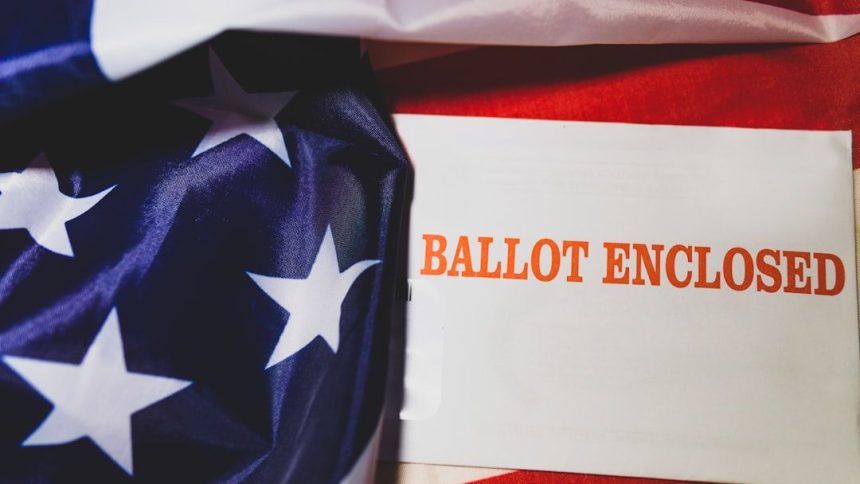

The most important election is the one most Americans skip – Image for illustrative purposes only (Image credits: Unsplash)
Recent primary contests have shown how a small slice of the electorate can steer the direction of the Republican Party and, by extension, the balance of power in Washington. With midterm elections approaching, the outcomes in several states underscore a long-standing pattern: most congressional seats are effectively decided long before November. This dynamic leaves broader voter preferences with limited influence once general election campaigns begin.
Trump-Backed Candidates Secure Key Victories
In Indiana, challengers supported by the president defeated sitting Republican state senators who had resisted efforts to redraw electoral maps. Louisiana delivered a clear signal when Sen. Bill Cassidy, who voted to convict the president during his second impeachment trial, lost to a candidate aligned with the administration. Kentucky produced another result when Rep. Thomas Massie, an eight-term lawmaker known for releasing Epstein files and questioning certain foreign policy moves, fell to political newcomer Ed Gallrein.
These results occurred even as a New York Times/Siena poll placed the president’s approval rating at 37 percent, a low point in his second term. The pattern illustrates how core supporters within one party can sustain influence despite wider national sentiment.
Low Turnout Shapes Who Picks the Nominees
Only about one in five eligible voters participates in midterm primaries. Those who do show up tend to be older, wealthier, and more consistently partisan than the general population. This narrower electorate gives greater weight to strongly held views at the edges of each party.
Partner offer
Three-quarters of Republicans and Republican-leaning independents continue to approve of the president’s performance, according to the same poll. That loyalty helps explain why candidates carrying his endorsement have performed strongly even when overall popularity has declined.
Safe Districts Make November Votes Less Decisive
Decades of gerrymandering and residential sorting have produced a House in which just 18 of 435 seats qualify as true toss-ups, according to the Cook Political Report. In the remaining districts, the winner of the dominant party’s primary almost always prevails in the general election.
Political reformer Katherine Gehl has described the situation plainly: most November elections have become largely symbolic because the real selection happens earlier. The result is a system in which a modest number of primary participants effectively choose the lawmakers who represent the vast majority of Americans.
Reform Proposals Seek Wider Participation
States including Nevada, California, Washington, and Alaska have moved toward nonpartisan primary systems in which all candidates appear on a single ballot. Top finishers advance to the general election, sometimes with ranked-choice voting added to encourage broader appeal. Maine and New York City have adopted ranked-choice voting for certain contests as well.
Advocates argue these changes could reduce the pull of the most partisan voters and give independent-minded candidates a better chance. Whether such systems would have altered recent outcomes in Louisiana or Indiana remains uncertain, yet the experiments continue in several states.
Partner offer
Planning a trip to Vegas?
Compare hotel rates and show tickets on VEGAS.com.