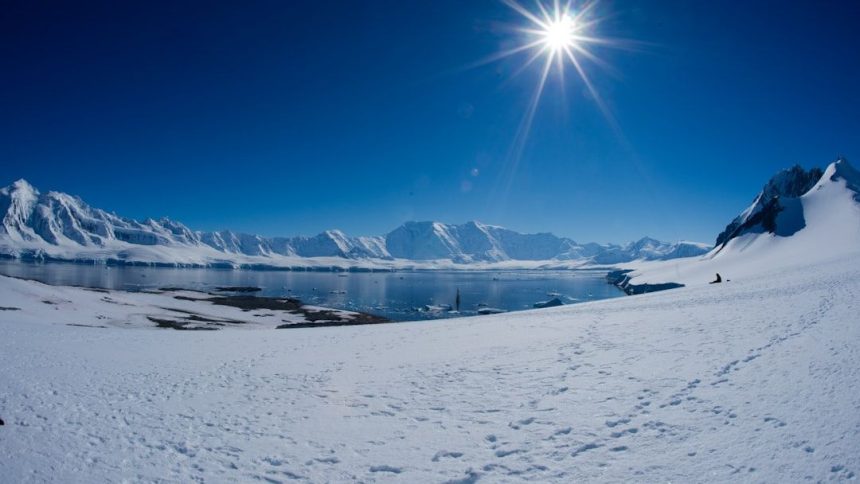


Dissecting the Polar Vortex Breakdown (Image Credits: Unsplash)
East Antarctica endured its most severe winter heatwave on record during July and August 2024, with surface air temperatures in Dronning Maud Land surpassing seasonal averages by more than 9 degrees Celsius for 17 straight days. Scientists pinpointed a weakened stratospheric polar vortex as the primary trigger, responsible for about half the warming through enhanced heat and moisture transport from lower latitudes. Anthropogenic climate change amplified the event by roughly 0.7 degrees Celsius and more than doubled its probability in today’s climate, according to a new multi-model analysis. Such findings from the past week’s research underscore how human influence now permeates even the planet’s coldest frontiers.
Dissecting the Polar Vortex Breakdown
Researchers employed a sophisticated framework blending regional climate modeling, circulation analogues, and large-ensemble probabilistic methods to unpack the 2024 event. The polar vortex’s pronounced weakening spawned a high-pressure anomaly that propelled warm air equatorward, accounting for the bulk of the observed temperature spike. Models across methods consistently showed human-induced warming exacerbating the heatwave’s intensity.
Projections paint a stark future trajectory. In a natural climate absent human interference, events like this occurred with rarity. Current conditions elevate the odds to two or three times higher, climbing to about sixfold under moderate emissions and as much as 26 times by 2100 with high emissions. These dynamics threaten ice shelf integrity and complicate forecasts for Antarctic extremes.
Arctic Melt Season Hits a Volatile Plateau
The Arctic sea ice melt season, a critical barometer of regional climate shifts, lengthened by around 40 days since 1979, largely from delayed autumn freeze-up. Yet since 2010, its duration has held steady near 108 days, swinging wildly within plus or minus 11 days rather than trending longer. This stabilization follows the sharp decline of multi-year ice between 2000 and 2009, which drove the biggest melt extension of plus 25 days in that decade.
Post-2010 changes proved minimal, with freeze onset shifting just two days later. Scientists interpret this as evidence of altered Arctic conditions under anthropogenic forcing: a thinner ice pack now reacts sharply to external pressures, introducing high variability. Decadal cycles may modulate these patterns, but the baseline remains far extended and fragile.
Experimental Push to Bolster Sea Ice
Field tests in Svalbard’s Vallunden Lagoon explored artificial flooding to thicken first-year sea ice and boost summer survival odds. From March to June 2024, researchers pumped seawater atop 90-centimeter ice, adding 26 centimeters of new frozen layers under snow cover. The technique heated the upper ice column and raised salinity but postponed rotten ice formation by six days.
Surface albedo shifted due to slush, snow drift, and meltwater events. Despite initial gains, complete melt timing matched a nearby untreated site. Larger-scale trials across varied locales could clarify if local factors or flood extent determine viability amid relentless ice retreat fueled by albedo feedbacks.
- Thickening achieved: +26 cm via flooding
- Delayed rotten ice: 6 days
- Summer melt outcome: No difference from control
Sea Level Warnings and Public Perceptions
Low-emission IPCC scenarios for sea level rise face skepticism given ice sheet observations, model gaps, and persistent high emissions. Analysts urge planning for over 1 meter by 2100 under mid-to-high pathways like SSP3-7.0, with potentials exceeding 2 meters this century and meters more beyond. Deep cuts could avert extremes, but decision-makers need candid risk assessments.
Public views lag action potential. Surveys reveal a hidden U.S. climate majority fretting change yet unaware of shared concern, fostering pluralistic ignorance. Trust loops with worry – 79 percent of those trusting media feel alarmed – while partisan media diets skew beliefs. Misperceptions about peers’ discernment of misinformation hinder mobilization. Globally, personal duty wanes despite heat records, with short-term woes eclipsing climate in polls.
Solution-focused videos by scientists spark positive YouTube engagement, outpacing blame narratives or politician-led content. Conversational threads amplify constructive dialogue.
These patterns signal opportunities: expert-led, forward-looking messaging could bridge gaps.
Implications for a Warming World
From polar anomalies to ice tinkering and rising seas, week 18’s 114 papers across 55 journals expose climate’s cascading reach. Biology studies flag salmon die-offs and tree vulnerabilities under extremes, while GHG flux work highlights wetland methane uncertainties. Communication research stresses interactive, optimistic framing to rally support.
Though innovations like sea ice flooding falter in isolation, collective insights demand urgent adaptation. As variability surges in vulnerable zones, bridging perception chasms emerges as vital as emissions curbs. The signal grows clearer: unchecked warming reconfigures baselines everywhere, from Antarctic winters to public mindsets.