


There’s a specific feeling that settles in around the two-minute mark of a film when you realize, quietly, that something has already gone wrong. Not dramatically wrong – no alarm goes off. It’s more like a small internal withdrawal, a pulling back from the screen before the story has even found its footing. Over twelve years of reviewing films, that feeling has become one of the most reliable instincts I have.
A film’s opening sequences bear particular importance since they introduce viewers to the filmic world, creating the initial set of expectations that guide them through the rest of the movie. When those expectations are mismanaged, broken, or simply never set at all, it’s rarely something a film recovers from. These are the nine opening patterns that have consistently put me off – and that tend to predict a rough two hours ahead.
The Relentless Exposition Dump That Treats You Like a Student


Perhaps the most familiar form of bad storytelling is when a movie opens with some sort of big info dump – you know it when you see it. Two characters standing in a bland location, speaking lines that no living human would ever say, explaining to each other things they would already know. The scene exists entirely for the audience’s benefit, and it shows.
A common way to convey information to viewers is through “expositional dialogue,” in which two or more characters exchange information essential to the narrative. While there are tricks to make such a conversation seamless and natural, writers often do it poorly, which can pull you out of the story. The moment a film opens by leaning on this crutch, it signals a deeper problem: the filmmakers haven’t figured out how to dramatize their own premise.
The Jarring Cheap Kill of a Character You Already Like


There were many ways for a film to distance itself from its predecessors, but by killing popular characters in such casual fashion, it infuriates fans of the franchise. Bumping off two leading lights from Aliens so unceremoniously set the tone, and from there, there was no chance Alien 3 would be afforded a shred of goodwill. That opening remains one of cinema’s most instructive lessons in how to squander audience investment before the title card has even appeared.
Despite Aliens director James Cameron complaining about Alien 3‘s uber-bleak opening, the Terminator franchise’s most recent installment, 2019’s Terminator: Dark Fate, pulled off almost the same opening – and did it worse. Cameron famously hated the opening scene of David Fincher’s dark, muddled Alien 3, and he berated it for killing off Newt and Bishop, feeling it was a mean trick to play on audiences. When a franchise repeats the same mistake decades later, it stops looking like a bold choice and starts looking like a failure of imagination.
The De-Aging Effect That Breaks the Spell Immediately


In Indiana Jones and the Dial of Destiny, the intention to hearken back to Indy’s classic trilogy was clear, but the execution fell short thanks to the uncanny visual effects. The prologue was too dark to even see properly. The de-aging effects used on Harrison Ford were impressive, but they clashed with his current, older voice. There’s a particular cruelty in a prologue that draws attention to exactly what time has taken away rather than what the story still offers.
James Mangold’s sequel begins with an extended action sequence as the franchise is wont to do, but it’s cloaked in almost impenetrable darkness, presumably to cover up the shortcomings in de-ageing the title character. It’s fine in isolation, but from the second Indy’s face moves and Ford’s grizzled old man voice emerges, it’s a one-way trip to the uncanny valley. No amount of John Williams scoring can paper over the gap between what a digital face looks like and what a real one feels like.
The Chaotic Opening That Mistakes Speed for Energy

Some films confuse a fast pace with a compelling one. The opening spins through action, location changes, and character introductions at a pace that doesn’t generate momentum – it generates disorientation. You’re three minutes in and have no one to follow, no stakes to hold onto, nothing to care about. It’s the cinematic equivalent of someone talking very loudly while saying very little.
In screenwriting, the first five minutes are make-or-break. Whether you’re pitching to a producer, entering a competition, or writing your debut feature, the opening scene must grab attention, raise questions, and introduce tone and genre – fast. The key word there is “questions.” A chaotic opening doesn’t raise questions; it just raises noise. There’s a real difference, and audiences feel it even if they can’t name it.
Partner offer

The Abrupt Resurrection or Retcon That Signals a Broken Story

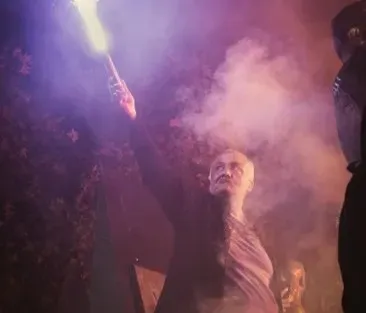
The return of Palpatine is initially dealt with in a hilariously abrupt manner in The Rise of Skywalker‘s jarring opening crawl, then ham-fisted into the chaotic opening scene which features Kylo Ren discovering things with a look of bewilderment analogous to what the audience is surely feeling. It feels off right away, and sets a precedent for the unapologetically sloppy and scatterbound blockbuster to follow.
When a film opens by announcing that a previously defeated villain has simply returned, without any setup from the film before it, it reveals something damaging about what’s underneath. The story doesn’t have anywhere new to go, so it borrows from its own past while hoping enthusiasm will substitute for coherence. It rarely does. The audience senses the absence of a plan almost immediately.
The Voice-Over Narration That Never Stops Explaining

Voice-over narration can be a legitimate tool. Used well, it creates irony, distance, or intimacy. Used poorly – especially at the start of a film – it becomes a way for screenwriters to tell the audience exactly what they should be thinking and feeling instead of allowing the images to do that work. It’s a signal that the film doesn’t quite trust itself, and that unease tends to linger.
One of the not-so-good ways to handle exposition involves having characters talk about important events in the story rather than showing those events happen on screen. Movies are primarily a visual medium. Therefore, it is always better to show an audience an event as it happens rather than have a character describe the event after it has occurred. When a film opens by violating this basic principle, with narration describing what we’re watching or recapping events we never saw, it’s a hard mood to shake.
The Tone-Deaf Comedy Beat in a Film That Isn’t a Comedy

Some films misjudge their audience from the very first moment by inserting a misplaced joke or a slapstick beat into a scene that has no room for it. The tonal whiplash is immediate. You don’t know what register to respond in, and more importantly, you don’t know whether the film does either. A misread opening joke doesn’t just fail – it makes everything that follows feel slightly uncertain.
Engagement is achieved by eliciting curiosity, surprise, or empathy, using plot devices in opening sequences that compel the audience to continue watching in anticipation of what’s to come. A comedy beat that lands wrong achieves the opposite. It produces a small but distinct moment of disconnection – the audience pulls back slightly, recalibrates, and from that point on watches with a fraction less generosity than they arrived with.
The Overlong Prologue That Belongs in a Different Film
This is related to de-aging prologues, but broader in scope. Some films open with extended sequences set years or decades before the main story that operate in a completely different tone, genre, or visual language. The result is something that feels like a short film attached to the front of the actual movie. It can be visually polished, narratively clear, and still feel entirely wrong – because it delays the story you actually came to see.
A good opening scene should give the audience an idea of what the rest of the movie is going to be like. When the beginning of a movie is better than the actual plot, there is a problem. The inverse is equally true: when the opening operates in a mode the film never returns to, it creates a strange sense of disappointment even before anything has gone badly wrong. You’ve been primed for something the film can’t deliver.
The Exposition Monologue Straight to Camera

Frank Herbert’s Dune had long been deemed unfilmable, and that seemed truer than ever when David Lynch established within the first scene of his 1984 attempt that wrestling such a sprawling tome into a feature film was beyond even a filmmaker of his talents. What’s the worst way to let an audience know there’s a mountain of world-building on the way? Kicking things off with an excruciatingly lengthy exposition dump that manages to say an awful lot and nothing at all at the same time.
Virginia Madsen’s Princess Irulan dominates the frame with a look that’s every bit as inexpressive as her monotone delivery, painstakingly detailing the ins and outs of Arrakis, its main players, and how it all fits together. From that moment forward, it was clear Lynch and Dune would fail to do justice to the source material. The direct-to-camera monologue as a world-building device has a long, mostly undistinguished history, and it almost always signals the same thing: nobody could figure out how to begin the actual story.
Partner offer
Planning a trip to Vegas?
Compare hotel rates and show tickets on VEGAS.com.


