
Nevada has never been a state that stands still. Its population shifts, its economy pivots, and its identity keeps rewriting itself with each passing decade. Right now, one of the most significant chapters of that story is being written by the Latinx community, a group whose presence stretches from the state’s earliest mining camps to the front lines of its most contested elections. Understanding this community means looking closely at the numbers, the neighborhoods, the ballots cast, and the classrooms filling up across the Silver State.
A Demographic Shift Decades in the Making

As of the 2020 U.S. Census, Hispanics and Latinos of any race made up 28.3 percent of Nevada’s total population. That figure alone tells a remarkable story, but the growth behind it is just as compelling. Throughout history, the Latinx population has contributed substantially to Nevada’s mining, railroad, farming, ranching, and tourism industries.
The community did not truly boom until the late 1980s, when casino development began drawing Latino families to the state in search of work, with politically minded individuals having to fight hard to make their presence known. The foundation built in those early years has compounded steadily ever since, producing one of the fastest-growing Latino communities in the American West.
Clark County at the Center of Growth

The growth is especially pronounced in Clark County, the state’s population center, where more than 23 percent of voting-age residents were Latino in 2022, up from about 14 percent in 2009. That is a shift of nearly ten percentage points in roughly a decade, a pace that is difficult to overstate.
In 2010, Latino-dominant Census tracts were mostly concentrated in East Las Vegas, with only six of roughly 650 Las Vegas Valley tracts classified as majority Latino. By 2022, there were more than six times as many majority-Latino Census tracts, with the growth spread throughout the valley. The map of Latino Nevada looks fundamentally different today than it did fifteen years ago.
The Backbone of Nevada’s Economy

Leisure and hospitality is the main industry in Las Vegas, comprising 26 percent of total employment, and Latino workers form a substantial part of that workforce. Las Vegas is where Trump unveiled his plan to eliminate taxes on tips, seen as a direct pitch largely to Latino workers who make up the backbone of the state’s casino and hospitality industry.
Latino immigrants contribute substantially to Nevada’s construction and hospitality industries, which anchor the state’s economic growth and stability. Nevada’s economy is highly dependent on a diverse workforce, particularly hospitality workers, and free trade in sectors like mining and agriculture. The community is not simply a demographic statistic; it is a structural pillar of how the state functions economically every single day.
Electoral Power: Potential Becoming Reality

Around one in five voters in Nevada are Latino, giving the group more political power than it holds in almost any of the other seven key states in the Electoral College count. That share has only grown as the community ages into voting eligibility. Nationally, Latinos grew by almost four million eligible voters and represented half of the total growth in eligible voters since 2020.
According to the National Association of Latino Elected and Appointed Officials, approximately 280,000 Latino voters in Nevada cast ballots in 2024, an increase of nearly 16 percent since 2020. The UCLA Latino Policy and Politics Institute found that about 450,000 Latinos were eligible to vote in Nevada, representing nearly 22 percent of the state’s electorate. These are not fringe numbers; they are decisive margins in a state where elections routinely come down to a few thousand votes.
A Community That Defies Simple Categories

The Latino community is not a political monolith, with voting behaviors differing greatly by immigration experience, age, and Spanish proficiency. Political strategists have been slow to fully absorb this reality. A 2024 pre-election poll found that the top priorities for Nevada Latino voters were dominated by cost-of-living issues, including inflation, jobs, wages, and affordable housing, with immigration and gun violence ranking fourth and fifth.
In 2024, 20 percent of Nevada Latinos were voting in their first-ever presidential election, and 37 percent of the Nevada Latino electorate was new since the 2016 presidential election. This is a community in active civic formation, not one that has reached a settled political identity. The mix of first-time voters and long-established residents creates a dynamic that neither party has fully solved.
The 2024 Election: Shifting Ground
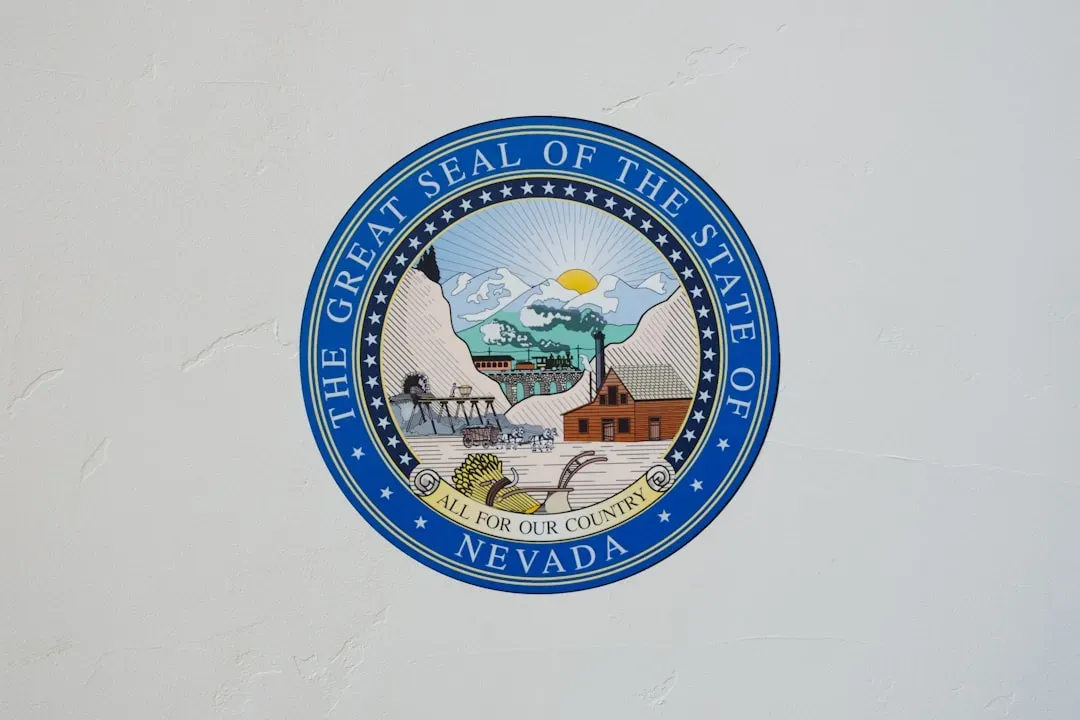
In 2020, 70 percent of Latino voters in Nevada voted for Biden while only 27 percent backed Trump. By 2024, 64 percent supported Harris against the 35 percent of Nevada Latinos who backed Trump. The shift, while not enormous, was measurable and politically significant. Inflation, concern about border security, and unfocused Democratic messaging all contributed to Trump’s increasing success with Nevada Latinos, according to political consultants and community leaders.
Partner offer
More than half of Nevada’s registered Latino voters surveyed in a 2024 poll said they had not been contacted by any political party or campaign, with 53 percent of Latino voters polled saying they still hadn’t been reached by a campaign or political party. That gap in outreach, for a bloc this large, represents real electoral consequence. Both parties are still learning how to engage this community on its own terms rather than as a voting formula.
Economic Anxieties and Current Pressures

Senator Jacky Rosen, who held her own with Latinos and won re-election in 2024 on the same ballot as Trump, has spoken about backlash in the community to aggressive immigration raids. The economic dimension is equally pressing. Peter Guzman, the president of Nevada’s Latin Chamber of Commerce, noted that his member companies feel the economic situation is roughly similar to what it was the previous year.
Community organizations report that Latinos are deeply frustrated by the rising costs of living, food, and everyday necessities. The tariff pressures of 2025 have amplified those concerns. Latino-owned businesses in Nevada feel the financial strain of federal tariffs, with at least one Hispanic brewery in Las Vegas reporting it has had to scale back production because canning prices rose so high it could not keep up with costs.
Education, Identity, and the Classroom

Latino and Hispanic students make up half of the student population in the Clark County School District, yet cultural representation in curriculum has historically lagged behind that demographic reality. Through an arts-cultural curriculum titled “A Road Trip Through Latin America,” 4-H educators have immersed hundreds of fourth and fifth graders in predominantly Latino Clark County schools in the rich diversity of Latin American cultures, aiming to deepen students’ understanding of their own identities.
As immigrant families establish residency and send children to K-12 schools and higher education, long-term enrollment stability opportunities emerge through stronger educational pipelines, reflecting Nevada’s broader transformation into one of the nation’s most racially and ethnically diverse states. Education is increasingly being recognized not just as a ladder for individual students but as a structural investment in the state’s future workforce and civic fabric.
Culture, Research, and Institutional Recognition

In 2024, the University of Nevada, Reno’s Latino Research Center celebrated its 20th anniversary, announcing a mural project to honor the rich culture, heritage, and contributions of the Latino community in Nevada. The center’s work reflects a broader effort by Nevada’s academic institutions to document and legitimize a community whose history has too often gone unrecorded. The mural is meant to encapsulate the themes of unity, diversity, and empowerment, reflecting the richness of Latino experiences and the promising future for generations to come.
In October 2025, the University of Nevada, Reno’s Latino Research Center hosted the 7th Biennial Siglo XXI National Conference in partnership with the Inter-University Program for Latino Research, bringing together scholars, leaders, students, and community members to explore Latino and Latina experiences and identities across the United States. That Nevada hosted this national conversation says something meaningful about where the state now stands in the broader landscape of Latino studies and advocacy.
Civic Organizing and the Road Ahead
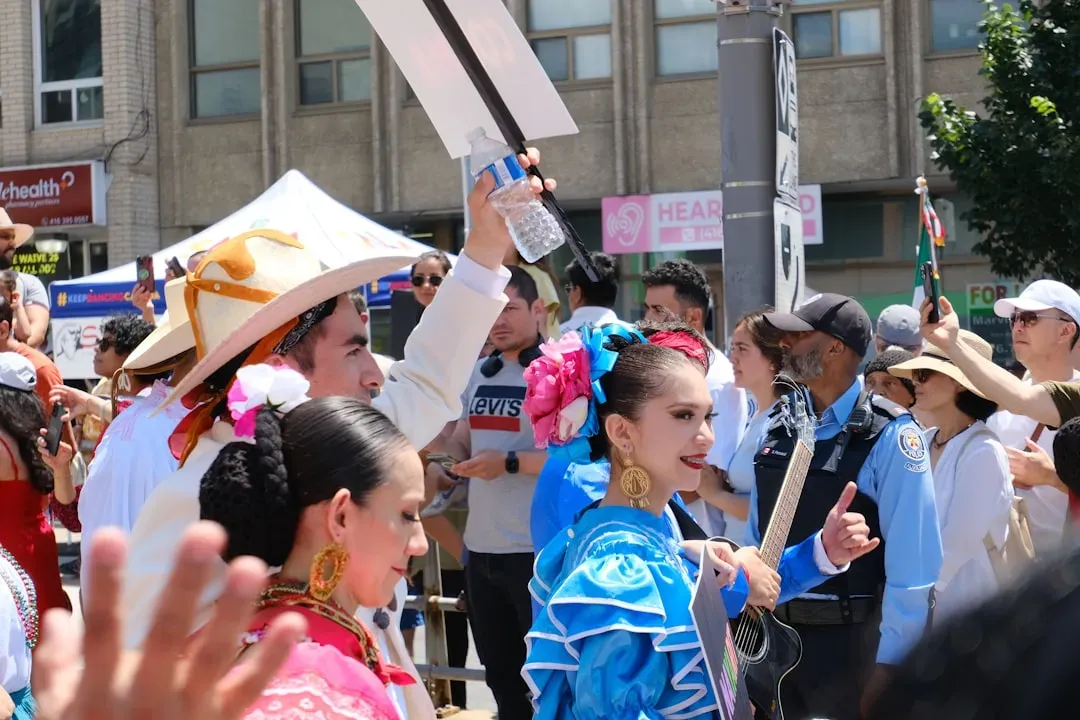
Organizations like Mi Familia Vota Nevada are working to forge coalitions uniting young Latinos, Latino business owners, and Latinas, with the goal not just of engagement but of empowerment, aiming to become a cornerstone of advocacy, civic engagement, and political power for Latinos in Nevada. The data confirms that voting-age Latino population growth has outpaced overall population growth in Nevada, and the power of Latino voters is growing in a state where the 2022 U.S. Senate race was decided by about 8,000 votes, the slimmest margin nationwide.
An extensive scholarly study of the Latinx population in Nevada highlights their roles in society and specifically examines the implications of their growing presence, contemplating the future role they will continue to play in politics and the economy. The community’s influence is not an emerging story. It has been building for decades, and what’s different now is that Nevada’s institutions, its universities, its political parties, and its economic planners, are finally treating that influence as the central fact it has always been.
The desert has a long history of surprising people. A community that arrived to build hotels and stock casino floors has grown into a force that shapes elections, fills classrooms, runs businesses, and debates the future of the state. That transformation didn’t happen overnight, and it isn’t finished yet. Nevada’s identity has always been a work in progress, and the Latinx community is now one of its most essential authors.
Partner offer
Planning a trip to Vegas?
Compare hotel rates and show tickets on VEGAS.com.