Science fiction didn’t arrive fully formed with rocket ships and laser guns. It crept in through gothic parlors, underground caverns, and Victorian drawing rooms. The books below span roughly a century, from 1818 to the early 1920s, and most of them still read surprisingly well.
None of them can claim to be the one true beginning. Still, together they cover the big ideas the genre keeps returning to: artificial life, deep time, alien invasion, scientific hubris, and the cost of a perfectly ordered society.
Frankenstein by Mary Shelley (1818)
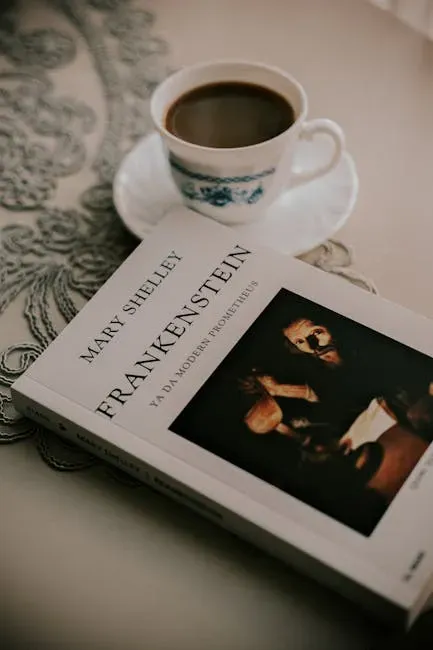
Many critics and historians point to this novel as the strongest candidate for the first true science fiction story. It was published anonymously on the first day of 1818, when Mary Shelley was twenty. The idea grew out of a ghost story challenge during the summer of 1816, when she was staying near Lord Byron on Lake Geneva.
What sets it apart from older gothic tales is that Victor Frankenstein uses science, not magic, to create life. The book asks what a creator owes to what he makes. Shelley revised the text for an 1831 edition, and the two versions differ in tone and emphasis.
Journey to the Center of the Earth by Jules Verne (1864)

Verne’s novel follows Professor Lidenbrock and his nephew Axel, who descend into an Icelandic volcano called Snæfellsjökull. A coded note from a sixteenth century alchemist sets the whole expedition in motion. It’s an adventure story, yet it’s packed with the geology and paleontology of its day.
Underground, the travelers meet prehistoric creatures and a vast subterranean sea. Verne wanted readers to feel science as a thrill, not a lecture. That approach shaped the popular adventure branch of the genre for generations.
Twenty Thousand Leagues Under the Seas by Jules Verne (1870)

The story ran as a serial from 1869 before appearing as a book in 1870. Its central figure is Captain Nemo, a brooding, mysterious inventor who commands the submarine Nautilus. The narrator, Professor Aronnax, becomes his reluctant guest.
A common misunderstanding is that the title describes depth. In fact, the leagues refer to the distance traveled across the oceans during the voyage. Verne’s blend of technical detail and moral ambiguity around Nemo gave the genre one of its first memorable antiheroes.
The Time Machine by H. G. Wells (1895)

Wells gave the world a device that carries a person through time, and the idea has never really left. His unnamed Time Traveller journeys to the year 802,701, where humanity has split into the gentle Eloi and the subterranean Morlocks. It’s a sharp social allegory about class division, dressed as a scientific romance.
The book is short, which helps. Wells uses the far future to comment on Victorian England, and he ends with a vision of a dying Earth that feels strikingly bleak. Plenty of later time travel stories borrow his structure.
The Island of Doctor Moreau by H. G. Wells (1896)

A year after his debut, Wells turned to biology. A shipwrecked man lands on an island where Doctor Moreau surgically reshapes animals into crude human forms. The novel was a direct response to debates about vivisection and evolution in late Victorian Britain.
It’s an uncomfortable read, and that’s the point. The story questions where humanity ends and animal nature begins. Modern conversations about genetic engineering often echo its central worry.
The Invisible Man by H. G. Wells (1897)

This one begins with a bandaged stranger arriving at an inn in the village of Iping. He turns out to be Griffin, a scientist who has discovered how to make himself invisible. Wells grounds the premise in optics and refractive index, which gave the fantasy a scientific feel.
The real drama isn’t the trick, it’s the consequences. Griffin finds that invisibility brings isolation and a growing taste for violence. The novel treats unchecked scientific ambition as a personal and moral problem, not just a technical one.
The War of the Worlds by H. G. Wells (1898)
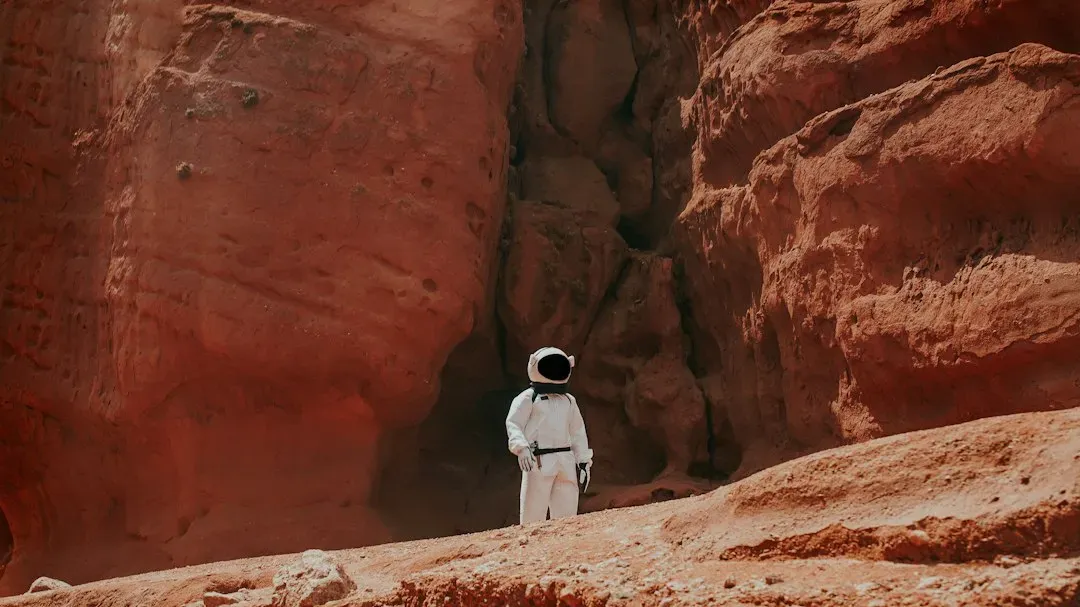
The novel appeared in serial form in 1897 before its book release. Martians land at Horsell Common near Woking, and the narrator watches England fall apart in the face of vastly superior technology. It established the alien invasion story as we know it.
Wells also turned colonial power on its head, imagining the British as the conquered. The book’s fame later got a boost from Orson Welles’s 1938 radio dramatization, which became a famous piece of broadcasting history. The original remains a tight, unsettling read.
We by Yevgeny Zamyatin (written 1920 to 1921)

Zamyatin wrote this dystopian novel in the early years of Soviet Russia, and it was banned there. It first appeared in English translation in New York in 1924. The story follows D-503, an engineer living in the One State, where every hour and thought is regulated.
The book is widely seen as an ancestor of later dystopias, and Orwell was familiar with it. It shows science fiction moving from wonder toward political warning. Reading it after the Victorian adventures makes the genre’s shift in mood very clear.
Where These Eight Books Leave You

Read in order, they trace the genre’s early path from gothic experiment to adventure, social satire, invasion story, and political warning. Each one introduced a template that writers still use today.
If you’ve finished all eight, you’ve covered the foundations from Shelley to Zamyatin.