Russian literature has a reputation for heft, and the reputation is mostly earned. Many of its best known novels first appeared in serial form, in installments that ran for months or years. That habit left behind books with huge casts, long digressions and endings that take a while to arrive.
Page counts shift from one translation and edition to the next, so this list leans on publication history and scope instead of exact numbers. Some of these books are monumental, and a few are only long by ordinary standards. Together they make a fair reading challenge for anyone who likes a thick spine.
War and Peace by Leo Tolstoy

This is the one most people think of first. Tolstoy’s novel follows several aristocratic families through the years of Napoleon’s invasion of Russia in 1812. It was published in installments between 1865 and 1869, and many English editions run well past a thousand pages.
The cast is enormous, and most editions include a list of characters to help. Battle scenes sit beside drawing room conversations, and Tolstoy stops now and then to argue about how history works. Readers who finish it often say the essays are easier to get through once they care about the people.
Anna Karenina by Leo Tolstoy

Tolstoy’s second great novel was serialized in The Russian Messenger in the 1870s and then published as a book. It follows Anna’s affair and its consequences, alongside the quieter story of Levin, a landowner who is searching for meaning. The two plots only touch lightly.
It’s long, but it moves faster than War and Peace. Most of the length comes from Tolstoy’s attention to ordinary detail, from a society ball to the mowing of a field. Plenty of readers find Levin’s chapters slower, though they carry much of the book’s moral weight.
The Brothers Karamazov by Fyodor Dostoevsky

Dostoevsky’s last novel appeared in 1880, and he died in early 1881. It centers on a murder in a provincial town and the three very different brothers who are tangled up in it. Underneath the crime story are long arguments about faith, doubt and responsibility.
The length comes from those arguments as much as from the plot. Chapters such as the Grand Inquisitor episode are famous for being dense and demanding. Many readers treat them as the reward for sticking with the book.
Life and Fate by Vasily Grossman

Grossman’s sprawling novel about the Battle of Stalingrad and the Soviet Union during the Second World War has a remarkable publishing history. He finished it around 1960, and in 1961 the KGB seized the manuscript and related materials. It was eventually published in Switzerland in 1980, years after his death in 1964.
The book is often compared to War and Peace because of its scale and its many characters. It covers front line fighting, scientific research, family life and the grim reality of the camps. It’s a long read and an emotionally heavy one.
Demons by Fyodor Dostoevsky
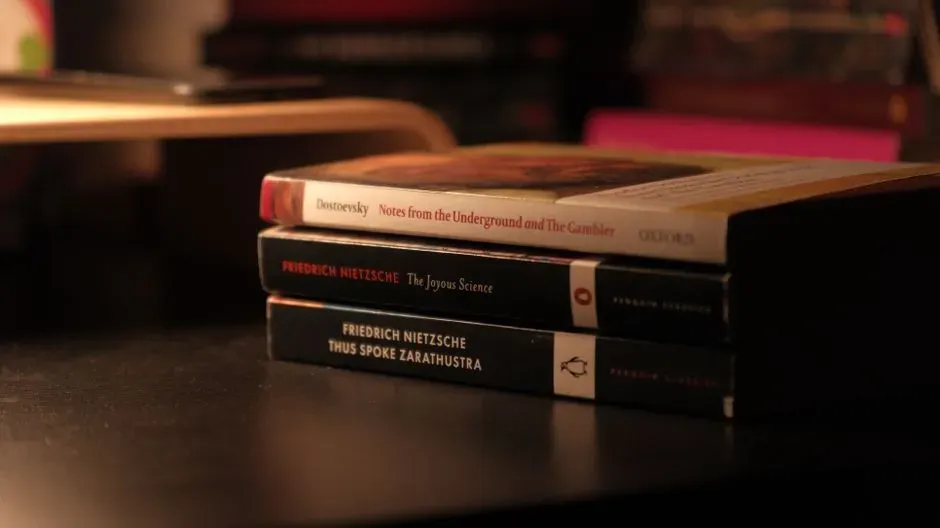
Also published as The Possessed or The Devils, this novel came out in installments in 1871 and 1872. Dostoevsky drew on a real case, the murder of a student by members of a radical circle led by Sergey Nechayev in 1869. The story follows a provincial town as revolutionary ideas take hold.
It’s a messy, uneven book, and that is part of its reputation. The first half moves slowly through social scenes before events turn violent. Many critics treat it as one of the most politically sharp novels of its century.
The Idiot by Fyodor Dostoevsky
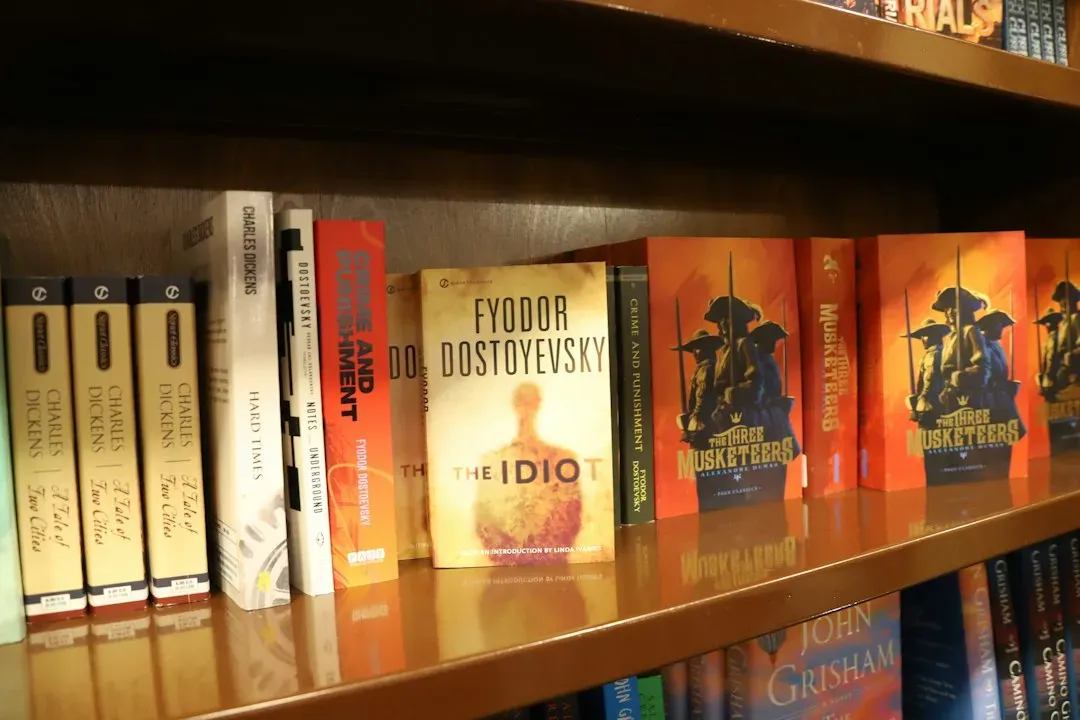
Dostoevsky wrote The Idiot in the late 1860s, and it was serialized in The Russian Messenger in 1868 and 1869. Prince Myshkin, a kind and unworldly man, returns to Russia and finds himself caught between rival social circles and two very different women. The idea was to portray a truly good person in a flawed world.
The book is long and often talky. Scenes of conversation and confession stretch on, then end in sudden disasters. It rewards patient readers, though it can feel slow if you expect a tidy plot.
Quiet Flows the Don by Mikhail Sholokhov

This epic about Don Cossack life during the First World War, the revolution and the civil war was published in parts between 1928 and 1940. It’s usually read in English as a long work in several volumes. Sholokhov received the Nobel Prize in Literature in 1965.
The novel is less often read in the West than Tolstoy or Dostoevsky. Its scale is similar, and its tone is earthy and tragic. Questions about its authorship have been raised over the years, though the debate has never changed its place in Soviet literary history.
Doctor Zhivago by Boris Pasternak

Pasternak’s novel follows a physician and poet through the upheavals of the early twentieth century, from the 1905 revolution to the years after the civil war. It was first published in Italy in 1957 after Soviet publishers refused it. The following year Pasternak was named the Nobel laureate in literature, and he declined the prize after pressure from Soviet authorities.
It’s shorter than some entries here, but it’s still a substantial read with a large cast and long stretches of historical background. The prose is lyrical, which suits Pasternak’s background as a poet. The story moves in leaps, so attentive reading helps.
Crime and Punishment by Fyodor Dostoevsky

Published in 1866, this is probably the most approachable book on the list. It follows Raskolnikov, a poor former student in Saint Petersburg who commits a murder and then struggles with guilt. Like many of its peers, it first appeared in The Russian Messenger.
It’s long but tightly driven, with a clear pull toward its confession and aftermath. Many readers start with it before moving to the heavier Dostoevsky titles. Finishing it still counts as a real piece of reading.
What Finishing Them Says
Nine novels like these add up to thousands of pages, much of it written for readers who encountered it in installments. Reading the whole set is less a sprint than a long habit.
If you’ve made it through even a few, you’ve already handled some of the longest books in world literature.