Something has shifted in the underground world of illegal sports betting. Law enforcement is no longer just watching from the sidelines. Over the past two years, a wave of coordinated, multi-agency stings has exposed just how deeply illegal bookmaking has burrowed into everyday life, from college campuses to professional locker rooms, from New Jersey neighborhoods to global gambling syndicates stretching across three continents. The scale of it all is hard to wrap your head around.
The story isn’t just about crime. It’s about what happens when a massive, decades-old shadow economy collides with a newly legalized, billion-dollar sports betting industry. It’s about who gets caught, who gets away, and why so much of the action still happens off the books. Let’s dive in.
The Staggering Size of the Illegal Betting Market

Let’s start with a number that should make your jaw drop. As of August 2025, the American Gaming Association estimated Americans wager $673.6 billion annually in illegal and unregulated markets, which includes sports betting, online games, and unregulated machines. That’s not a typo. Think of it this way – that’s roughly the entire GDP of a mid-sized country, flowing through underground channels every single year.
The American Gaming Association estimates that over roughly four fifths of all sports betting placed in the United States still flows through illegal bookmakers and offshore websites, amounting to roughly $150 billion annually. Even as states continue to legalize regulated sports wagering, the black market hasn’t shrunk. If anything, it’s adapted. It’s gone digital, gone organized, and in many cases, it’s gone deep inside professional sports itself.
How the Perna Enterprise Ran a Nationwide Bookmaking Web
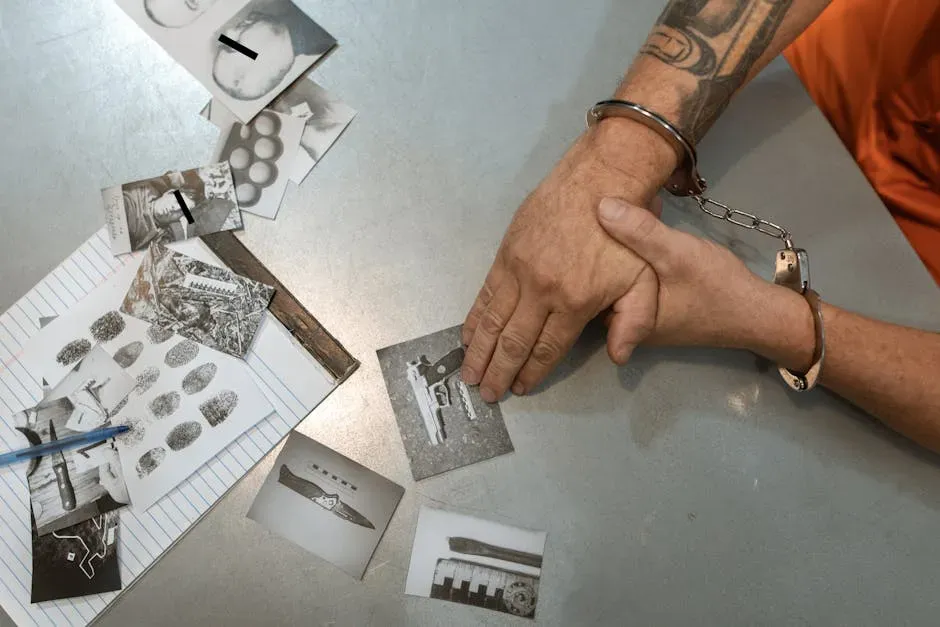
One of the most striking recent takedowns involved a multi-state criminal network with roots going straight back to the mob. Joseph “Little Joe” Perna, a member of the Lucchese crime family, and his associates ran a nationwide network of bookmakers who used offshore websites to facilitate approximately $2 million in bets between 2022 and 2024. That figure represents what investigators could document. The real volume was almost certainly higher.
The scheme employed a hierarchical structure: a “bookmaker” at the top, regional agents recruiting bettors, and layers of individuals who collected profits and managed the flow of money. Perna’s son, Joseph R. Perna, conducted the daily operations of the sportsbook, facilitating dozens of subordinate agents, including his brother, stepbrother, and cousins. This was a family business, in the worst possible sense of the word.
College Athletes Recruited as Bookmakers
Here’s the part that honestly surprised me the most. New Jersey Attorney General Matthew Platkin said several college athletes operated sportsbooks at the direction of Perna’s organization. Prosecutors also noted that the plot involved college athletes who are accused of operating sportsbooks, and two of the defendants, Michael Cetta and Nicholas Raimo, wrestled for Rutgers.
This isn’t just a crime story. It’s a warning about the specific vulnerability of young athletes. Two years ago, the NCAA released a study finding roughly two thirds of college students living on campus had engaged in sports betting, more than two in five had bet on their school’s teams, and more than a third had used a student bookmaker. The demand was already there. Organized crime simply found a way to supply it, using the very athletes at the heart of the action. The NCAA is aware of the charges and is looking into the case.
The Hidden Attempt to Conceal Evidence

Investigations like these rarely move in a straight line. Sometimes the most revealing moments happen on the side of the road. In April 2025, Rosanna Magno, age 52, of Oakland, New Jersey – Joseph M. Perna’s ex-wife and mother of several of the defendants – allegedly attempted to conceal what were later determined to be gambling ledgers from police during an investigative stop. Those ledgers, hidden in plain sight, became a key piece of the prosecution’s case.
The case is being prosecuted by Deputy Attorney General Robert Anstatt, and it was investigated by the New Jersey State Police Port Investigations Unit, with assistance from the Tampa Police Department, the Rhode Island State Police, FBI-Newark, and the Gainesville Police Department. That’s five separate agencies, across three states, working in concert. Multi-agency is not just a buzzword here. It was a genuine operational necessity to chase a network that deliberately spread itself across jurisdictions.
The NBA Scandal and Mafia-Backed Rigged Games
October 23, 2025 sent a genuine shockwave through the sports world. On that date, the sports world was shocked with the announcement that multiple NBA figures were arrested by the FBI and subsequently indicted on charges related to gambling, including Chauncey Billups, head coach of the Portland Trail Blazers, and Terry Rozier, point guard for the Miami Heat. It was, without question, the biggest single day of sports-related gambling arrests in recent memory.
The second indictment charged 31 defendants, including Billups, with operating a network of rigged high-stakes poker games connected to organized crime. Prosecutors stated that members and associates of the Bonanno, Genovese, and Gambino crime families used sophisticated technology such as modified shuffling machines, contact lenses, and other devices to control outcomes. Joseph Nocella Jr., interim US Attorney for the Eastern District of New York, described the arrests as the largest dismantling of a gambling enterprise since the historic PASPA decision in 2018.
How Illegal Bookmakers Lure Bettors Away From Legal Markets

So why do bettors keep using illegal bookmakers when legal options now exist in most U.S. states? The answer is frustratingly practical. Illegal bookmakers often offer more favorable odds and avoid charging the commission that legal operations require. They typically also extend credit to bettors, allowing wagering without upfront payment – a practice that frequently leads to substantial debts and associated problems.
Illegal operations also don’t report winnings to tax authorities, creating an illusion of tax-free gains for successful bettors. It’s a seductive pitch. No paperwork, better lines, bet now and pay later. But bettors who wager with illegal bookmakers put themselves at risk of extortion and violence if they are unable to repay debts. That credit line has teeth. Serious ones.
The Insider Information Pipeline: From Locker Rooms to Betting Windows

What made the NBA case uniquely dangerous was the source of the edge being exploited. The group allegedly obtained non-public details about player injuries, game plans, and lineup changes from NBA players and coaches. Think about what that means in practice. Someone knew a star player was leaving the game in the second quarter before a single word reached the public, and bets were placed accordingly.
The defendants and their associates allegedly used licensed sportsbooks and illegal bookies to place bets, often through “straw bettors” – people betting on their behalf to avoid detection. They focused on prop bets, especially betting the “under” on a player’s stats when they knew the player would perform poorly or leave early, placing bets before injury news or lineup changes became public to ensure better odds. It was essentially insider trading, but in a sports context. The legal and financial parallels are hard to ignore.
The Ohtani Scandal and an Illegal Bookmaker’s $325 Million Handle

For sheer scale of individual bookmaking operations, the case connected to baseball superstar Shohei Ohtani’s interpreter stands in a class of its own. Ippei Mizuhara, the former interpreter of Shohei Ohtani, received a 57-month sentence for embezzling nearly $17 million from the MLB superstar, with the stolen funds used to repay a portion of his sports betting debts with Matt Bowyer, an illegal bookmaker.
The scale of Bowyer’s operation was staggering. Bowyer’s enterprise accepted roughly 19,000 wagers from Mizuhara alone, amounting to a total handle of $325 million. Mizuhara still owed Bowyer about $24 million at the time of his arrest, an amount that likely will never be recovered. One illegal bookmaker. One client. Three hundred and twenty-five million dollars. That number alone tells you everything you need to know about how large this shadow industry really is.
The Global Reach: INTERPOL’s Operation SOGA X

Illegal bookmaking isn’t just an American problem. It’s a global one. Operation SOGA X, conducted between June and July 2024, was a collaborative effort involving INTERPOL and 28 countries and territories, designed to tackle illegal online football gambling during the UEFA 2024 European Football Championship. The timing was deliberate. Major sporting events create massive spikes in betting volume, and criminal networks plan around them with precision.
Police recovered more than $59 million in illicit proceeds, while arresting 5,100 people and shutting down tens of thousands of illegal websites. The illegal gambling market is worth a staggering $1.7 trillion globally, according to research by the Asian Racing Federation, and is closely tied to other criminal enterprises. It’s hard to say for sure whether any single sting operation truly disrupts that kind of infrastructure, but each takedown removes key nodes and sends a clear message that no operation is invisible forever.
What Comes Next: Regulation, Technology, and the Ongoing Fight

The fight against illegal bookmakers has entered a new, more tech-savvy phase. On the day the alleged improper bets took place in the NBA case, sportsbooks flagged the unusual wagering activity and reported it to the NBA and state gaming regulators, underscoring that even as sports gambling permeates America, licensed sportsbooks are abiding by the rules and protections prescribed by state regulators. Legal markets, ironically, are becoming one of the best tools for detecting illegal ones.
Organized crime groups run illegal gambling operations, including online sportsbooks, to generate revenue for other criminal activities such as human, drug, and weapons trafficking. One of the FBI’s stated priorities is to investigate these groups to disrupt and dismantle their operations. The American Gaming Association reported that the U.S. sports betting industry generated an all-time high of $13.71 billion in revenue in 2024, an increase of roughly a fifth from 2023. The legal market is booming. The illegal one refuses to disappear. That tension is where the next chapter of this story will be written.
The reality is this: every dollar placed with an illegal bookie is a dollar that funds something darker downstream. The game may look the same on the surface, but underneath the bet, the structure supporting it matters enormously. What would you do differently knowing who might really be on the other side of that wager?