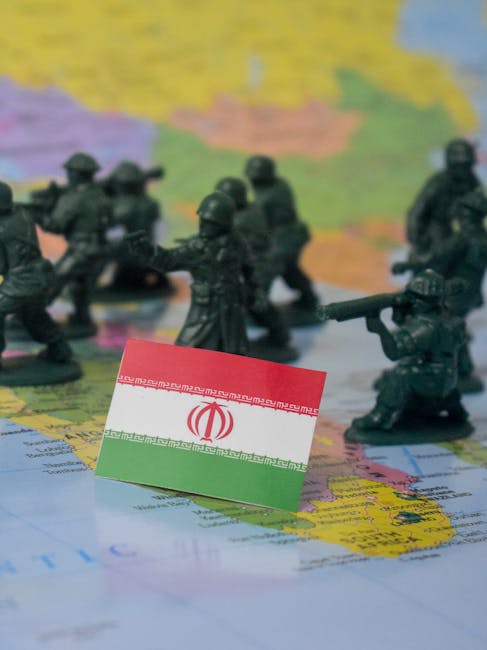
Assassination Sets Off Chain Reaction (Image Credits: Pexels)
The war pitting the United States and Israel against Iran marked its 11th day on March 10, 2026, with fresh exchanges of airstrikes and missile barrages heightening fears of prolonged regional instability.[1][2]
Assassination Sets Off Chain Reaction
U.S. and Israeli forces launched Operation Epic Fury on February 28, delivering nearly 900 strikes across Iran in the first 12 hours alone. Commanders targeted military infrastructure, nuclear sites, and leadership in cities including Tehran, Isfahan, and Qom.[3][2] The operation killed Supreme Leader Ali Khamenei along with senior officials such as the defense minister and IRGC commanders.[4]
Israel coordinated under Operation Roaring Lion, destroying air defenses and missile production facilities. Cyberattacks accompanied the bombings, plunging parts of Iran into an internet blackout. Iranian officials decried the assault as an existential threat, prompting immediate countermeasures.[2]
Tit-for-Tat Strikes Spread to Lebanon and Beyond
Iran responded swiftly with Operation True Promise IV, unleashing hundreds of ballistic missiles and thousands of drones toward Israel, U.S. bases, and Gulf allies. Targets included Tel Aviv and Haifa in Israel, as well as oil infrastructure in the United Arab Emirates, Bahrain, Saudi Arabia, Qatar, and Kuwait.[1][2] On March 10, Iranian drones struck petrochemical plants in UAE’s Ruwais and a residential building in Bahrain’s Manama, claiming additional lives.[1]
Israel retaliated with airstrikes on Tehran and Hezbollah strongholds in Lebanon, where the Iran-backed group fired rockets into northern Israel. U.S. forces sank an Iranian frigate and hit naval assets, while ongoing bombardments targeted IRGC bases and oil depots.[2] Iran closed the Strait of Hormuz, stalling over 150 ships and disrupting global energy flows.[3]
- February 28: Initial U.S.-Israel strikes kill Khamenei; Iran launches first retaliatory missiles.[2]
- March 1-3: Hezbollah escalates; Gulf states intercept barrages.[1]
- March 4-7: U.S. sinks Iranian ships; strikes reach cultural sites in Iran.[2]
- March 8-10: Mojtaba Khamenei named supreme leader; Iran rations munitions amid depletions.[4]
Leaders Escalate Verbal Warfare
President Donald Trump predicted a swift conclusion but demanded Iran’s unconditional surrender and regime change. He warned that any full blockade of the Strait of Hormuz would prompt strikes “twenty times harder.”[1][4] U.S. Defense Secretary Pete Hegseth promised the “most intense day of strikes” yet, with over 5,000 targets already hit.[1]
Iranian parliament speaker Mohammad Bagher Qalibaf rejected ceasefires, insisting aggressors face consequences. Ali Larijani dismissed U.S. threats as empty and vowed retaliation. The sides showed no signs of backing down, even as Iran’s missile stocks dwindled.[2]
Casualties Mount and Economies Reel
The fighting claimed thousands of lives, predominantly in Iran where 1,255 to 4,145 died, including civilians in strikes like the Minab school bombing that killed over 160 children. Israel reported 18 deaths, the U.S. seven service members, and Gulf states dozens more.[2] Hundreds of thousands fled conflict zones, with 667,000 displaced in Lebanon alone.[1]
Oil prices surged past $90 per barrel, fueling global inflation worries and rerouting tankers. Airspaces closed across the Middle East, stranding travelers and hammering markets.[3]
Key Takeaways
- U.S.-Israel degraded much of Iran’s military but face sustained proxy threats.
- Iran’s retaliation strained Gulf allies and global energy supplies.
- Diplomatic off-ramps appear distant amid hardened positions.
As bombardments continue from Tehran to Tel Aviv, the path to de-escalation remains unclear. What do you think lies ahead for this volatile conflict? Tell us in the comments.