
Something big is shifting in American hiring culture. For decades, the bachelor’s degree was treated like a golden key – the thing that separated serious candidates from the rest. You either had it or you didn’t. Full stop.
Now, that rule is quietly being torn up. Some of the most recognizable companies in the world are rethinking a requirement that, honestly, many employers added more out of habit than necessity. The implications are enormous, both for workers and for the future of higher education itself. Let’s dive in.
The Numbers That Started Changing Everything

Here’s the thing – the shift didn’t happen overnight, but the pace has been startling in recent years. Forty-five percent of companies planned to eliminate bachelor’s degree requirements for some positions in 2024, according to a report from Intelligent.com. That’s nearly half of corporate America rethinking a hiring standard that was once considered untouchable.
In 2023 alone, 55% of companies removed degree requirements, particularly for entry-level and mid-level roles. Think about that for a second. More than half of surveyed companies were already moving in this direction before 2024 even began. The momentum is real, and it’s building fast.
According to a Harvard study, new non-degree hires increased by 18% in 2024. The shift toward non-degree hiring is only growing, and by next year, an additional 25% of companies plan to drop degree hiring requirements, bringing the surveyed total to over half of American companies. That is a seismic change, no matter how you look at it.
The Big Names Leading the Charge

It’s one thing when a small startup drops degree requirements. It’s a completely different story when corporate giants follow. In recent years, many of America’s largest companies have announced they will no longer require a college degree for high-paying office jobs. That list includes Google, IBM, Tesla, Accenture, Walmart, Dell, Verizon, Delta, General Motors, Bank of America, and Home Depot, among others.
The concept is gaining traction in the tech, consulting, and finance sectors, with companies such as Google, IBM, Deloitte, and Bank of America eschewing four-year degree requirements for some roles. These aren’t fringe players. These are the companies that once set the gold standard for hiring. When they change, industries follow.
Among respondents who eliminated some degree requirements, the highest percentages tended to be in industries such as information services, software, construction, and finance and insurance. Honestly, this list makes complete sense. These are some of the fastest-moving, most skills-driven fields in the economy.
Why Experience Is Beating the Diploma

Let’s be real: a four-year degree teaches you a lot of things, but it doesn’t always teach you how to do the actual job. In a survey of 800 U.S. employers, 80% said they were “very likely” or “likely” to favor work experience over education when assessing job candidate applications. That is a stunning number from any angle.
When considering the practical skills and experience needed for job performance, 77% of business leaders said their company is very likely or likely to favor experience over college education. This shift highlights a growing recognition of the value of hands-on experience and practical knowledge in the workplace.
Eliminating a bachelor’s degree can open jobs up to individuals who weren’t able to attend college. It’s not just about finding better candidates, either. It’s about fairness, access, and acknowledging that talent doesn’t only come wrapped in a diploma.
What Companies Say Is Actually Happening After They Drop Requirements

Skeptics might wonder: do companies actually benefit once they stop insisting on a degree? The data says yes, and by a wide margin. In a survey of 1,000 hiring managers, 84% of companies that recently removed degree requirements said it has been a successful move. That’s not a small sample, and it’s a nearly overwhelming verdict.
Employers said they dropped these requirements to create a more diverse workforce, increase the number of applicants for open positions, and because there are other ways to gain skills. More applicants means more choices. More diversity means better problem-solving. It’s a straightforward win for organizations willing to rethink old habits.
LinkedIn data shows that companies with the most skills-based searches are 12% more likely to make a quality hire. Skills-based hiring can be challenging and time-consuming, but AI is poised to change that. So even the process of finding non-degreed talent is getting smarter and more efficient over time.
The Public Has Already Made Up Its Mind

Before employers even started making these moves formally, everyday Americans were questioning the college degree’s value. Roughly half of Americans surveyed by Pew Research Center said having a four-year college degree is less important for landing a high-paying job today than it was 20 years ago. That’s a profound cultural shift in a remarkably short period of time.
Only 22% of those surveyed said the cost of getting a four-year college degree is worth it even if it requires taking out loans. The financial reality is hitting home for millions of families. When the return on investment is uncertain, the calculation changes dramatically. Think of it like buying an expensive car on credit when you can rent a perfectly good one for far less.
Only one-in-four U.S. adults say it’s extremely or very important to have a four-year college degree in order to get a well-paying job in today’s economy. Just a decade ago, that number would have seemed unthinkable. Today, it reflects something real that is happening in households across the country.
The Gap Between Policy and Reality
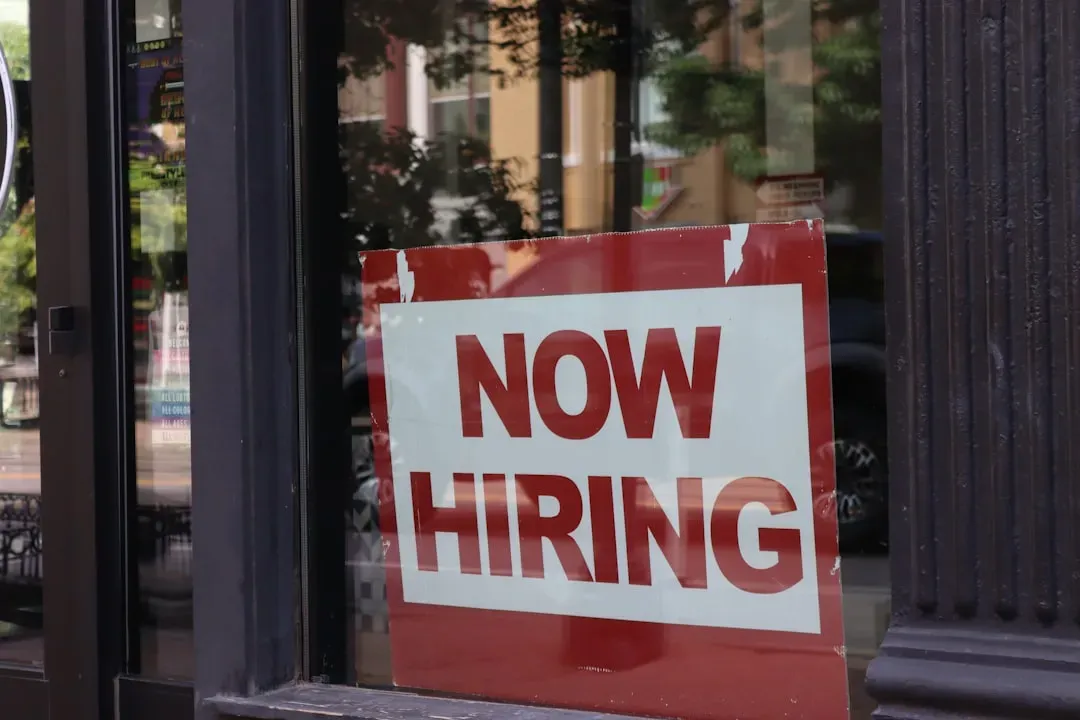
Now, here’s where it gets complicated, and I think this is the most important part of the whole story. Companies are making announcements. Job postings are changing. Yet the Harvard Business School and Burning Glass Institute’s research uncovered something surprising underneath all the headlines. Companies and public sector employers have been eliminating college degree requirements, but a new Harvard study shows a gap between intent and impact. To make a transition to skills-based hiring, managers must be trained to spot promising candidates, take risks when filling positions, and change corporate culture to give workers pathways to success.
Corporate press releases trumpet the death of degree requirements, and HR conferences overflow with sessions on skills-first transformation. Yet the data shows that fewer than 1 in 700 actual hires are affected by these policy changes. That is the bombshell finding from Harvard Business School and the Burning Glass Institute’s comprehensive 2024 analysis of actual hiring patterns.
Although skills-based hiring has gained traction, hiring practices are still catching up and remain influenced by traditional requirements, according to LinkedIn data. The change in hiring appears to be less dramatic than the change in job postings, which could suggest a breakdown between recruiters and hiring managers in making this shift. In other words, the rhetoric is ahead of the reality. The intention is good, but implementation is still a work in progress.
Government Is Stepping In Too

This debate isn’t confined to boardrooms. State governments across the U.S. are actively rewriting the rules. At least 26 states, along with private companies like IBM and Accenture, have begun stripping degree requirements and focusing hiring practices on applicants’ skills.
Seven states showed double-digit percentage increases in job listings without a degree requirement between 2019 and 2024, according to the National Governors Association. That’s not just symbolic. These are real, measurable changes happening in public hiring across the country. California has announced a plan to launch “career passports” to encourage job access, combining academic records and experience from work, military service, and training programs for hiring.
Numerous state and local governments have dropped degree requirements for most jobs, including Alaska, Maryland, Minnesota, New Jersey, Pennsylvania, Utah, and Virginia. The aim is to improve access to and retention within government roles, as well as emphasize skills and work experience as job qualifications. It’s hard to say for sure how far this will spread, but the direction is unmistakably clear.
The Rise of Alternative Pathways

If you’re not getting a four-year degree, what are you doing instead? Increasingly, the answer is apprenticeships and alternative training. The numbers here are remarkable. In fiscal year 2024, there were about 680,000 active apprentices across the United States, a 114% increase over the count in fiscal year 2014. That’s more than doubling in under a decade. Something is clearly working.
The Department of Labor reported that between April 2022 and March 2023, registered apprenticeship completers earned average annual wages of about $80,000 in their first year after exiting their program. Let that sink in. Eighty thousand dollars a year, no student debt, and practical skills that employers actually need right now.
Apprenticeship presents an alternative to costly higher education, providing young people with paid job training and work experience without the burden of student debt. For students who don’t have the financial means to even consider college, this is especially important as a route to economic mobility. The apprenticeship model isn’t new, of course. It’s actually ancient. What’s new is that America is finally taking it seriously at scale.
Conclusion: A Turning Point, Not Just a Trend

The college degree debate is no longer a fringe conversation. It’s playing out in corporate HR departments, state legislatures, kitchen tables, and job postings across the country. The data from 2023 through 2025 tells a consistent story: the bachelor’s degree is losing its grip as an automatic hiring requirement, and for many roles, that grip was never as justified as we assumed.
That doesn’t mean college is dead. College degree holders typically command higher wages and are less likely to experience unemployment than those with only high school diplomas. In 2024, college graduates’ median pay was 37% higher than median pay for those without a bachelor’s degree, according to an analysis from compensation firm PayScale. The advantage is real and it hasn’t vanished. The question is whether that advantage always justifies the cost.
What’s changing is not the value of knowledge. It’s the monopoly that one specific credential had over access to opportunity. Skills, portfolios, certifications, and apprenticeships are carving out legitimate paths that didn’t meaningfully exist a generation ago. The employers who figure out how to genuinely evaluate these alternatives, and not just post about it, will likely have a serious edge in finding the best talent available. So here’s the real question worth sitting with: in ten years, will we look back at the mandatory four-year degree requirement the same way we look at other outdated gatekeeping practices? What do you think? Share your experience in the comments below.