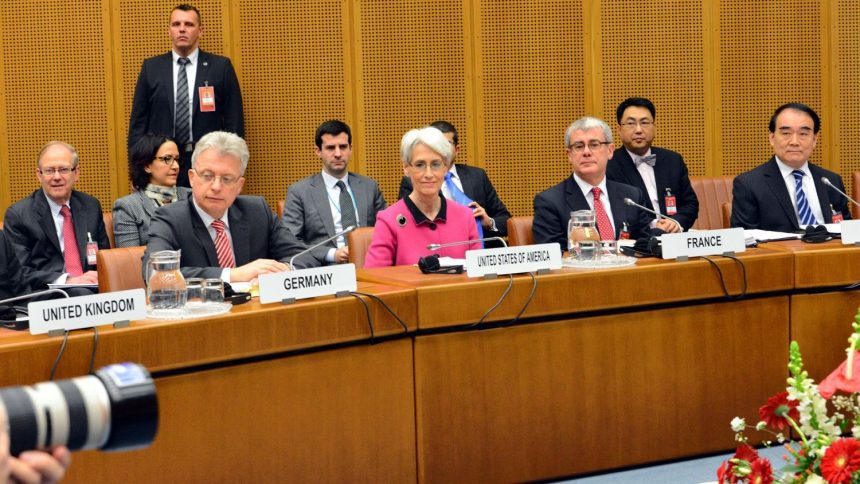

Iran says it has offered a new proposal for peace talks with the U.S. – Image for illustrative purposes only (Image credits: upload.wikimedia.org)
Tehran delivered a new diplomatic initiative to Pakistani mediators on Friday, aiming to break the impasse in negotiations with the United States.[1][2] The plan centers on resuming traffic through the Strait of Hormuz, lifting the American naval blockade, and formally ending hostilities that erupted earlier this year. Global energy markets remain on edge as the standoff persists, driving up oil prices and fueling economic strain worldwide.[3]
Details Emerge on Tehran’s Three-Stage Offer
The Iranian proposal outlines a phased approach to de-escalation. Stage one calls for the United States and its allies to cease military operations and provide security assurances, paving the way for unrestricted passage in the strait.[4] Subsequent phases would address maritime coordination and broader conflict resolution, while deliberately sidelining Iran’s nuclear program for future discussions.[5][6]
This strategy reflects internal pressures in Tehran to prioritize immediate economic relief over long-term concessions. Officials familiar with the talks noted that the offer seeks to overcome leadership divisions by focusing on tangible wins like reopening the vital waterway, through which one-fifth of global oil flows in normal times.[5] Iran maintains its restrictions on the strait in response to the U.S. blockade, creating a mutual chokehold that has halted shipping for weeks.
Washington’s Cautious Stance Signals Hurdles Ahead
President Donald Trump’s national security team reviewed the proposal during a Monday meeting, but early indications suggest limited enthusiasm.[7] U.S. officials emphasized that any deal must tackle Iran’s nuclear ambitions upfront, rejecting the idea of deferring them.[8] Secretary of State Marco Rubio described the overture as insufficient, underscoring America’s red lines on enrichment and missile capabilities.[9]
The White House has not dismissed the plan outright, leaving room for counterproposals through Pakistan. Yet Trump expressed frustration with prior rounds, blaming Tehran for the deadlock and hinting at renewed military options if diplomacy falters.[10] This comes as a fragile ceasefire holds, but tensions simmer with Iranian commanders warning of retaliation against further aggression.[3]
Partner offer
Global Economy Reels from Prolonged Strait Closure
The standoff has triggered sharp spikes in energy costs, with U.S. gasoline averaging over $4 per gallon and benchmark crude surpassing $110 per barrel.[8][11] Iran’s restrictions, coupled with the U.S. blockade, have severed oil and gas exports, exacerbating inflation and supply shortages from Europe to Asia.
| Impact Area | Effects Observed |
|---|---|
| Oil Prices | Rose to three-week highs above $111/barrel[8] |
| U.S. Gas Prices | Hit $4.18/gallon nationally[8] |
| Global Shipping | Strait closed to commercial traffic, disrupting 20% of oil trade[12] |
Analysts warn of broader ripple effects, including fertilizer shortages and heightened recession risks if the impasse drags on. Domestic pressure mounts on both leaders to deliver relief, yet neither appears ready to blink first.[13]
Conflict Roots Trace Back to February Escalation
Hostilities ignited on February 28 when U.S. and Israeli forces launched strikes against Iranian targets, prompting Tehran’s retaliation and strait closure.[14] A temporary ceasefire took hold in early April, but core disputes over nuclear development, regional proxies, and sanctions lingered.
Pakistan emerged as a neutral conduit after earlier talks in Islamabad stalled. Iran’s leadership, facing storage crises for unsold oil, now bets on decoupling the strait from nuclear demands to force U.S. concessions.[14] Observers note this mirrors past patterns, where economic pain has nudged Tehran toward compromise without yielding strategic ground.
With oil markets volatile and military postures rigid, the coming days will test whether this proposal reignites momentum or deepens the divide. Resolution hinges on bridging the gap between immediate relief and enduring security guarantees, a balance that has eluded negotiators thus far.
Partner offer
Planning a trip to Vegas?
Compare hotel rates and show tickets on VEGAS.com.