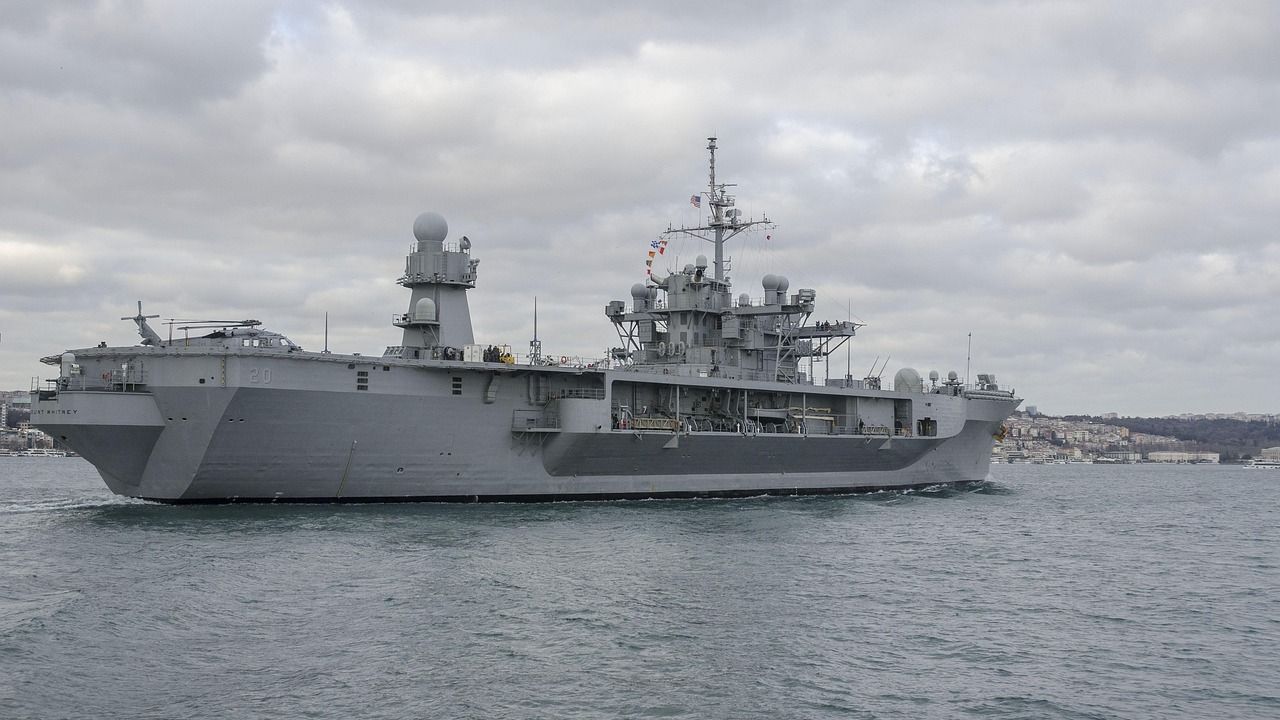

Iran threatens ships that take up U.S. offer on Strait of Hormuz transit – Image for illustrative purposes only (Image credits: Pixabay)
President Donald Trump initiated “Project Freedom” on Monday, deploying U.S. naval forces to guide commercial vessels through the Strait of Hormuz, a vital artery for global oil trade now snarled by conflict.[1][2] Iran responded swiftly, threatening attacks on any ships that accept the American offer, escalating risks in the waterway where thousands of mariners remain stranded.[3] This development tests a fragile ceasefire forged last month, as both sides maneuver amid ongoing peace talks channeled through Pakistan.
Trump’s Bold Move to Free Stranded Vessels
Trump announced the operation late Sunday on Truth Social, framing it as a humanitarian effort requested by neutral nations whose ships languish in the Persian Gulf.[2] “Countries from all over the World… have asked the United States if we could help free up their Ships, which are locked up in the Strait of Hormuz… They are merely neutral and innocent bystanders!” he wrote.[2]
The U.S. Central Command outlined a robust deployment: guided-missile destroyers, over 100 aircraft, unmanned systems, and 15,000 personnel to bolster security without direct escorts for each vessel.[1] Officials emphasized the mission’s defensive nature, aimed at restoring navigation freedom while upholding a blockade on Iranian ports. Early reports indicated U.S. assets moving into position as the first ships signaled interest in U.S. guidance.
Stranded traffic includes roughly 2,000 vessels and 20,000 crew members, many facing dwindling supplies after weeks of impasse.[3] Project Freedom marks Washington’s latest push to alleviate the logjam without reigniting full hostilities.
The Strait’s Pivotal Role in Global Commerce
The Strait of Hormuz funnels about 20 million barrels of oil daily – roughly one-fifth of global seaborne trade – alongside significant liquefied natural gas from Gulf producers.[1][3] Disruptions since late February have slashed flows, triggering the sharpest oil price spikes in decades, with Brent crude peaking above $126 per barrel in March.
Gulf exporters like Saudi Arabia and Iraq invoked force majeure, curtailing output by up to 70% in some cases, while U.S. gasoline prices climbed toward $5 per gallon in high-demand regions.[3] Fertilizer and helium markets also reeled, amplifying costs for agriculture and industry worldwide.
What Matters Now: With crews aboard trapped tankers running low on essentials, Project Freedom could ease immediate humanitarian strains but risks broader supply shocks if confrontations erupt.
Iran’s Military Draws a Hard Line
Iran’s Revolutionary Guard Corps and top commanders issued stark warnings Monday, vowing to target U.S. forces entering the strait and any vessels aligning with the American initiative.[1] Maj. Gen. Ali Abdollahi declared Iran would defend the waterway “with full strength,” while officials labeled the U.S. plan a ceasefire breach.
Tehran views the strait as sovereign territory under its northern control, where it has imposed tolls exceeding $1 million per passage during brief openings.[3] Past incidents underscore the peril: since the war’s outset, at least two dozen ships faced attacks, seizures, or harassment, claiming over a dozen seafarer lives.[3]
- April 18: Container ship CMA CGM Everglade damaged by rockets.
- April 22: Greek and Italian vessels Epaminondas and MSC Francesca captured after gunboat assaults.
- May 4: Fresh reports of a tanker struck by projectiles near the strait.
Such actions echo IRGC challenges earlier in the crisis, daring U.S. escorts and referencing 1980s tanker war precedents.[4]
From War to Ceasefire: A Tense Timeline
The crisis erupted February 28 when U.S.-Israeli strikes under Operation Epic Fury targeted Iranian nuclear sites and leadership, prompting Tehran’s retaliation and strait closure.[3] A temporary truce in early April allowed limited traffic, but U.S. port blockades and failed Islamabad talks reignited restrictions.
Recent diplomacy shows glimmers: Iran submitted a 14-point peace proposal via Pakistan, demanding sanction relief and force withdrawals, which Trump described as sparking “very positive discussions.”[1] Yet Monday’s tanker incident and Iranian media claims of repelling U.S. destroyers highlight persistent friction.
Navigating Uncertainty in a High-Stakes Standoff
Stakeholders from shipping firms to energy importers watch warily as U.S. presence intensifies. Neutral flag states like Panama and Liberia, operating many trapped vessels, urged caution without endorsing escorts.
While Project Freedom promises relief for isolated crews, Iran’s resolve signals potential flashpoints. The operation’s success hinges on de-escalation, underscoring how a narrow waterway continues to shape global fortunes amid fragile negotiations.[2]