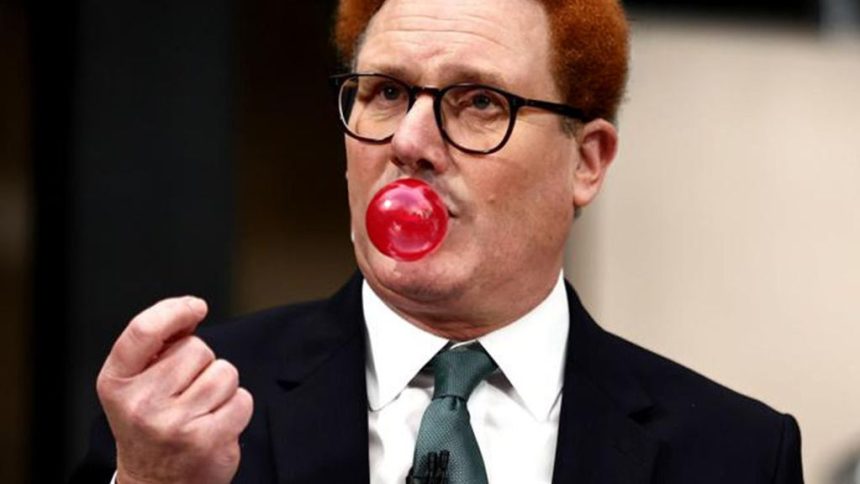

The lame duck prime minister’s survival guide – Image for illustrative purposes only (Image credits: Flickr)
Keir Starmer now confronts the practical reality of governing with diminished authority inside his own party. More than 90 Labour MPs have signalled they want him gone, and a potential leadership challenge from Health Secretary Wes Streeting has surfaced just as the government prepares to advance its legislative programme. The situation raises immediate questions about how much a prime minister can still achieve once colleagues begin to treat the end of the tenure as a foregone conclusion.
Former aides who served in similarly strained No. 10 operations describe a narrow set of tools that can buy time, even if they cannot restore lost confidence. These approaches centre on controlling the daily news cycle, using the formal powers of office, and forcing rivals to articulate a credible alternative. The stakes extend beyond Starmer’s personal position to the government’s ability to deliver on economic and foreign-policy priorities amid ongoing international instability.
Why the Timing Matters for Policy Delivery
The King’s Speech this week was intended to set out a clear legislative timetable, yet the leak of Streeting’s intentions overshadowed the moment. Starmer’s team responded by limiting access and shaping the narrative in real time, a tactic that former communications director Guto Harri says can shift the immediate balance of power. When the prime minister’s comments were briefed while Cabinet was still in session, the move created a short window in which opponents had to react rather than initiate.
That window is finite. Once leadership speculation dominates coverage, ministers and backbenchers alike redirect their energy toward positioning for a contest. The result is slower progress on bills that require sustained parliamentary management, particularly those touching sensitive areas such as health funding and economic stabilisation following recent global events.
Using the Formal Powers of Office
Incumbent prime ministers retain certain institutional advantages that can be deployed even when support is eroding. Scheduling decisions, such as placing the King’s Speech shortly after local elections, create brief periods in which attention shifts from internal plotting to ceremonial duties. Former chief of staff Gavin Barwell recalls how Theresa May used similar procedural arguments during her 2018 confidence vote to highlight the disruption any leadership change would cause.
Partner offer
Physical access to Downing Street itself also matters. Allowing cameras to record routine Cabinet proceedings can project an image of continuity, provided the prime minister appears in command during those moments. Harri notes that such controlled visibility serves as a reminder to colleagues that the occupant still holds the levers of government, even if only temporarily.
Managing Cabinet and Backbench Relations
Decisions about whether to retain or remove ministers who have expressed private doubts carry immediate consequences. Removing a figure such as Streeting risks accelerating resignations and leaks, while keeping them in post invites ongoing internal friction. Former special adviser Ross Kempsell emphasises that the chief whip’s personal standing with the prime minister becomes critical in these circumstances, because that individual must track shifting loyalties among MPs who will ultimately decide any leadership vote.
Backbench management extends beyond the Cabinet table. MPs who sense an imminent vacancy begin to weigh their own futures, and any perception that the prime minister is distracted by travel or external summits can loosen discipline further. Historical precedent shows that absences abroad have repeatedly coincided with intensified plotting inside the parliamentary party.
The Limits of Tactical Manoeuvres
Former aides are clear that procedural tactics and messaging discipline can extend a tenure by weeks or months, yet they do not address the underlying absence of enthusiasm for the leader’s programme. Barwell observes that Starmer entered office with a large majority that should have provided greater insulation than May enjoyed during the Brexit impasse. The fact that serious challenge has emerged so quickly points to deeper questions about policy direction and personal authority that no amount of briefing or scheduling can fully resolve.
Once speculation consumes government time, the capacity to advance substantive legislation shrinks. Resources that might have gone toward economic measures or international coordination instead focus on containing the next leak or managing the next resignation threat.
What matters now
Starmer’s immediate task is to demonstrate that his government can still pass meaningful legislation before internal divisions consume the remainder of the parliamentary session. Success on even a narrow set of priorities would strengthen the argument that continuity serves the party’s electoral interests better than an abrupt change.
Ultimately, the record of previous prime ministers suggests that survival depends less on any single manoeuvre and more on whether enough colleagues conclude that removing the leader would create greater problems than allowing the current arrangement to continue. For Starmer, that calculation will be tested repeatedly in the weeks ahead.
Partner offer
Planning a trip to Vegas?
Compare hotel rates and show tickets on VEGAS.com.