Pushback Against Editorial Stance (Image Credits: Upload.wikimedia.org)
Las Vegas – A local resident challenged Republicans to examine former President Donald Trump’s tenure amid ongoing concerns about the national debt.
Pushback Against Editorial Stance
Jerry Sturdivant penned a letter published in the Las Vegas Review-Journal on Friday, responding to the newspaper’s Thursday editorial on federal finances. The editorial highlighted grim projections from the Congressional Budget Office, noting persistent deficits and rising interest costs with no encouraging developments.[1][2]
Sturdivant took issue with the editorial’s phrase, “Democrats take note.” He argued that Democrats had already flagged significant debt growth under Trump. The writer questioned why Republicans, who position themselves as the party of fiscal responsibility and smaller government, continued to advocate for expanded tax cuts.
This exchange underscores tensions in public discourse as lawmakers grapple with a debt exceeding $38 trillion.[3]
Debt Growth During Trump’s Presidency
The national debt saw substantial increases during Trump’s four years in office. Publicly held debt rose from about $19.9 trillion at his inauguration to roughly $27.7 trillion by January 2021, marking an approximate 39 percent jump.[4][5]
Sturdivant referenced a roughly 25 percent rise, aligning with critiques that highlighted Trump’s contributions before the COVID-19 pandemic accelerated spending. Policies such as the 2017 Tax Cuts and Jobs Act reduced revenues, while bipartisan spending bills added to deficits.
Proponents of the tax cuts maintained they spurred economic growth, but critics pointed to lasting revenue shortfalls that fueled borrowing.
Republican Proposals Under Scrutiny
Sturdivant warned that further tax reductions, particularly benefiting high earners, would exacerbate the problem. Republicans have floated plans for additional cuts as part of their agenda following recent electoral gains.
Historical data shows tax policy plays a key role in debt dynamics:
- Trump’s 2017 tax law cost an estimated $1.9 trillion over a decade, per initial projections.
- Deficits averaged over $1 trillion annually pre-pandemic under Trump.
- Recent GOP platforms emphasize growth through lower taxes despite fiscal warnings.
- COVID relief packages, signed by Trump, added trillions more amid economic shutdowns.
- Interest payments now consume a growing share of the budget, projected to hit 4.6 percent of GDP by 2036.
Comparing Administrations’ Debt Impacts
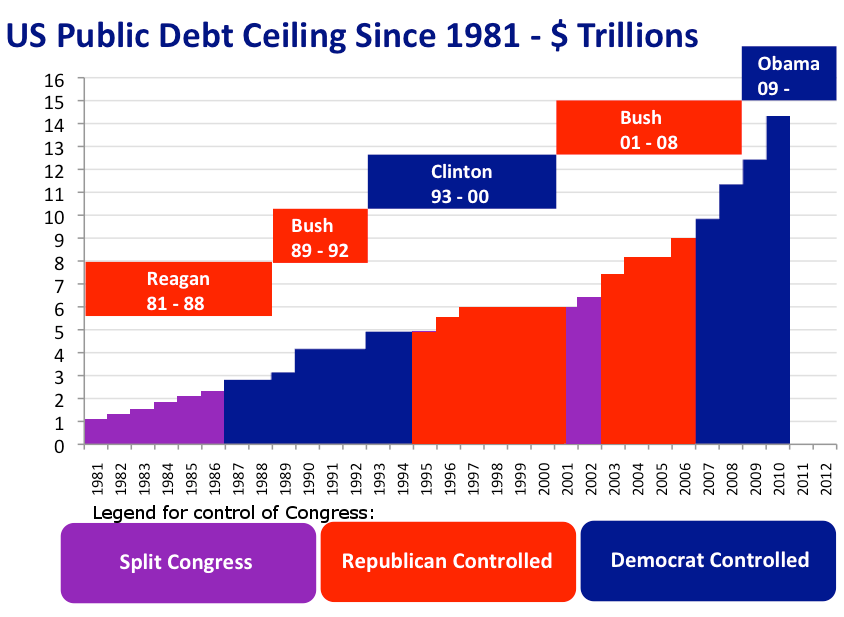
Debt accumulation spans presidencies, influenced by Congress, crises, and policy choices. A quick comparison illustrates patterns:
| President | Dollar Increase (Trillions) | Percentage Increase |
|---|---|---|
| Obama (2009-2017) | ~8.6 | ~94% |
| Trump (2017-2021) | ~7.8 | ~39% |
| Biden (2021-2025) | ~7.0 (through mid-2025 est.) | ~25% |
These figures reflect gross debt held by the public. Each era faced unique pressures, from recessions to pandemics.
Sturdivant’s letter prompts reflection on whether party labels align with actions on fiscal restraint.
Key Takeaways:
- National debt climbed sharply under Trump, driven by tax cuts and spending.
- Republicans face calls to reconcile rhetoric with policy proposals.
- Interest costs threaten future budgets regardless of party control.
As debates intensify ahead of budget battles, Sturdivant’s voice from Las Vegas highlights a core question: Who truly bears responsibility for America’s fiscal path? What steps would restore balance without stifling growth? Share your views in the comments.