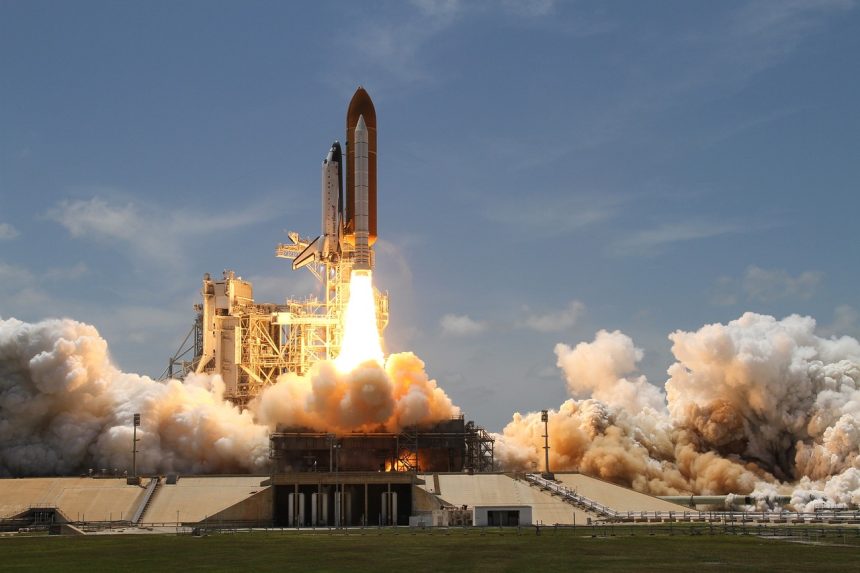
A Historic Crew Steps Forward (Image Credits: Pixabay)
Kennedy Space Center, Florida — Four astronauts donned their pressure suits and rolled out to Launch Pad 39B on Wednesday, marking the final steps before NASA’s Artemis II mission lifts off.[1][2] This crewed flight will send humans around the Moon for the first time since 1972, testing systems for future deep-space exploration.[3] With a launch window opening at 6:24 p.m. ET, teams monitored favorable weather conditions and completed fueling operations.[4]
A Historic Crew Steps Forward
Commander Reid Wiseman led the team as they departed the Neil Armstrong Operations and Checkout Building in the iconic Astrovan, flanked by support vehicles.[5] Pilot Victor Glover, Mission Specialist Christina Koch, and Mission Specialist Jeremy Hansen followed close behind, each embodying milestones in spaceflight history. Koch will become the first woman to venture toward the Moon, while Hansen marks Canada as the sixth nation to send an astronaut beyond low-Earth orbit.[2]
The astronauts completed suit-up procedures earlier in the day, a process that ensures their safety during the intense ascent. NASA reported smooth progress, with the crew now strapped into the Orion spacecraft atop the Space Launch System (SLS) rocket. This moment captivated onlookers, evoking memories of Apollo-era launches from the same pad.[6]
The Powerhouse Behind the Mission
The SLS rocket, standing tall at Launch Complex 39B, represents NASA’s most powerful launch vehicle to date. Fully fueled and verified through recent rehearsals, it promises to propel Orion into a trajectory that loops around the Moon.[7] Engineers conducted a wet dress rehearsal weeks ago, simulating the full countdown and confirming the stack’s readiness after rollout from the Vehicle Assembly Building on March 20.[8]
Orion’s design prioritizes crew safety in deep space, featuring advanced life support and heat shield technology tested during the uncrewed Artemis I in 2022. During this 10-day journey, the spacecraft will travel thousands of miles beyond the Moon’s far side before splashing down in the Pacific Ocean. NASA emphasized that every system performed as expected in pre-launch checks.[9]
Mapping the 10-Day Lunar Path
The mission profile unfolds in precise stages, beginning with liftoff and Earth orbit insertion. Orion will then fire its engines for a trans-lunar injection, setting course for a free-return trajectory around the Moon.[10] Crew members will conduct checkouts, including manual flight tests and communication blackouts to simulate deep-space conditions.
- Day 1-2: Ascent to orbit and outbound transfer.
- Day 4: Lunar flyby, closest approach at about 80 miles.
- Day 6-8: Distant lunar views and science demos.
- Day 10: Reentry and splashdown.
This path validates Orion’s capabilities without risking a landing, paving the way for Artemis III’s surface mission. Backup launch windows extend through the week if needed, though forecasts predict clear skies.[11]
Milestones and What Lies Ahead
Artemis II revives human lunar exploration after Apollo 17’s departure in December 1972. The program aims to establish a sustainable presence on the Moon, supporting Mars ambitions. Delays from technical hurdles pushed the date from 2025, but recent milestones restored momentum.[12]
International partners, including the Canadian Space Agency, contributed to Hansen’s role and Gateway station plans. Success here will boost confidence in Orion for longer durations. NASA tracked the mission in real time, offering public tools for following the flight.[9]
| Launch Window | Date | Time (ET) |
|---|---|---|
| Primary | April 1 | 6:24 p.m. |
| Backup 1 | April 2 | 5:45 p.m. |
| Backup 2 | April 3 | 5:12 p.m. |
Key Takeaways:
- First crewed Artemis flight tests Orion in deep space.
- Four astronauts: Wiseman, Glover, Koch, Hansen.
- 10-day mission circles the Moon without landing.
As the clock ticks toward potential liftoff, Artemis II stands as a bridge to humanity’s next giant leap. This mission not only honors past achievements but charts a course for lunar bases and beyond. What are your thoughts on this return to the Moon? Share in the comments below.