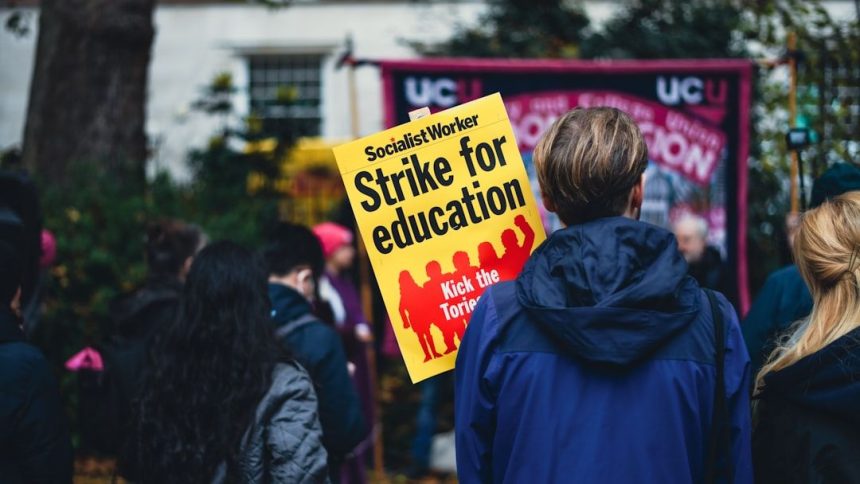
Roots of a Rare District Walkout (Image Credits: Unsplash)
Santa Fe Springs, Calif. — Parents and students in the Little Lake City School District gained a measure of relief Wednesday when teachers and administrators announced a tentative agreement to conclude a strike that disrupted schooling for more than a week.[1][2] The walkout, the district’s first in 150 years, forced families to manage childcare amid picket lines and shortened school days, leaving many feeling the strain of lost instructional time.
Teachers from the Little Lake Education Association returned to negotiations after months of impasse, securing commitments that address core concerns over working conditions and benefits. Classes will resume Thursday, allowing roughly 3,500 students across Santa Fe Springs, Norwalk, and parts of Downey to return to normal routines.[3]
Roots of a Rare District Walkout
The strike began April 16 following eight months of stalled contract talks. Educators authorized the action with 94% support, protesting changes that hit their finances and classrooms hard.[4] For the first time since the district’s founding, teachers walked out, marking the third-longest such action in California over the past three decades.[2]
District leaders maintained schools on minimum schedules with substitutes and support staff, but attendance dropped as families opted out. Superintendent Jonathan Vasquez accelerated his retirement amid the pressure, citing health reasons, and paving the way for interim leader Monica Martinez-Johnson to step in.[3] Tensions peaked when police intervened during one bargaining session after parents sought to confront officials.
Core Disputes That Fueled the Picket Lines
Teachers highlighted surging healthcare premiums after the district ended full subsidies on January 1, shifting up to $1,400 monthly out-of-pocket to employees for common plans. This effectively cut take-home pay at a time when inflation squeezed household budgets.[3]
Partner offer
Administrators also proposed raising class sizes from 24-to-1 ratios in early grades to the state maximum of 28, while resisting added aides for a growing special education population. With 80% of students eligible for free or reduced lunch, educators argued these moves undermined learning for vulnerable children. One teacher captured the exhaustion: “We’re trying to stay positive but every day feels like a punch to the gut. I’m losing sleep.”[3]
Breakthrough Terms Bring Relief
The tentative pact caps healthcare premiums between $0 and $630 per month based on plan choice, easing the financial burden that sparked the unrest. Class sizes remain protected at current levels, thwarting increases that would have strained resources further.[3]
Additional support arrives for special education students, a demand the district initially rebuffed. Members also received a $1,000 one-time bonus, though short of the $4,000 sought, with no across-the-board raise attached to salary scales topping out near $118,000. The district emphasized fiscal prudence in its $73 million budget, where salaries and benefits consume over $53 million.[3]
- Healthcare premiums capped at $0-$630 monthly.
- Class sizes held steady, no increases to state max.
- Extra aides for special education classrooms.
- $1,000 bonus per educator.
Next Steps Amid Community Scars
Ratification votes will follow soon after teachers report Thursday, with full details emerging post-approval. Both sides acknowledged the toll on students, who lost about 6% of the school year to the dispute.[1] The district stated, “This agreement reflects meaningful progress and a renewed focus on what matters most: restoring stability for students, supporting our teachers, and getting educators back into classrooms as quickly as possible while maintaining the fiscal responsibility needed to protect the long-term stability of the District.”[2]
Union leaders praised community solidarity during marches and rallies. Yet parents like Sherry Gonzalez voiced frustration over the wedge driven into neighborhoods: “As a parent it’s just been hard… We feel worn down, tired, and like we’re being ignored.”[3] As classrooms refill, the focus shifts to rebuilding trust in a district facing statewide pressures from enrollment drops and expiring aid.
The resolution underscores broader challenges in California schools, where rising costs collide with tight budgets. For Little Lake families, the return to routine offers a quiet victory after days of uncertainty.
Partner offer
Planning a trip to Vegas?
Compare hotel rates and show tickets on VEGAS.com.