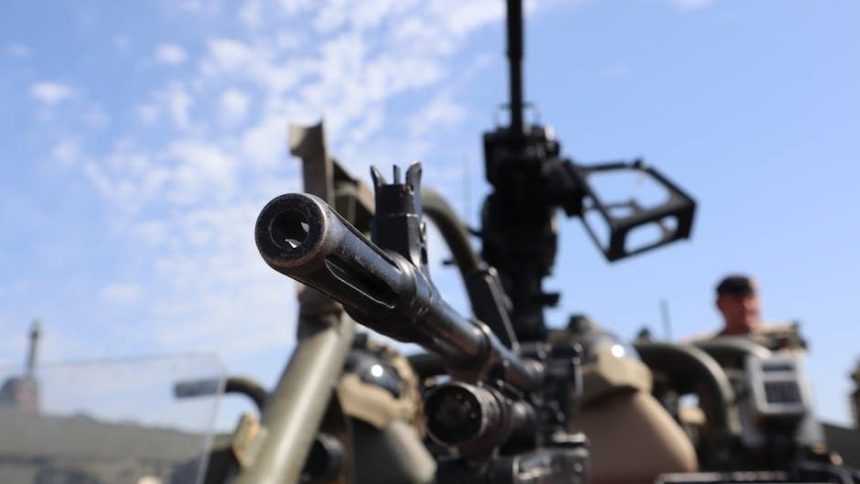
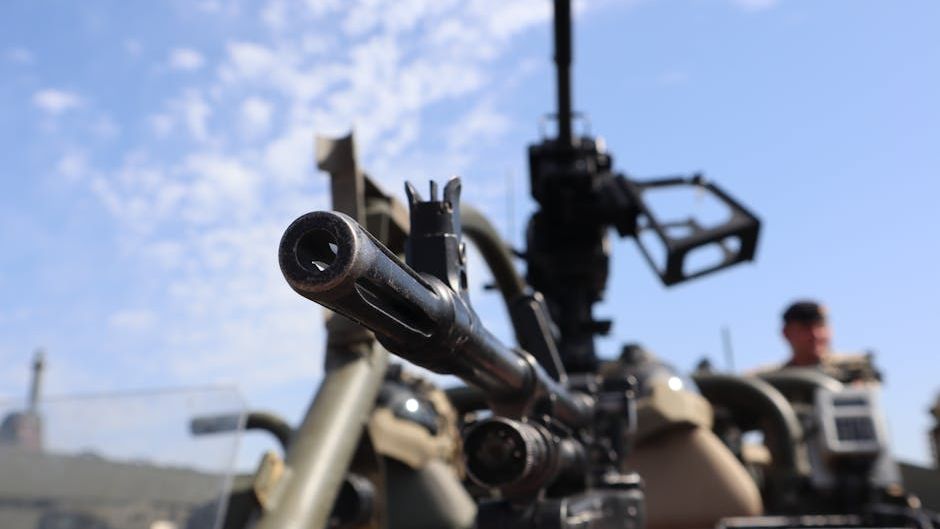
The New Directive Reshapes Base Security (Image Credits: Pexels)
A recent directive from Defense Secretary Pete Hegseth has lifted longstanding restrictions on personal firearms at U.S. military installations. The change allows off-duty service members to request permission to carry their own weapons on base, marking the end of what critics called dangerous gun-free zones. Dr. John Lott, president of the Crime Prevention Research Center, highlighted the shift during an appearance on the Lars Larson national radio show last week.[1][2]
The New Directive Reshapes Base Security
Secretary Hegseth signed the memo on April 2, 2026, instructing commanders to approve requests from uniformed personnel to carry privately owned firearms while off-duty. Denials now require specific, written justifications, creating a presumption in favor of allowing the carry.[3][2] This policy applies to Department of Defense properties in the United States and aims to address vulnerabilities exposed by past attacks.
Hegseth emphasized the training level of service members in announcing the move. “Uniformed service members are trained at the highest and unwavering standards,” he stated. The undersecretary for intelligence and security will update department manuals to implement the permitting process. Previously, bases functioned as gun-free zones for most personnel, with severe penalties for violations including court-martial and imprisonment.[1]
Deadly Incidents That Fueled the Change
U.S. military bases have suffered multiple shootings over the years, often in environments where victims lacked immediate access to firearms. At Fort Hood in 2009, Major Nidal Hasan killed 13 people. Five years later, another attack there left three dead and more wounded.[1][3]
Other tragedies include the 2013 Navy Yard shooting, the 2015 Chattanooga recruiting center attack, and the 2019 Naval Air Station Pensacola incident where three died and eight were injured. More recently, a 2025 shooting at Fort Stewart wounded five soldiers, and a March 2026 event at Holloman Air Force Base resulted in a fatality. In each case, unarmed personnel hid or fled while attackers operated unimpeded for critical minutes.[1]
Partner offer
- Fort Hood (2009): 13 killed
- Fort Hood (2014): 3 killed
- Naval Air Station Pensacola (2019): 3 killed, 8 wounded
- Fort Stewart (2025): 5 wounded
- Holloman AFB (2026): 1 killed
Lott’s Op-Ed Lays Out the Risks of Disarmament
In his April 4 Real Clear Politics piece, Lott detailed how bases became gun-free under policies from the early 1990s. President George H.W. Bush sought a more “professional” military, and President Clinton banned personal firearms in 1993. Yet troops in Iraq and Afghanistan carried weapons on base without incident, underscoring the policy’s flaws at home.[1]
Lott pointed to broader data on mass shootings. Research indicates 93% occur in gun-free zones, where attackers face no resistance. Diaries and manifestos often reveal deliberate targeting of such areas. Civilians with concealed permits stop attacks more frequently than police, who face higher risks themselves.[1] Military police guard entrances but cannot patrol everywhere, leaving vast areas exposed.
It’s no coincidence that 93% of mass public shootings happen in places where guns are banned.
– John R. Lott Jr.[1]
Radio Spotlight Amplifies the Debate
On April 8, from 5:35 to 5:43 p.m. ET, Lott joined Lars Larson to discuss his op-ed and the policy reversal. The segment focused on why bases should never have imposed gun-free rules on trained soldiers. Lott argued that such measures only embolden attackers who anticipate unarmed victims.
Hegseth echoed this in his announcement: “Our military installations have been turned into gun-free zones – leaving our service members vulnerable and exposed. That ends today.”[1] The change aligns bases with service members’ off-base rights and could deter future threats. As implementation proceeds, commanders face new responsibilities to balance security and rights.
This shift promises a safer environment for those who defend the nation, closing a long-standing gap in preparedness.
Partner offer
Planning a trip to Vegas?
Compare hotel rates and show tickets on VEGAS.com.