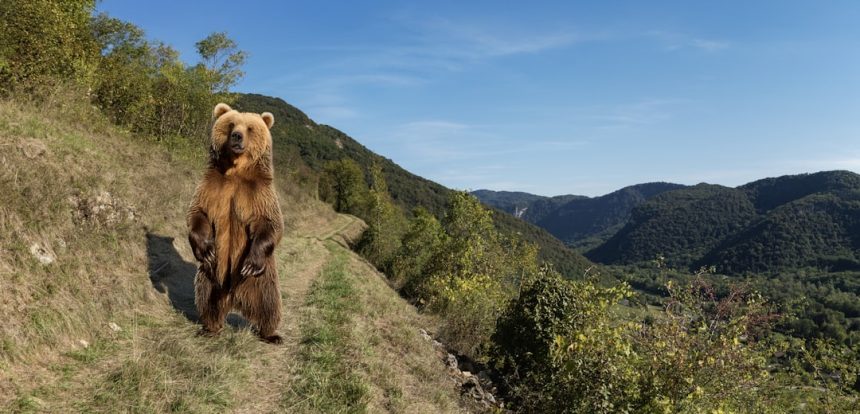
A Frightening Morning Encounter (Image Credits: Unsplash)
Monrovia – A local woman faced a startling confrontation with a black bear while walking her dog in the city’s foothills, suffering only minor injuries after the animal swiped at her leg. The incident unfolded Saturday morning in a residential neighborhood bordering wildlife habitat, highlighting the occasional overlap between human activity and California’s abundant bear population. Authorities emphasized the rarity of such direct contact, marking it as an outlier in an area accustomed to bear sightings.[1][2]
A Frightening Morning Encounter
The episode occurred around 9:20 a.m. on the 700 block of Oakglade Drive, near the Ridgeside area in Monrovia’s foothills. The woman strolled with her dog when an adult black bear approached her directly. It then “kind of charged” her, according to Monrovia Police Lt. Kevin Oberon, before clawing the back of her knee.[1]
She managed to retreat from the scene, unharmed beyond the swipe, which caused non-life-threatening injuries. A nearby resident dialed 911, and paramedics transported her to a local hospital for treatment. Officials confirmed she would recover fully, with her dog escaping unscathed. The California Department of Fish and Wildlife received notification and dispatched officers to the site.[2][3]
Police Label Attack as Unprecedented
Lt. Oberon described the event as unusual during his 23 years with the department. He noted it represented the first instance he knew of a bear physically swiping a human in Monrovia. Such direct aggression stood out against the backdrop of more typical sightings, where bears generally avoid confrontation.[1]
Responders arrived promptly, but the bear had already departed. Wildlife officials set a trap near a neighbor’s home, where bears had lingered recently. Later that day, they relocated a bear and its two cubs from the vicinity, though confirmation on whether it matched the attacker remained pending DNA analysis.[4]
Neighbors Share Accounts of Heightened Bear Presence
Residents in the Oakglade-Ridgeside neighborhood reported multiple bear observations in recent weeks. One witness recounted the chaos: the dog barked frantically, the woman screamed, and the bear alternated charges between them before pursuing the fleeing pet briefly. Next-door neighbors emerged with an airhorn, potentially deterring further advance.[5]
Partner offer
Others mentioned a bear residing under a house for two months, possibly with cubs, and damaging a car cover. A neighbor named Robert expressed shock, having lived there since 2020 without prior human attacks. Julie Strople spotted a bear nearby moments earlier and verbally urged it away. Such familiarity bred caution, with locals joking about naming the visitors while stressing respectful distance.[3]
Factors Drawing Bears into Foothill Communities
California boasts about 60,000 black bears, the largest number in the contiguous United States, with frequent appearances around the San Gabriel Mountains. Human expansion into wildlands coincides with bears venturing into former no-go zones for food and water. The 2025 Eaton fire near Altadena likely exacerbated this, scorching habitats and pushing animals toward neighborhoods.[1]
Bears possess an acute sense of smell, zeroing in on unsecured trash, pet food, or fruit trees. A bear raided a Claremont home the previous day, devouring snacks via an open door. Monrovia officials urged securing attractants to minimize conflicts.[2]
Proven Strategies to Avoid Bear Conflicts
Authorities reiterated standard protocols for foothill dwellers. Encounters demand composure to prevent escalation.
- Stay calm and speak firmly to identify as human, not prey.
- Never run; instead, back away slowly while maintaining eye contact and providing ample space.
- Make yourself appear larger by raising arms or standing tall if the bear approaches.
- Secure garbage, pet food, and bird feeders – remove them nightly or use bear-proof containers.
- Avoid leaving scented items outdoors, even non-food products like cosmetics.
- Report sightings to 911, especially aggressive behavior.
These measures foster coexistence in bear-prone zones like the San Gabriel Valley.[5][2][6]
Key Takeaways
- Bear attacks remain rare despite California’s large population of 60,000 black bears.[1]
- This swipe marked a first for Monrovia police in over two decades.
- Prevent draws by locking away food sources and trash.
As bears and residents navigate shared spaces, vigilance ensures safety for all. Simple habits like proper storage can prevent future close calls. What steps do you take in bear country? Share in the comments.
Partner offer
Planning a trip to Vegas?
Compare hotel rates and show tickets on VEGAS.com.