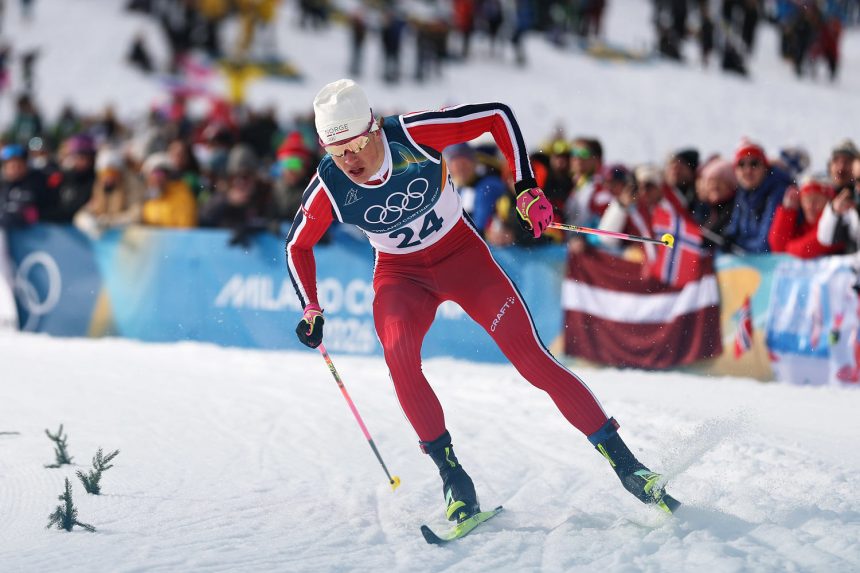

Five Golds and Counting: Klaebo’s Reign (Image Credits: Media-cldnry.s-nbcnews.com)
Tesero, Italy – A Norwegian skier’s pursuit of unprecedented glory at the Milan-Cortina Winter Olympics encountered an unlikely obstacle in the form of unreliable internet.[1]
Five Golds and Counting: Klaebo’s Reign
Johannes Hoesflot Klaebo entered the Dolomites carrying immense expectations. The 29-year-old Norwegian had already secured five Olympic gold medals, positioning him just three victories away from matching the all-time Winter Games record held by fellow countrymen.[1]
Klaebo earned the moniker “King” through sheer dominance in cross-country skiing. He holds the title of reigning world champion across all six events in the discipline. During these Olympics, he aimed to achieve something historic: capturing gold in every cross-country event at a single Games.[1]
Competitors in endurance sports like this one endure punishing conditions on snow-covered trails. Yet Klaebo’s preparation extended beyond physical training. He spent over 250 days a year on the road, requiring strategies to maintain mental balance.[1]
Video Games Fuel Recovery Routine
To unwind after intense sessions, Klaebo relied on video gaming. He packed a screen and PlayStation console in his luggage for every trip. The first-person shooter “Battlefield” became a staple, allowing online play with friends back home.[1]
“A great way to switch your mind off,” Klaebo explained. He described the evenings as a deliberate shift from skiing discussions to casual chats. This ritual helped regulate nerves, ensuring peak performance the next day.[1]
The approach proved effective amid the high-stakes environment. Gaming sessions provided recovery time after days filled with extreme focus and exertion. Klaebo viewed it as essential for sustaining his edge.[1]
Spotty Connection Disrupts Decompression
Arrival in Tesero brought an immediate setback. Klaebo struggled to connect his console due to weak Wi-Fi in his accommodations. The signal proved too feeble for smooth online play.[1]
“The conclusion was that the internet was a bit too weak,” he noted last week. Klaebo took action, urging local providers to intervene. He even offered to cover costs for a direct cable installation if needed.[1]
- Weak signal prevented PlayStation connectivity upon arrival.
- Klaebo contacted Italian services for upgrades.
- He pledged personal funds for a wired solution as a last resort.
- Gaming formed a core part of his mental reset strategy.
“I depend on it completely so I am willing to pay a lot to get it sorted,” Klaebo said. The issue highlighted a modern challenge for athletes wired into digital escapes.[1]
Medals Roll In Despite Distractions
Wi-Fi woes failed to derail Klaebo’s on-snow results. He claimed gold in Sunday’s skiathlon, followed by victory in Tuesday’s sprint classic final. In the sprint, he powered uphill faster than a six-minute-mile pace on skis.[1]
These triumphs elevated his career total to seven Olympic golds. One more win would tie the record shared by three Norwegians from cross-country and biathlon backgrounds. After Sunday’s success, Klaebo planned to celebrate with evening games – if the connection cooperated.[1]
Teammate Johannes Dale-Skjevdal, a biathlete, faced similar issues. He switched rooms for better service and played “Battlefield” against French rivals. Dale-Skjevdal assured observers he prioritized sleep, logging sufficient rest despite late-night troubleshooting.[1]
Key Takeaways:
- Klaebo’s seven Olympic golds position him near history.
- Gaming aids mental recovery for traveling athletes.
- Poor infrastructure can impact even top performers.
Klaebo’s story underscores how elite athletes blend old-school grit with contemporary habits. As races continue in the Dolomites, reliable connectivity may prove as crucial as wax on skis. What role do you think tech plays in top-level sports? Tell us in the comments.