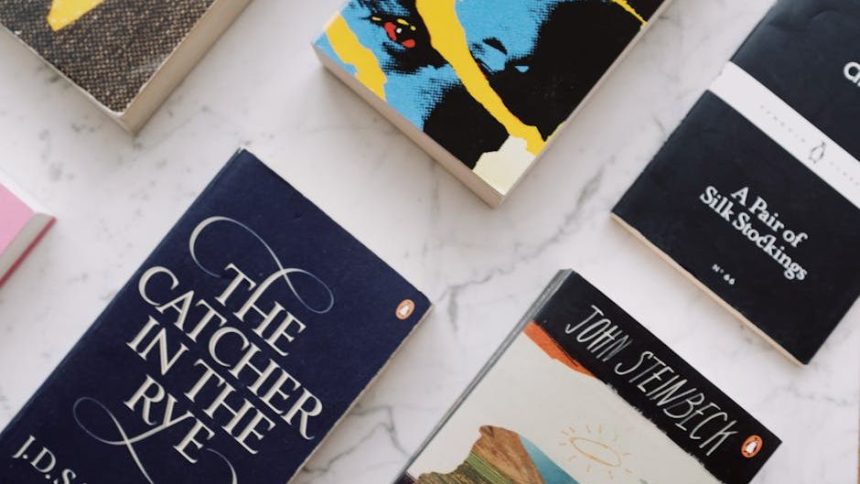
There is something almost impossible to explain about what happens when the right book lands in the right moment. It isn’t just entertainment. It is, in the truest sense, a detonation – quiet at first, then thunderous. History is full of examples where a single story didn’t just reflect society but actually shook it, reshaped it, forced it to look in a mirror it had been carefully avoiding.
Most of us think of novels as private things. Something you read in bed, on a commute, maybe with a cup of coffee. But some books have started wars. Some have ended them. Some have changed the laws that govern your life without you ever knowing it. What follows is a gallery of exactly those books – works that crossed the line from storytelling into revolution. Brace yourself.
Uncle Tom’s Cabin: The Novel That Helped Start a Civil War

Imagine writing a book and having a president suggest it helped ignite a national conflict. That is essentially what happened to Harriet Beecher Stowe. Uncle Tom’s Cabin, published in 1852, was the most popular 19th-century novel and, after the Bible, was the second-best-selling book of that century. The numbers alone are staggering.
The book was a runaway bestseller, selling 10,000 copies in the United States in its very first week, 300,000 in the first year, and in Great Britain, 1.5 million copies in one year. Those are figures that would impress a modern publisher. In the 1850s, they were borderline miraculous.
Stowe’s genius was in recognizing that political arguments, while essential, often failed to reach the hearts of everyday citizens. By telling a deeply personal and morally charged story, she turned passive readers into passionate advocates. Its emotional storytelling humanized enslaved people and stirred public opinion in the North, helping to fuel the abolitionist movement.
The book played a pivotal role in the American abolitionist movement, helping to raise awareness of the plight of enslaved people. Its impact was so great that it changed the course of history and contributed to the eventual end of slavery in the United States with the passage of the Thirteenth Amendment in 1865. That is not a small thing. That is a novel rewriting constitutional law.
George Orwell’s 1984: A Warning That Keeps Coming True
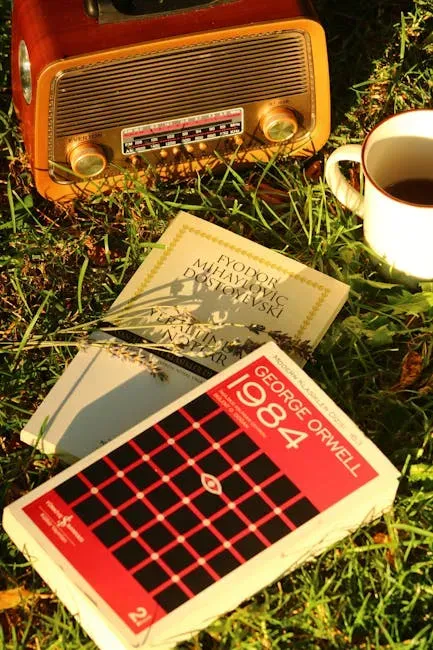
Here is the thing about 1984 – it was written as a warning, and yet every generation seems to need to rediscover it in a panic. George Orwell’s 1984 is a book that has haunted readers since its publication in 1949. In a world where power dynamics are increasingly influenced by technology, misinformation, and political manipulation, the dystopian society Orwell created seems less like fiction and more like a reality we’re living in today.
The sales of this dystopian classic have seen significant spikes in response to major political and social events. The renewed interest in Orwell’s work often occurs during periods of political upheaval or when current events draw parallels to the themes he explored, such as authoritarianism, surveillance, and the manipulation of truth. It is less a book at this point and more of a political seismograph.
President-elect Trump’s return to the White House in November 2024 sent books about totalitarianism, tyranny and dystopia soaring off the shelves, with titles by Margaret Atwood and George Orwell climbing Amazon’s rankings. After Trump’s win, sales of The Handmaid’s Tale shot up 6,866%, CNN reported. The urgency of Orwell’s imagination, it turns out, never really goes away.
Phrases like “Big Brother” and “doublethink” are now part of our everyday vocabulary. That is an extraordinary legacy for a piece of fiction. That’s why 1984 remains urgently relevant. It’s not just a story anymore – it’s becoming our user manual for recognizing and resisting the real-world Big Brothers of our time.
The Jungle by Upton Sinclair: When Fiction Changed Food Safety Law

Upton Sinclair wrote The Jungle to expose the exploitation of immigrant workers in Chicago’s meatpacking industry. He wanted to spark outrage about labor conditions. What actually happened was something far more immediate – and far messier. Although the book was written to highlight the plight of the working poor and the deep-rooted corruption of people in power, it also sparked a public outcry over food hygiene. Sinclair famously complained that he aimed for the public’s heart and by accident hit it in the stomach.
After reading The Jungle, President Theodore Roosevelt commissioned an investigation into Chicago’s meat-packing industry. Within a year, the Meat Inspection Act was passed, along with the Pure Food and Drug Act, which later paved the way for the Food and Drug Administration. Think about that. A novel directly triggered the creation of a federal agency that still regulates food safety today.
Known as a muckraker for exposing issues society was unaware of, Sinclair changed American government, business, and social awareness like no other. Honestly, the irony of his situation is almost poetic. He set out to be a champion of the working class and ended up reforming the food industry. This one particular book led to the first legislative acts for food purity, which in turn paved the way for many others over the years.
The Handmaid’s Tale: Dystopia as a Living Political Blueprint
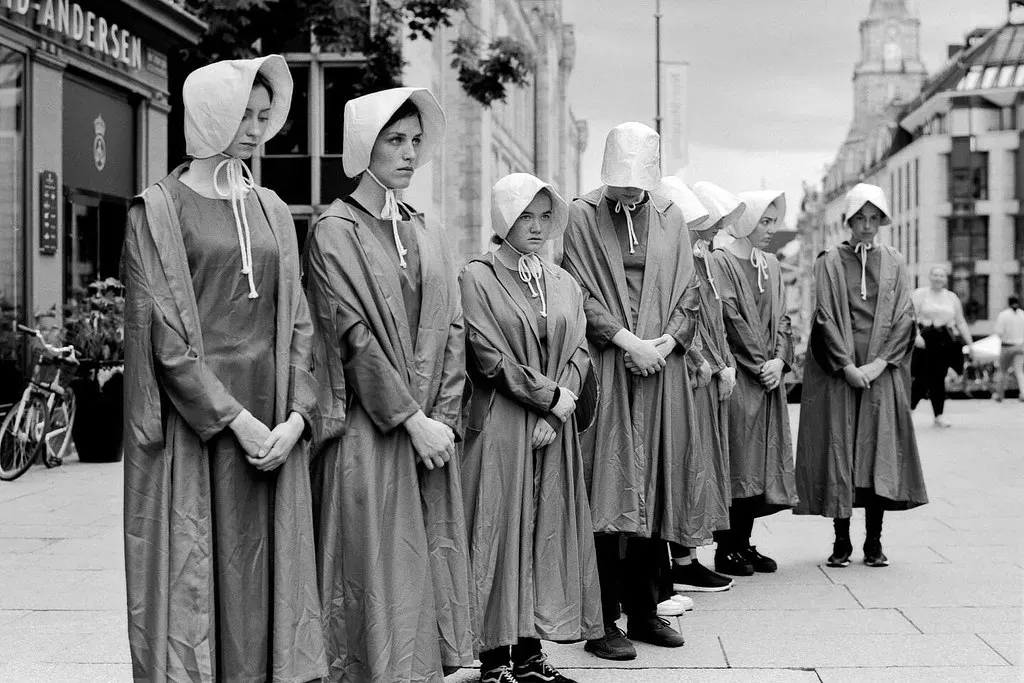
Margaret Atwood’s The Handmaid’s Tale envisioned a future where women’s rights were stripped away, sparking conversation around autonomy and resistance. Published in 1985, it was considered a dark fantasy. In 2024 and 2025, it reads closer to a current affairs brief than science fiction. That shift is deeply unsettling – and wildly significant.
Margaret Atwood’s novel was the number two slot on Amazon’s best sellers list the Friday after the 2024 U.S. election. That’s up from number 209 ahead of the election. In a matter of hours, a novel about the suppression of women’s bodies became the most urgently purchased book in America. That kind of cultural reflex doesn’t happen by accident.
Atwood’s publicist told NPR in February 2017 that The Handmaid’s Tale had seen a more than 200% increase in sales after Trump’s initial election months prior. The pattern repeated itself in 2024. The Handmaid’s Tale is described as an instant classic and eerily prescient cultural phenomenon. That word “prescient” is doing a lot of heavy lifting – and it’s entirely earned.
Things Fall Apart: Colonialism Confronted Through Story

Perhaps the best-known novel of Nigerian novelist, poet and essayist Chinua Achebe describes a tribal society falling apart as a result of the arrival of Christian missionaries. Published in 1958, it gave the African continent a literary voice at precisely the moment it needed one most. It pushed back against an entire tradition of Western literature that had portrayed Africa as a backdrop, never a protagonist.
Written in 1958, the novel has sold more than 10 million copies around the world and has been published in some 50 languages. It is still widely read and studied as an example of the impact of colonialism on African culture and identity. Fifty languages. That kind of reach rewrites the meaning of influence. It becomes something closer to cultural restoration.
These revolutionary classics introduced new styles, tackled forbidden topics, and often forced entire societies to look at themselves differently. Just as modern classics continue to push boundaries today, these historical milestones remind us that storytelling isn’t just entertainment – it’s an act of transformation. Things Fall Apart did exactly that. It didn’t just tell the story of the Igbo people. It demanded that the world recognize what had been done to them.
The Feminine Mystique: How a Book Broke the Mold of Womanhood
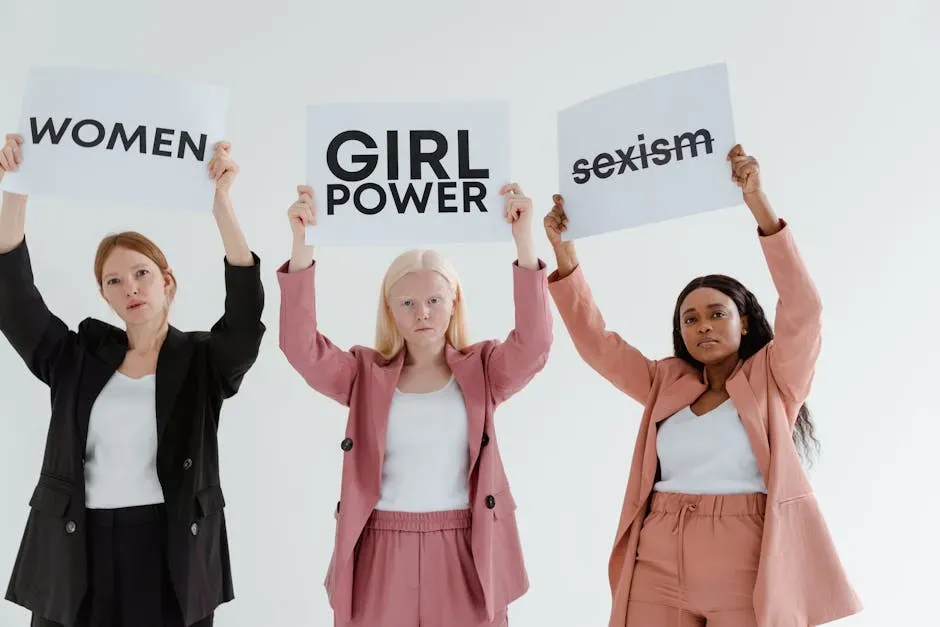
The Feminine Mystique by Betty Friedan, published in 1963, is often credited with sparking the second wave of feminism in the United States. The book critiqued the societal expectations of women in the post-World War II era, particularly the notion that women should find fulfillment solely through marriage and motherhood. It named a problem that millions of women were experiencing but had no words for.
Her book broke new ground by exploring the idea of women finding personal fulfillment outside of their traditional roles, influencing many women in the United States, helping spur the movement. I think it’s hard to overstate how radical that was. Simply saying, out loud and on paper, that domestic life wasn’t enough – that was an act of courage in 1963.
The Feminine Mystique had a lasting impact on the feminist movement and continues to be a cornerstone in the study of gender and women’s rights. The book was instrumental in reshaping American society’s views on gender roles, and its themes are still discussed in contemporary feminist discourse. Over six decades later, people are still arguing about the ideas it introduced. That’s not a sign of a book’s failure. That’s a sign of a book’s permanent relevance.
Books as Catalysts: What the Research Actually Tells Us
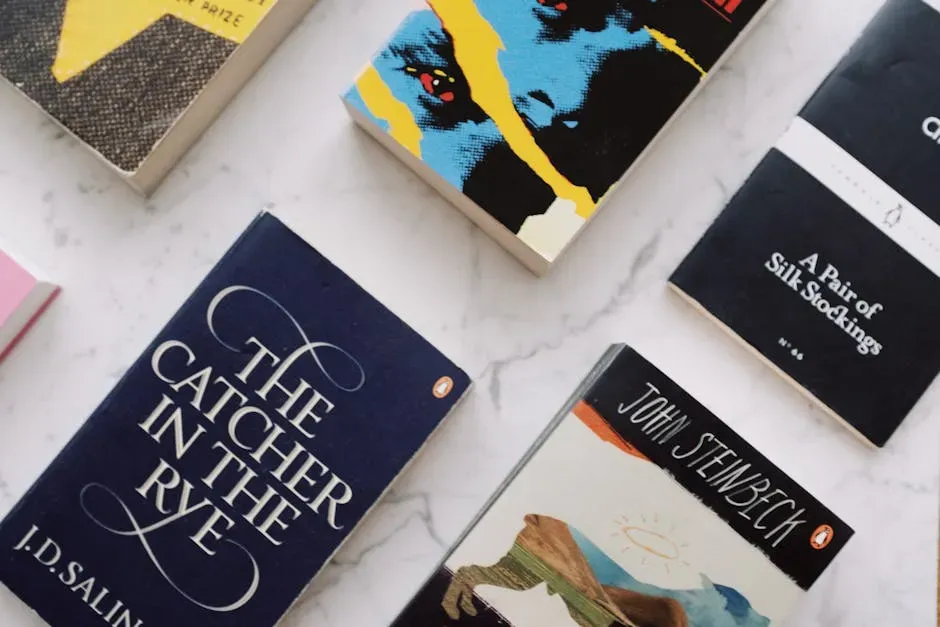
It’s easy to romanticize the idea of a single book changing the world. The reality is more complicated, and honestly, more interesting. Both popular narratives and scholarly treatments identify certain books published in the early 1960s as having spurred important social movements and government action. This “big book myth” provides a simple origins story for social movements – a version of an “immaculate conception” notion of social change. The truth is messier than that.
A study indicated that individuals who read political texts are 25% more likely to vote than those who don’t. This statistic is hardly surprising – when readers engage with political literature, they often develop a stronger sense of civic duty. Books don’t just inform us. They activate something in us. They make us feel like our choices matter, like the world is something that can actually be changed.
In states where a book was banned, its circulation increased by 11% in other states that didn’t impose the ban. This phenomenon suggests that book bans often lead to heightened curiosity and demand among readers who relish the thrill of accessing what they can’t have. There’s a beautiful irony there. Suppressing a revolutionary idea often makes it more powerful. Books do more than tell stories – they introduce ideas that challenge the status quo and inspire new ways of thinking. They reach people across time and space, setting the stage for movements that push for real change.
In the end, the most revolutionary novels are the ones that make us feel less alone in our anger, our grief, or our hope. They give the unnamed feeling a name. That is not a small power. That might be the greatest power there is. What book has made you see the world differently – and did you expect it to?