
Most people assume that when a prison door opens, that’s where the story ends. The sentence is served, the papers are signed, and life resumes. The reality is far more layered, especially when the person walking out is a public figure, a major organized crime defendant, or someone whose case attracted national attention. The machinery behind a high-profile release involves months of legal coordination, risk assessment, supervised transition plans, and in some cases, round-the-clock security logistics that the public never sees. From federal policy shifts to real reentry data, what unfolds between the final day of a sentence and genuine freedom is a process that most justice systems are still quietly working to get right.
The Release Decision: How and When It Is Made


The decision to release a federal inmate is rarely made overnight. Eligible incarcerated people who agree to participate in programs may earn time credits toward early transfer to supervised release and prerelease custody, such as home confinement or a residential reentry center. This process can begin months before the official release date.
With early release, people who satisfy the terms of their probation and prove they pose no danger to the community are freed from supervision before the date originally established by the court, with judges making decisions on a case-by-case basis. For high-profile cases, this review is often more intensive, with additional scrutiny from prosecutors, law enforcement, and sometimes the courts themselves.
As of November 1, 2025, major updates to the federal supervised release guidelines took effect, with these changes emphasizing individualized, case-by-case decisions, reflecting a shift away from the traditional one-size-fits-all model. That shift matters enormously for prominent inmates whose cases carry unique public safety and public perception dimensions.
Risk Assessment: Scoring the Danger Before the Door Opens

The First Step Act of 2018 required the Federal Bureau of Prisons to assess incarcerated people’s risk of recidivism and their needs. However, BOP did not conduct all assessments within required time frames for various reasons, including technology issues. That gap has consequences, particularly when a high-profile inmate’s transition is already under public scrutiny.
Under the First Step Act, BOP is expected to help reduce recidivism by assessing a person’s recidivism risk and needs and providing programs and activities to address those needs. For well-known inmates, this assessment carries an added layer: the perceived social and symbolic risk of releasing someone whose name still draws media attention.
Of particular importance in the assessment process is the supervisee’s recidivism risk, determined by a social science instrument called the Post-Conviction Risk Assessment. The tool has been used successfully in the federal court system for many years to gauge someone’s likelihood of committing another crime while on supervision.
Supervised Release: Freedom With a Leash


In fiscal year 2024, more than nine out of ten individuals sentenced to federal prison also received a term of supervised release, according to the United States Sentencing Commission’s most recent QuickFacts report. That figure has risen by nearly eleven percentage points since 2020, suggesting that supervision is now one of the largest components of the federal correctional system.
Supervised release is not simply a formality. It comes with binding conditions. Traditionally, these conditions have included mandatory drug testing and the need for permission to leave the state. For high-profile individuals, additional conditions might include restrictions on contact with co-defendants, media communication limitations, or financial reporting requirements.
Research shows the rate of approved early releases increased to twenty-eight percent of all case closures in 2023, up from twenty-two percent in 2014, and people considered low-risk based on scientific methods were three times more likely to receive early termination than those in the high-risk category. High-profile inmates, regardless of their actual risk score, often find that political and media attention complicates an otherwise straightforward process.
The Halfway House: A Structured Bridge Back


Federal halfway houses, also known as Residential Reentry Centers, are essential resources for individuals nearing release from federal prison, and understanding how these facilities work can make a significant difference for inmates and their families preparing for reentry. For notable or famous inmates, placement decisions at this stage are handled with considerable care.
The BOP contracts with residential reentry centers to provide assistance to inmates who are nearing release. These centers provide a safe, structured, supervised environment, as well as employment counseling, job placement, financial management assistance, and other programs and services, while helping inmates gradually rebuild their ties to the community.
Prerelease placement to a residential reentry center and length of stay are dependent upon the BOP’s assessment of the inmate’s need for transitional services, the risk the inmate might pose to the community, and risk for recidivism. Inmates placed in a residential reentry center may be there for up to twelve months. In recent months, that timeline has been in flux due to shifting federal policy.
Policy in Motion: The 2025 Halfway House Controversy


The Bureau of Prisons made headlines in early 2025 for an abrupt policy reversal that rattled thousands of release plans. The Federal Bureau of Prisons issued a memorandum limiting the amount of halfway house placement for federal inmates from twelve months to two months. The result was that many prisoners who had dates to go to a halfway house or home confinement had their dates moved, and after uproar from prisoners, advocates, and civil rights attorneys, the BOP rescinded that limitation.
The sudden change upended the plans of incarcerated individuals and their families, with many seeing their previously approved release dates rescinded. For some, it meant staying in prison until February 2026 instead of going home in March 2025. The impact on high-profile cases was especially visible, since any date change tends to attract immediate media coverage.
In June 2025, the Federal Bureau of Prisons issued a press release about an internal memorandum to all wardens clarifying that First Step Act and Second Chance Act authorities are cumulative and shall be applied in sequence to maximize prerelease custody, including home confinement. This directive represents a bold departure from earlier efforts by the BOP to restrict prerelease custody.
Home Confinement: The New Frontier of Reentry


Home confinement is, in essence, a highly restricted version of freedom. Technically, inmates remain in BOP custody just outside of prison. Their movements are tracked and subject to strict rules, but instead of being locked in a facility, individuals are at home through federal location monitoring, often with a support system to help them transition back into the community.
The 2025 BOP home confinement policy shifts to direct home confinement for eligible individuals, overriding limitations from halfway house bed availability. Under a June 2025 memo, BOP staff are required to refer individuals who have earned time credits under the First Step Act and meet eligibility criteria directly to home confinement if they do not need residential reentry center services.
For high-profile inmates, home confinement adds an extra dimension of complexity. Residence verification, neighborhood assessments, and support network documentation all play a role. The Residential Reentry Management office will be notified and then sets up an inspection of the proposed residence, verifying everything, which may include visiting in person, checking the neighborhood, and ensuring the individual will have the structure and supervision necessary to succeed.
The Recidivism Problem: What the Numbers Actually Say


No discussion of prisoner release is complete without confronting what happens next. In 2024, the Bureau of Prisons released approximately 42,000 people from federal prisons. Approximately 45 percent of people released from federal prison recidivate within three years of their release, according to BOP. That is roughly half of everyone who walks out a federal facility door.
According to a 2021 report from the Bureau of Justice Statistics, about 66 percent of persons released from state prisons across 24 states in 2008 were arrested within three years after release, and 82 percent were arrested within ten years. High-profile inmates are not immune to these statistics, though their elevated visibility often means violations or new arrests receive swift public attention.
On average, a previously incarcerated individual will spend over six months unemployed after release. Those who were previously incarcerated are approximately ten times more likely to experience homelessness than the general population. These structural barriers tend to affect well-known former inmates differently, since some arrive with financial resources and existing networks while others find their notoriety closes more doors than it opens.
Employment, Housing, and the Barriers Nobody Talks About

Research is clear that stable employment is an important predictor of successful reentry, but individuals with criminal records face high obstacles obtaining meaningful employment, even if they have paid their debt to society, are unlikely to reoffend, and are qualified for the job for which they are applying. For famous defendants, a Google search by any employer returns instant results.
A criminal record can be a barrier to finding stable housing and employment, which increases the risk of committing a new crime. Expungement of past charges, where appropriate, can improve options in the community and decrease recidivism risks. That option is rarely available to high-profile convicts, whose records often involve charges too serious to qualify for expungement.
Because reintegration to the community after incarceration intersects with issues of health, housing, education, employment, family, faith, and community well-being, the U.S. Department of Health and Human Services and other federal agencies are focusing on the reentry population with activities that aim to improve outcomes in these areas. For those returning to the public eye, the personal and the political tend to collide at every step.
Mental Health and Healthcare Continuity After Release

Approximately half of individuals in prison or jail report having had a chronic condition and almost twenty percent report having had an infectious disease. More than half of individuals in prison or jail report having a mental health condition. These realities do not disappear on release day.
After release, there is often even less care available in the community. Yet the research is clear: continuity of care is essential if we want to see health and safety benefits. For a high-profile inmate, the transition to civilian healthcare can be jarring, particularly when mental health needs have been managed under institutional constraints for years.
Residential reentry centers provide offenders an opportunity to access medical and mental health care and treatment, with the intent of assisting the individual in maintaining continuity of medical and mental health care. Inmates ordinarily transfer from an institution to a residential reentry center with an initial supply of required medications. That continuity is a small but critical detail that often determines whether reentry succeeds or collapses in the early weeks.
The Cost of Keeping and Releasing: A System Under Strain


Federal inmates cost the U.S. government more than eight billion dollars a year, a figure that continues to climb. Of the BOP’s nearly 154,000 prisoners, 24,000 are minimum security, with the average cost of housing a minimum security prisoner in 2024 recorded at $151.02 per day. The economics of incarceration make an efficient release process a fiscal priority, not just a humanitarian one.
The cost of housing federal inmates continues to rise each year due to a combination of structural, staffing, and operational pressures within the Federal Bureau of Prisons. Aging prison infrastructure requires constant maintenance, and many facilities operate beyond their intended lifespan. At the same time, the BOP faces a persistent staffing crisis, which forces reliance on costly overtime.
Roughly 62 percent of people who leave prison are rearrested within three years, and 39 percent return to prison. In 2023, approximately 450,000 people were released from federal and state prisons. When a high-profile inmate returns to custody, the story becomes national news again. That cycle feeds public skepticism about whether release protocols actually work, regardless of how much effort goes into designing them.
Conclusion

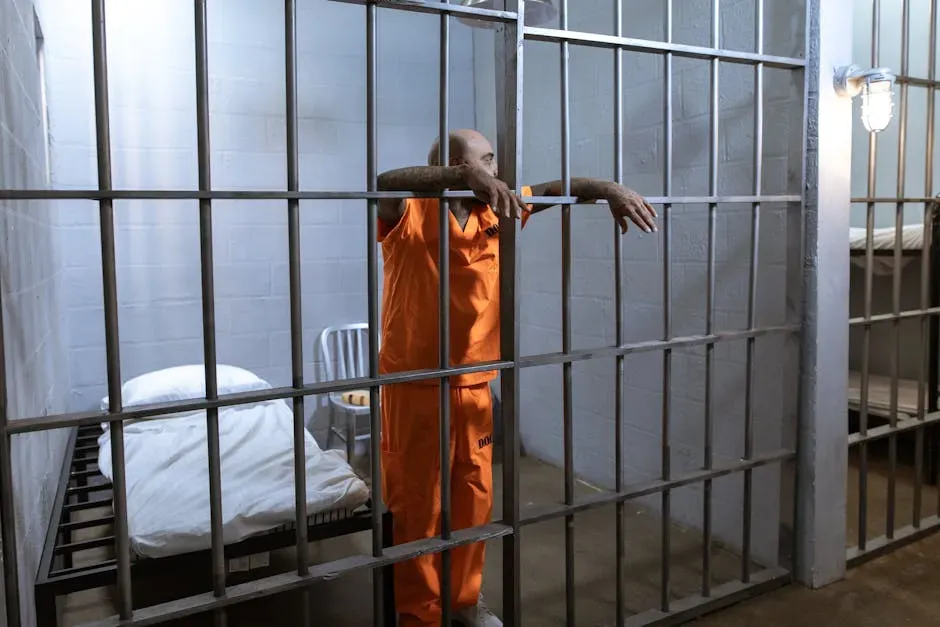
The release of a high-profile inmate is never just a legal formality. It is a carefully choreographed process that draws on risk science, federal policy, institutional logistics, and community infrastructure. The gap between walking out of a prison and successfully reintegrating into society is wide for everyone, and for those who carry the weight of public recognition, it often comes with an extra cost: scrutiny that follows them into every job interview, every housing application, and every quiet attempt to start over.
What the data consistently shows is that the quality of reentry planning matters more than most people realize. Familial support, access to housing, and employment were all found to reduce rates of recidivism. Systems that invest in those three things tend to produce better outcomes. Systems that treat release as an afterthought tend to see those 42,000 annual federal releases quietly cycling back.
The backstage mechanics of prisoner release, from risk scoring to halfway house policy debates to supervised release amendments, reflect a justice system still searching for the right balance between accountability and genuine second chances. For high-profile inmates, that search plays out in public. For everyone else, it plays out just as consequentially, just more quietly.