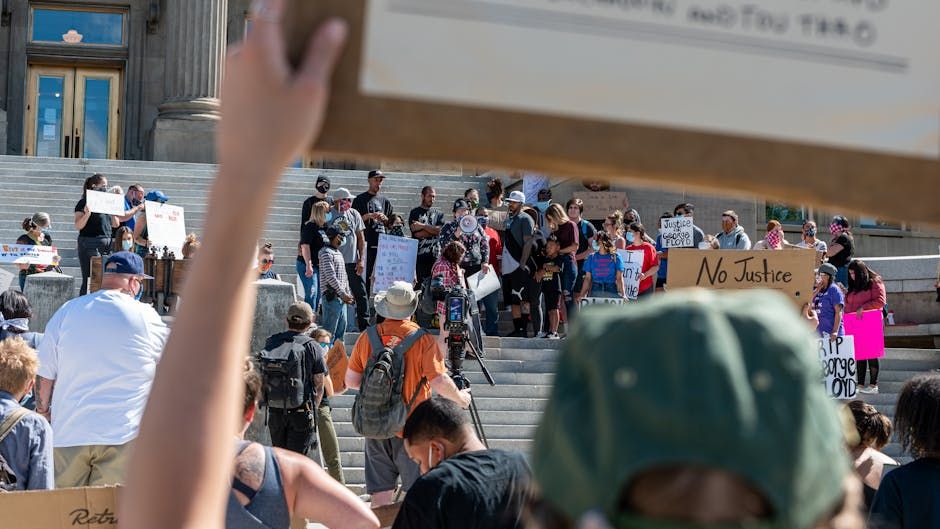
Moorpark professor may avoid prison time in death of Jewish man at Thousand Oaks protest – Image for illustrative purposes only (Image credits: Pexels)
A Moorpark professor who took part in a pro-Palestinian demonstration has changed his plea to guilty in the death of a Jewish man during a protest in Thousand Oaks. The shift in his legal position opens the door to a sentence that does not include time in state prison. The case, which began with the man’s death at the demonstration, now moves toward resolution without a full trial.
Change in Plea Alters Case Path
The professor entered the new plea after earlier proceedings that had kept the possibility of a contested trial alive. By accepting responsibility for the charges tied to the man’s death, he removed the need for prosecutors to prove every element of the case in court. This step typically signals an agreement with the district attorney’s office on the facts and the appropriate level of accountability. Such plea changes often reflect negotiations that weigh the strength of evidence, the wishes of the victim’s family, and the defendant’s prior record. In this instance, the adjustment appears to have produced terms that limit exposure to the most severe penalties available under state law.
Partner offer
Sentencing Outlook Focuses on Alternatives
With the guilty plea in place, the court will consider options that fall short of state prison time. Judges in similar cases have turned to county jail, probation, or community-based programs when the facts support a lower level of culpability or when rehabilitation appears feasible. The exact terms remain subject to a formal sentencing hearing, where both sides can present arguments and the victim’s representatives can be heard. The possibility of avoiding prison reflects a common outcome in cases where defendants accept responsibility early and where no prior violent history complicates the picture. Prosecutors and defense counsel will now prepare materials that guide the judge toward a final determination.
Next Steps in the Legal Process
Several concrete developments are expected in the coming weeks: – A sentencing hearing will be scheduled to review the plea terms and any victim impact statements.
– The judge will weigh factors such as the circumstances of the protest and the defendant’s acceptance of responsibility.
– Any agreed-upon conditions, including possible restrictions on future protest activity, will be formalized in the court’s order.
– The victim’s family will have the opportunity to address the court directly before the sentence is imposed. These steps keep the focus on accountability while allowing the legal system to close the matter without prolonged litigation. The resolution of this case leaves open questions about how similar incidents at public demonstrations will be handled in the future, particularly when participants face serious charges. The final sentence will determine whether the professor returns to his teaching role or faces ongoing restrictions tied to the events in Thousand Oaks.
Partner offer
Planning a trip to Vegas?
Compare hotel rates and show tickets on VEGAS.com.