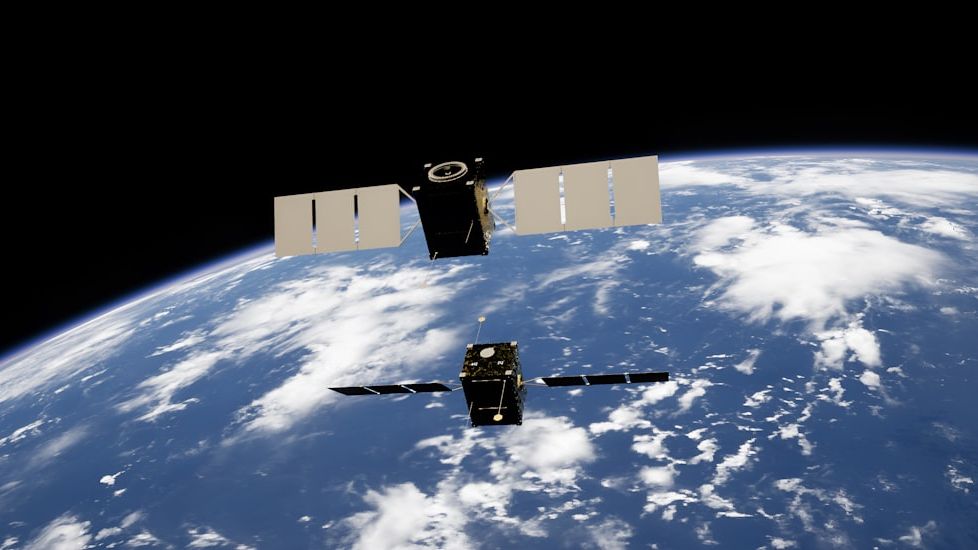
NASA’s Psyche spacecraft buzzing Mars on its way to a rare metal asteroid – Image for illustrative purposes only (Image credits: Unsplash)
NASA’s Psyche spacecraft is closing in on Mars this week for a brief but critical gravity assist. The robotic probe will streak past the red planet at more than 12,000 miles per hour, using the encounter to reshape its trajectory toward a distant metal-rich asteroid. Thousands of images captured during the pass will help refine instruments ahead of the main science campaign years from now.
The High-Speed Pass
The flyby will bring Psyche within roughly 2,800 miles of Mars, a distance comparable to the width of the continental United States. At that range the spacecraft will move at 12,333 miles per hour relative to the planet. All of its science instruments will remain active, recording data that mission teams can later compare with simultaneous observations from NASA’s Mars rovers and orbiting spacecraft.
Cameras on board have already begun photographing Mars, first as a thin crescent and later as a nearly full disk once the probe has passed. Those changing perspectives will serve both as calibration tests and as a source of striking visual records.
Why the Asteroid Stands Out
Psyche’s destination is a potato-shaped body roughly 173 miles long and 144 miles wide that lies in the main asteroid belt between Mars and Jupiter. Most objects in that region are rocky or icy, yet this one appears unusually rich in nickel and iron. Researchers believe it may represent the exposed metallic core of a protoplanet that lost its outer layers through ancient collisions.
Partner offer
Studying such a remnant could illuminate conditions in the early solar system more than 4.6 billion years ago. Data gathered once the spacecraft arrives may help explain how planets differentiate into core, mantle, and crust and why some worlds developed the ingredients for life while others did not.
The probe itself is roughly the size of a van and relies on solar-electric propulsion. Xenon gas thrusters provide steady, efficient thrust over the long cruise. Launched in 2023, the spacecraft is now roughly halfway through a six-year journey that will place it in orbit around the asteroid in 2029 for two years of detailed study.
Coordinated Science Across the Solar System
While Psyche focuses on Mars during the flyby, ground controllers are coordinating with existing Mars assets to gather complementary measurements of the planet’s surface and atmosphere. The combined dataset will allow scientists to cross-check instrument performance under real flight conditions.
After the Mars encounter the spacecraft will continue outward, eventually settling into orbit around its target in the outer reaches of the asteroid belt, three times farther from the Sun than Earth.
Key points to follow
- Gravity assist completed this week at 12,333 mph
- Close approach of 2,800 miles to Mars
- Arrival at asteroid Psyche expected in 2029
- Two-year orbital study of a possible planetary core
The mission’s success hinges on precise navigation and reliable instrument performance over the remaining years of travel. Each milestone, including this week’s flyby, brings the spacecraft one step closer to revealing new details about the building blocks of the solar system.
Partner offer
Planning a trip to Vegas?
Compare hotel rates and show tickets on VEGAS.com.