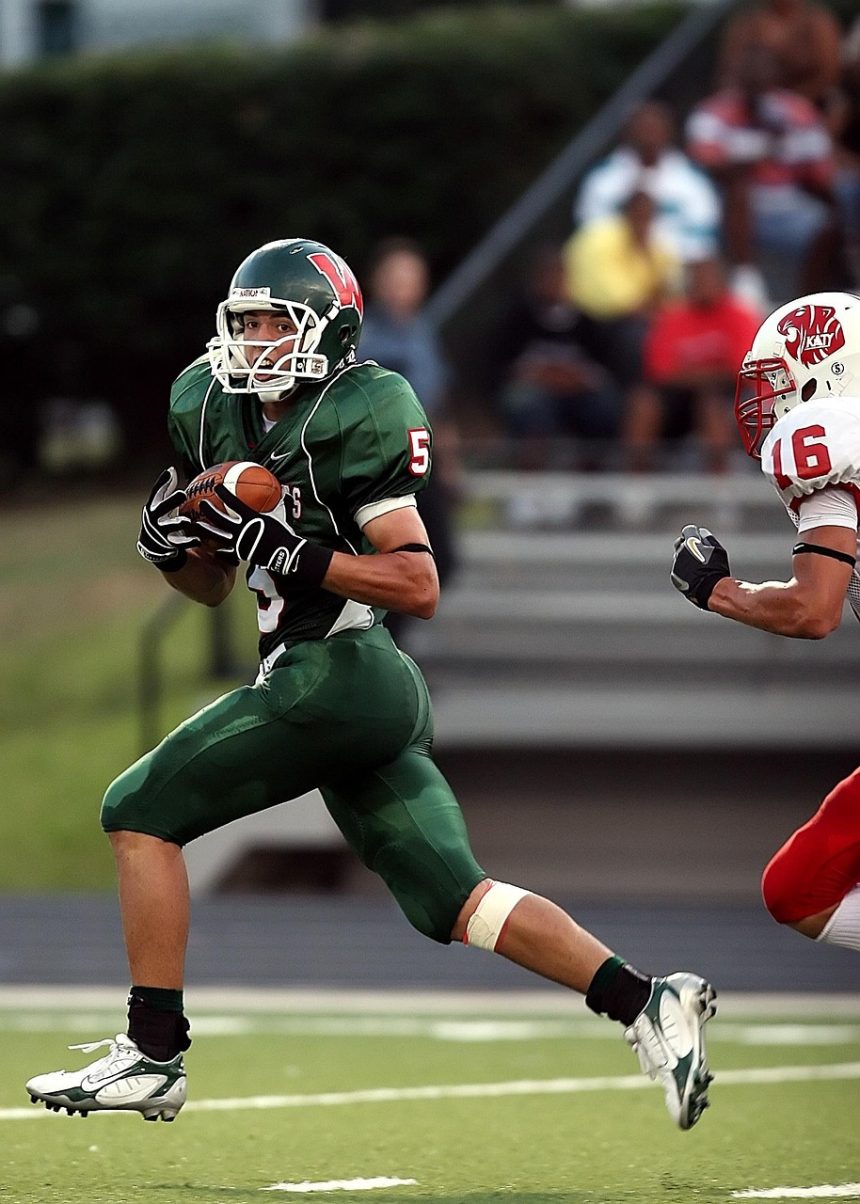

Assessing the Current Wide Receiver Roster (Image Credits: Pixabay)
Las Vegas – The Raiders hold the No. 1 overall selection in the upcoming 2026 NFL Draft, positioned to address their most pressing roster gap.[1][2] That top choice likely targets quarterback or another premium position, leaving nine additional picks to tackle lingering deficiencies, including at wide receiver. The position lacks a dominant playmaker, prompting scouts to evaluate prospects who fit new head coach Klint Kubiak’s scheme. With the draft set for April 23-25 in Pittsburgh, attention turns to how the Silver and Black can elevate their passing attack.
Assessing the Current Wide Receiver Roster
The Raiders entered the offseason with a group that showed flashes but failed to deliver consistent production. Tre Tucker led the unit last season with 696 receiving yards, yet the team ranked near the bottom league-wide in key passing metrics.[3][2] Jalen Nailor joined via free agency, adding slot versatility from his time in Minnesota. Second-year players like Jack Bech and Dont’e Thornton Jr. saw limited roles as rookies, running fewer routes than peers.
Depth includes veterans Phillip Dorsett II and Shedrick Jackson, alongside projects such as Dareke Young, Brenden Rice, and Justin Shorter. Young contributed mainly on special teams during his stint in Seattle under Kubiak’s prior staff. This mix provides bodies but lacks a true outside threat capable of stretching defenses.
- Tre Tucker: Speedy deep threat, top producer in 2025
- Jalen Nailor: Slot option with breakout potential
- Jack Bech: Power slot with strong run-blocking (74.5 PFF grade)
- Dont’e Thornton Jr.: Physical X-receiver prospect needing refinement
- Dareke Young: Special teams ace with scheme familiarity
- Phillip Dorsett II: Veteran depth
- Shedrick Jackson: Developmental speedster
- Brenden Rice and Justin Shorter: Exclusive rights free agents
Persistent Production Gaps Highlight the Need
Las Vegas finished 2025 ranked 28th in receptions (148), 30th in receiving yards (1,696), and 31st in touchdowns (7) among wide receivers.[2] Yards per reception sat at 11.5, underscoring a lack of explosive plays. Tight end Brock Bowers has shouldered much of the receiving load, functioning as the de facto top option.
Trades like Jakobi Meyers to Jacksonville for picks exacerbated the thin room. While Bech’s skill set as a possession receiver with yards-after-catch ability (5.5 YAC per reception) offers optimism, the group requires upgrades to support a new quarterback. Analysts view wide receiver as a Day 2 priority after the top selection.[4]
Traits That Fit Kubiak’s West Coast System
Kubiak’s offense demands versatile receivers who excel in route running, blocking, and contested catches. Ball-winners with size for red-zone work align with deep-ball tendencies. Separators bring speed to create separation downfield, while selfless blockers aid the run game.
Partner offer
Bech embodies the power slot role, thriving on crossers, digs, and hitches with a 58.6% success rate on targets. Thornton approaches X-receiver physicality but needs polish. Prospects must match this profile to integrate quickly, emphasizing YAC generation and run support like former Seahawks targets Cooper Kupp and Jake Bobo.[3][5]
Prospects on the Raiders’ Radar
Early targets include mid-round options like Denzel Boston (Washington), Omar Cooper Jr. (Indiana), and KC Concepcion (Texas A&M), whom the team hosted. Germie Bernard (Alabama) offers immediate starter potential, while Zachariah Branch (Georgia) provides elite speed. Later names such as Malachi Fields (Notre Dame), Ted Hurst (Georgia State), and Chris Bell (Louisville) profile as X-types with contested-catch prowess.[6]
Top talents like Carnell Tate (Ohio State) and Makai Lemon (USC) may fall outside Round 2 at pick 36. Day 3 gems include Elijah Sarratt (Indiana) for blocking and Ja’Kobi Lane (USC) for red-zone reliability. The deep class allows multiple additions without overreaching.
| Round | Potential WR Targets |
|---|---|
| 2-3 | Denzel Boston, Omar Cooper Jr., KC Concepcion |
| 4-5 | Germie Bernard, Malachi Fields, Elijah Sarratt |
| 6-7 | Chris Bell, Ja’Kobi Lane, Ted Hurst |
Leveraging Ten Picks for Roster Rebuild
The Raiders boast ample capital: Round 1 (No. 1), Round 2 (36), Round 3 (67), three Round 4s (102, 117, 134), Round 5 comp (175), two Round 6s (185, 208), and Round 7 (219).[1] Compensatory selections stem from free-agent losses, bolstering late-round chances.
Strategy focuses premium picks on quarterback and defense, shifting WR help to mid-rounds where value abounds. This approach builds depth without sacrificing higher priorities.
Key Takeaways
- WR room led by Tucker but ranks low in production metrics.
- Bech’s versatility tempers urgency for a top-36 selection.
- Target ball-winners, separators, and blockers for Kubiak’s scheme.
The Raiders stand at a crossroads with the No. 1 pick and nine follow-ups to reshape their offense. Wide receiver additions could unlock Kubiak’s vision, pairing young talent with scheme fits for contention. What prospects do you see helping Las Vegas most? Share in the comments.
Partner offer
Planning a trip to Vegas?
Compare hotel rates and show tickets on VEGAS.com.