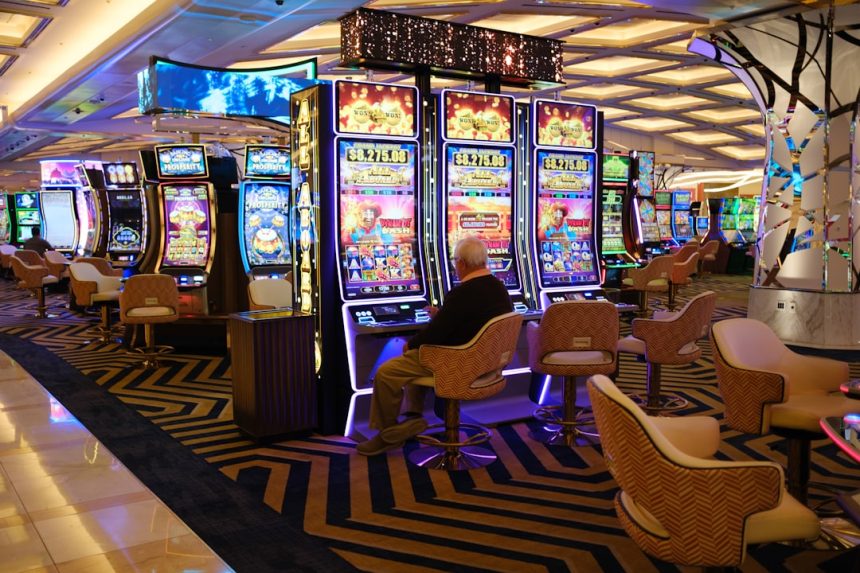

April Slump Gives Way to May Momentum (Image Credits: Unsplash)
Las Vegas – Hotel room rates along the iconic Strip are showing early signs of a gradual uptick, offering a positive indicator for demand recovery in the gaming capital. Truist Securities analyst Barry Jonas highlighted this trend in a recent investor report, noting improvements after a softer April. Forecasts point to double-digit gains in May, driven by major events and strategic promotions.[1][2]
April Slump Gives Way to May Momentum
Room rates experienced softness in April, with Strip-wide figures down 8 percent compared to the prior year. MGM Resorts International properties fell 15 percent, while Caesars Entertainment saw a 12 percent dip. This marked an improvement from earlier projections but still reflected cautious demand across midweek and weekend stays.[2]
Analyst Jonas attributed March’s stronger performance largely to the triennial ConExpo-Con/Ag trade show, which drew about 140,000 attendees. Now, May projections reveal a sharp turnaround. Strip rates are expected to rise 11 percent overall, signaling renewed visitor interest.[1]
Caesars Powers Ahead with Exclusive Events
Caesars properties are poised to lead May’s surge, with rates forecasted up 34 percent. Jonas pointed to the State Farm insurance conference as the key driver. “We think Caesars’ relative outperformance is largely due to the State Farm conference which is primarily an exclusive benefit to Caesars,” he wrote in the report.[1]
MGM rates, meanwhile, are set for a more modest 1 percent increase. Such event-driven spikes underscore how targeted bookings can bolster occupancy and pricing power for major operators. Promotions targeting value-conscious guests, including all-inclusive packages from MGM, Caesars, and Resorts World, are also helping to attract lower-end segments.[1]
June Trends Favor Weekdays Over Weekends
Early June forecasts offer further encouragement, with Strip rates up 5 percent, MGM at 2 percent, and Caesars at 3 percent. Weekday rates are the standout, climbing 19 percent Strip-wide, 16 percent at MGM, and 9 percent at Caesars. Weekend pricing, however, remains under pressure.[1]
Jonas noted these figures as Truist’s initial look at the month, subject to change. Still, the weekday strength suggests business travel and midweek leisure are gaining traction. Upcoming events like NHL playoffs for the Golden Knights, K-pop concerts, wrestling, and Metallica shows could sustain this momentum through summer.[2]
Guest Segments Reveal Uneven Recovery
Truist segmented guests into high-end, middle-end, and low-end categories. High-end visitors – those booking rooms at $300 or more per night – projected a 13 percent increase in the second quarter. Middle-end bookings fell 7 percent, and low-end dropped 8 percent overall.[1]
May showed promise for low-end proxies, up due to minimum-stay all-inclusive deals. “We think the low-end proxy inflection seen in May could be partially attributed to the recently announced… all-inclusive promotion/package type deals,” Jonas observed. This K-shaped recovery highlights resilience among affluent travelers amid broader value sensitivity.[1]
- High-end (>$300/night): Q2 up 13 percent
- Middle-end: Q2 down 7 percent
- Low-end (
Prediction Markets Secure Key Legal Victories
A U.S. District Court in Arizona issued a temporary restraining order blocking state enforcement of gaming laws against prediction markets. Arizona Attorney General Kris Mayes had filed a 20-count criminal case against Kalshi in March. The Commodity Futures Trading Commission intervened successfully.[1]
CFTC Chairman Michael Selig welcomed the ruling: “Arizona’s decision to weaponize state criminal law against companies that comply with federal law sets a dangerous precedent.” Similar actions target Connecticut and Illinois. In Nevada, a judge extended a restraining order for Kalshi, requiring geofencing by May 4. A Ninth Circuit hearing looms on related appeals.[1]
Elsewhere, Kalshi reported $1.8 billion in March Madness trading volume, surpassing its 2024 election totals. Caesars debuted Harrah’s Oklahoma, a 173,000-square-foot casino. Wisconsin advanced online sports betting via tribal compacts.
Key Takeaways
- Strip room rates rebound with May up 11 percent, led by Caesars’ 34 percent surge.
- Weekday pricing fuels June’s 5 percent gain amid strong event pipeline.
- Prediction markets notch wins against state crackdowns, bolstering federal oversight.
As Las Vegas navigates this phased recovery, operators balance premium demand with value promotions to fill rooms. The gradual rate increases could stabilize revenues if summer events deliver. What impact will these trends have on your next Strip visit? Share your thoughts in the comments.