


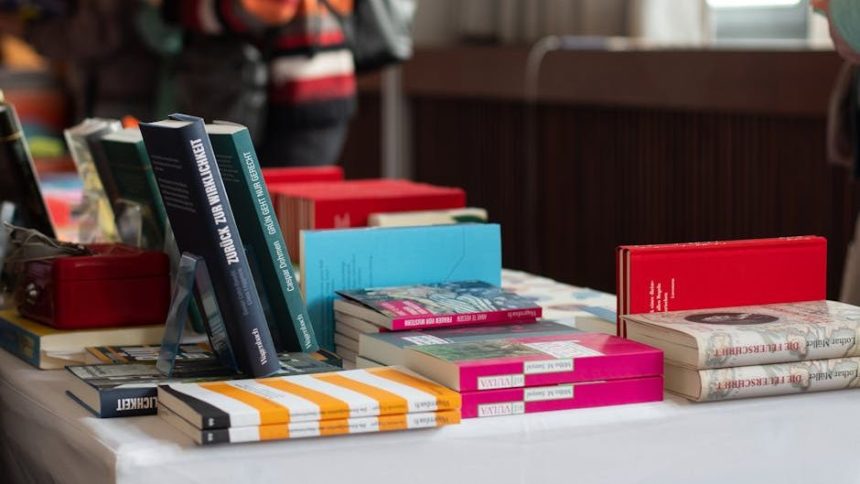
There is something almost magical about opening a novel written on the other side of the planet and suddenly feeling like you understand something deeply human, something you never had words for before. Global fiction does that. It reaches across continents, languages, and centuries to grab you by the collar and say: look at this, this is real too.
There is nothing better to take you around the world than the literature of different countries – from Italian to Indonesian, Georgian to Japanese, Pakistani to Palestinian. The world of translated and international fiction has never been richer, and honestly, it would be a shame to miss it. Whether you are a seasoned reader or just starting to look beyond English-language bestsellers, these ten novels are the perfect entry points. Let’s dive in.
1. One Hundred Years of Solitude – Gabriel García Márquez (Colombia)


If there is one novel that defines what global literature can achieve, it is this one. Published in 1967, the Colombian author Gabriel García Márquez tells the multi-generational story of the Buendía family, whose patriarch José Arcadio Buendía founded the fictitious town of Macondo. It’s a sweeping saga of love, memory, war, and time – all wrapped in a style that feels like a dream you cannot quite shake.
The novel is often cited as one of the supreme achievements in world literature. The magical realist style and thematic substance of the book established it as an important representative novel of the literary Latin American Boom of the 1960s and 1970s. Think of it as the literary equivalent of learning that gravity is not the only force holding you down – once you read it, your sense of what a novel can do fundamentally shifts.
It is considered García Márquez’s masterpiece and the foremost example of his style of magical realism. It was also a catalyst for a global wave of literary influence. Examining the connections between García Márquez and writers like Egypt’s Naguib Mahfouz reveals a link between two world literatures that reflects the importance of non-Western literature to Arab writers. Starting here means starting at the very root of the tree.
2. The Vegetarian – Han Kang (South Korea)

I know it sounds like a quiet domestic novel from the title – and in some ways it is – but nothing could prepare a first-time reader for how unsettling and precise this book actually is. The Vegetarian is a 2007 novel by South Korean author Han Kang, winner of the 2024 Nobel Prize in Literature. It is structured in three parts and follows the consequences of one woman’s radical decision to stop eating meat.
Originating in 1997 as a short story, the novel examines issues such as body horror, mental illness, consent, and misogyny, telling the story of a young woman who stops eating meat, which has disturbing consequences. After her family attempts to force-feed her, she stops eating altogether. It is, at its core, a meditation on what happens when a woman simply refuses.
Han rose to international prominence for this novel, which became the first Korean-language novel to win the International Booker Prize in 2016. Han is the first Asian woman and Korean to receive the Nobel Prize in Literature, receiving the award in 2024. Her winning the Nobel Prize was credited with boosting overseas sales of books by Korean authors, with approximately 1.2 million copies of Korean books purchased in countries other than Korea in 2024, versus some 520,000 copies the year before. That is the “Han Kang effect” – and it is very real.
3. We Do Not Part – Han Kang (South Korea)


Once you have read The Vegetarian and fallen for Han Kang’s voice, it is nearly impossible not to reach for her most recent work. The English translation of We Do Not Part followed Han Kang’s 2024 Nobel Prize in Literature. This novel is different in tone but no less devastating – it moves more slowly, more like snow falling than a sudden storm.
Kyungha reluctantly agrees to house-sit and look after the much-loved pet bird of her sick friend Inseon, and travels in snow and darkness to reach her rural cabin. The novel is at once a dreamlike encounter between people across time, place, and mortality; a recollection of the women’s friendship and childhoods; a personal history of the impact of the 1948 to 1949 Jeju massacre; and a portrait of the rural South Korean landscape in bleak winter.
This is the power of Han Kang: with little more than paper and ink, she acts as a conduit for the memories of generations that suffered state violence, passing them on to generations that inherited these traumas but not necessarily the long-suppressed facts beneath them. Reading this novel is not just a literary experience. It feels more like a responsibility.
4. Dream Count – Chimamanda Ngozi Adichie (Nigeria/USA)


Chimamanda Ngozi Adichie has always been a writer who refuses to be contained. Her new novel, published in 2025, is no exception. Dream Count is Adichie’s first novel in a decade – expansive and richly detailed, it follows the lives of four African women, moving fluidly between the US and Nigeria. It is the kind of book that makes you forget you are reading.
Set at the onset of the COVID pandemic, the pause in ordinary life creates space for the women to reflect and dream, deepening the novel’s engagement with memory and personal history alongside its comparative exploration of women’s experiences in different parts of the world. That tension between who we are and who we might have been runs through every single page.
Like several recent works, the women here both contrast and complement one another, offering nuanced insight into what it means to be Black and female and with varying degrees of privilege. Adichie remains one of the most important literary voices connecting Africa to the wider world. For a reader new to West African literature in a global context, this is an extraordinary place to begin.
5. When We Cease to Understand the World – Benjamín Labatut (Chile)


Here is the thing: this novel does something genuinely unusual. It blurs the line between reality and fiction so skillfully that you start to wonder what is even true. When We Cease to Understand the World is the perfect blend of fact and fiction about the lives of scientists and mathematicians who revolutionized human understanding of the universe. After researching Nobel Prize-winning scientists, Benjamin Labatut wrote this novel to highlight how life-changing discoveries have moral consequences beyond their imagining.
It is intriguing, a bit dark, but it reads surprisingly smoothly. It also recounts the lives of personalities like Werner Heisenberg, Erwin Schrödinger, and Alexander Grothendieck. Think of it less as a history lesson and more as a philosophical thriller – the kind that keeps you awake not because something scary happens, but because something true does.
The Chilean author crafts what feels like a completely new literary form. It is science, it is biography, it is fiction, and it is philosophy – all at once. For readers wanting a global novel that challenges both their intellect and their moral imagination, this is it. It’s been acclaimed across Europe and the Americas as one of the essential works of the 2020s.
6. The Road to the Country – Chigozie Obioma (Nigeria)


African literature has long deserved far more global attention than it receives. Let’s be real – for too long, the canon has been shaped by Western publishers. Chigozie Obioma is one of the writers changing that, whether the establishment is ready or not. Double Booker nominee Chigozie Obioma’s The Road to the Country was a standout read of 2024 – a masterful exploration of memory and myth, and the legacy of Biafra.
It is said that history is written by the winners, but recent literary reimaginings of the wars in Vietnam and Biafra have been written from the perspective of the vanquished. Obioma positions himself squarely within that tradition. Harrowing in its descriptions of war and deeply moving, The Road to the Country serves as both an exhumation of the past and a memorial to the dead.
The novel sits in a long tradition of Nigerian writing that confronts colonial history and civil war not as distant events but as living wounds. It is a sobering, necessary read – the kind that reminds you why literature exists in the first place. If you have never read Nigerian fiction before, this is a powerful and rewarding way in.
7. Perfection – Viet Thanh Nguyen and Italian Literary Voices (Germany/Italy)


Honestly, one of the most talked-about global novels of 2025 in European literary circles is a surprising one. In a sequence of beautifully written, perfectly observed chapters, Latronico itemises and describes the apartment, social media habits, limited perspective on Berlin, and the repetitive consumption and socially structured habits of a globalised lifestyle built around image and taste. It sounds dry. It absolutely is not.
The result is a remarkably astute and compelling novel – social realism at its sharpest – as Latronico nails the manners of the millennial generation. This is the rare type of global novel that holds up a mirror not to somewhere exotic and distant, but to the very screen you are probably reading these words on right now. That uncomfortable recognition is part of the point.
Novels like this remind us that world literature is not only about geography. It is about how the modern world connects and disconnects people, regardless of the city they sit in. For a reader wanting to understand what contemporary European literary fiction looks and feels like, this is as sharp and current as it gets.
8. The Best Translated Novels: What the International Booker Tells Us


It would be incomplete to write a guide to global fiction without talking about the International Booker Prize – the single most reliable compass for finding world-class translated fiction each year. If you would like to read recent novels from around the world but do not mind which country, the International Booker Prize, awarded annually for the best novel translated into English, is an excellent place to look.
Every year, the judges for the International Booker Prize read dozens of novels newly translated into English before compiling their shortlist of the very best. The 2024 shortlist ranged from a slim, elliptical Swedish novel about contemporary relationships to a multi-generational epic set in 20th-century Korea. That range alone tells you everything about the breadth of global storytelling.
South Korea punches above its weight in almost every respect – not only in terms of literature, but in film, music, television, and culture more generally. Meanwhile, books translated from their original language are proving increasingly popular as readers seek out global perspectives beyond their own. The number of literary titles in translation published in English in 2018 was 600, twice as many as in 1999, outpacing the overall expansion of the book market. The direction is clear – and the best is still coming.
9. Human Acts – Han Kang (South Korea)
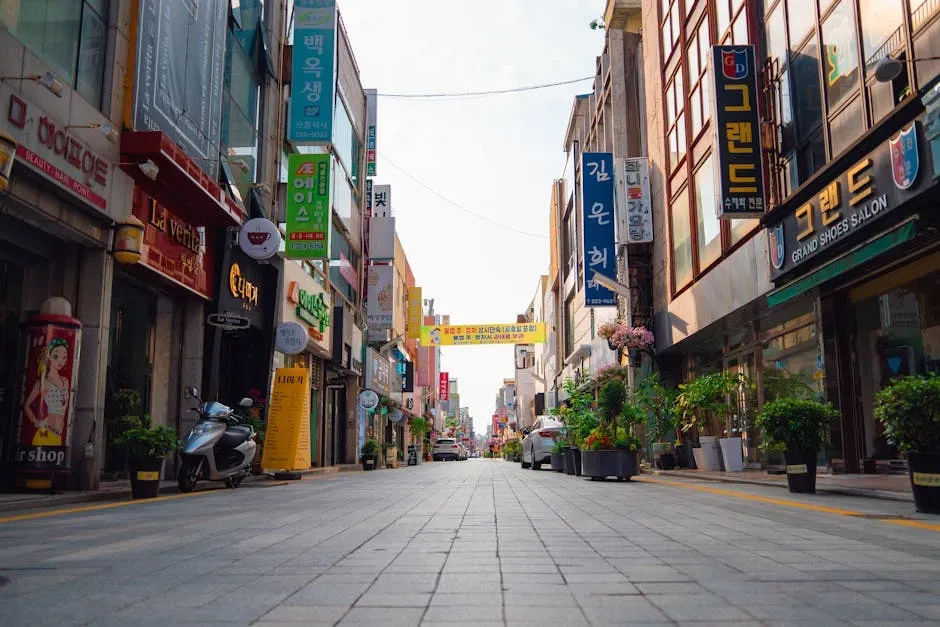
Some novels are not just books. They are acts of witness. Human Acts by Han Kang is one of those rare works that makes you feel physically altered by reading it. Written in six chapters, each from a different perspective, it orbits the aftermath of the 1980 Gwangju Uprising in South Korea – a moment of political violence that shaped an entire generation.
The Gwangju Uprising, a mass protest against the South Korean military government that took place in May 1980 and was met with a brutal response, has frequently influenced novelist Han Kang’s writing. She was nine years old at the time, and the uprising occurred shortly after her family moved from Gwangju to Seoul. That proximity to trauma – the near miss of it – is woven into every sentence of the novel.
In her oeuvre, Han Kang confronts historical traumas and invisible sets of rules and, in each of her works, exposes the fragility of human life. She has a unique awareness of the connections between body and soul, the living and the dead, and in her poetic and experimental style has become an innovator in contemporary prose. Human Acts is perhaps the purest expression of that vision. It is hard to read. It is impossible to forget.
10. World Literature and the Translation Gap: Why It Matters Now
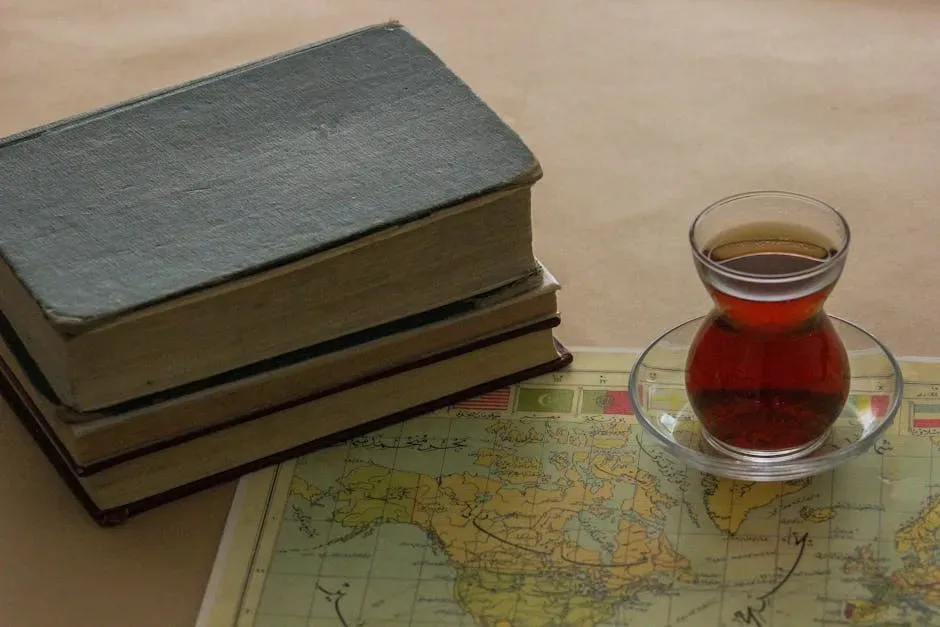
Let’s zoom out for a moment, because the bigger picture matters here. The fact that you are even reading a list of global novels in English is not simple or obvious. The New York Times 100 notable books of 2024 included only four translations. That is a striking number. Out of a hundred notable books, only four came from outside the English language. That says something – and it is not comfortable.
Best Literary Translations 2024 features both contemporary and historical poetry and prose originally written in nineteen languages – including some not commonly seen in US translations, such as Burmese, Kurdish, Tigrinya, and Wayuu. These poems, short stories, essays, and hybrid pieces were drawn from nominated works published in US literary journals during 2023 that spanned more than eighty countries and nearly sixty languages. The world is vast, and most of its stories remain untranslated.
Best Literary Translations 2024 marks a significant achievement for world literature, focusing on prose pieces and poems whose authors use literature as an act of resistance and expose life’s dysfunctions in all their spiritual, emotional, and political surrealities. In a world in which nationalism increasingly carves moats between literatures, the project of expanding world literature remains as urgent as ever. Every translated novel you pick up is, in a small but real way, a vote against those moats.
The ten novels in this gallery span Korea, Colombia, Nigeria, Chile, and beyond – and together they sketch something like a portrait of humanity in its full, complicated, beautiful mess. Reading globally is not a hobby. It is a way of seeing. What would you start with first?

