Nevada has long occupied an unusual spot in American education debates. It’s a state with chronically underfunded schools, a booming population, and a legislature that has been a genuine battlefield for some of the most sweeping school choice experiments in the country. The tension is real and ongoing. From universal voucher bills to tax-credit scholarships and rapidly expanding charter networks, Nevada has tried almost every tool in the school choice toolbox. Not all of them survived the courts, the legislature, or public opinion.
Nevada’s Landmark 2015 ESA Law: The Nation’s First Near-Universal Program


In 2015, Nevada lawmakers took a bold step toward expanding educational options by passing the nation’s first near-universal program of Education Savings Accounts, known as ESAs. The law was remarkable in scope, theoretically opening voucher-style accounts to virtually every family in the state.
An ESA is a private account into which the state deposits public money that parents can use for certain approved purchases, including tuition at a private or online school, transportation, textbooks, and private tutoring. To qualify, a student was required to have attended public school for at least 100 uninterrupted days immediately prior to applying.
Open to every qualifying student, the program was designed to deposit approximately $5,000 each year into an account that would allow parents to individualize their child’s educational program. It was celebrated by school choice advocates across the country as a historic breakthrough.
The Supreme Court Ruling That Stopped It Cold

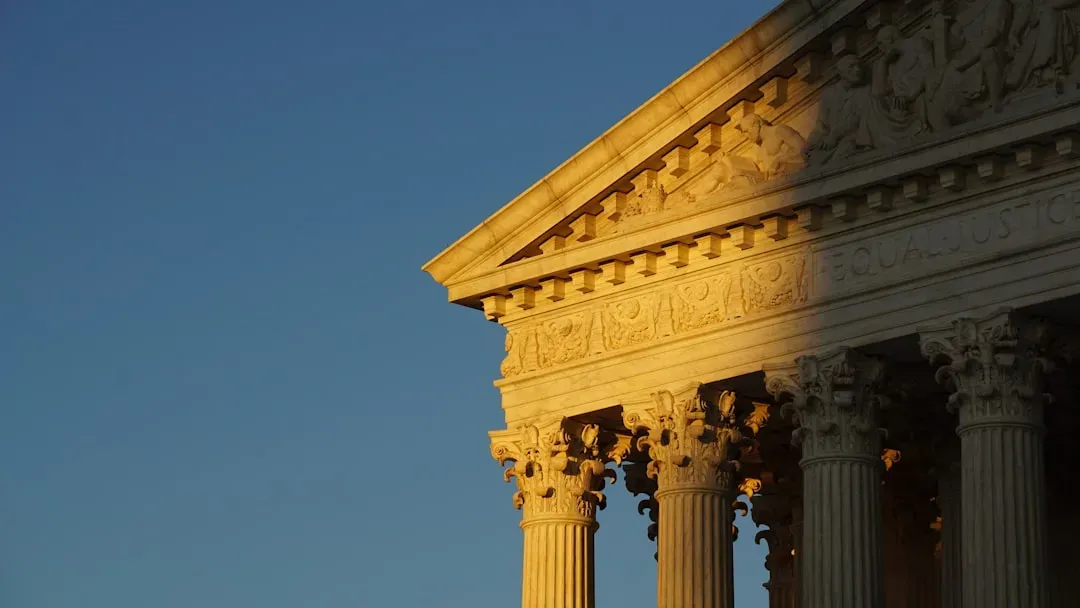
In September 2016, the Nevada Supreme Court ruled on two lawsuits brought against the ESA law, finding the funding mechanism for the program unconstitutional and placing a permanent injunction on it. The program never actually distributed a single dollar to a family.
The court order permanently enjoined the voucher program due to its unconstitutional funding structure, though the program could still be constitutional if the Legislature were to fund it without using public school dollars. That critical distinction has shaped every debate since.
The ESA law did not allocate new state money for vouchers. Instead, it required the State Treasurer to transfer funding directly from public school budgets for each child who left the public system and qualified for a voucher. That structural flaw proved fatal. The core policy idea, however, never left the room.
The Opportunity Scholarship: Nevada’s Active Private School Choice Program

The Nevada Legislature established the Educational Choice Scholarship Program in 2015. Also known as the Opportunity Scholarship, the program provides need-based scholarships for students who live in households whose income does not exceed 300 percent of federal poverty guidelines.
The Nevada Department of Education is responsible for determining the maximum scholarship amount based on the Consumer Price Index. The maximum scholarship per student for the 2025-2026 school year is $10,094.
Total credits claimed cannot exceed approximately $6.7 million, meaning less than one percent of Nevada’s K-12 student population can actually participate. About 1,800 students received a scholarship in 2023 according to an NDE report, with the average household income of recipients ranging from roughly $55,000 to under $59,000. The program remains small and politically contested.
The Funding Cap Problem and Political Gridlock

The program and its funding have been a political battleground for Republicans and Democrats since being established in 2015. Getting more money into the program has proven nearly impossible under a divided state government.
In 2023, one Florida-based organization, AAA Scholarship Foundation, claimed the entirety of the $6.66 million available, leaving nothing for the other organizations that had been counting on the money. The episode exposed serious administrative vulnerabilities in how funds were distributed.
The 2025 Nevada Legislative Session ended with no additional funding for the Opportunity Scholarship program, despite Governor Lombardo’s efforts. The average private school tuition in Nevada runs around $12,000 per year according to Private School Review, meaning the scholarship alone often falls short of covering full tuition costs for lower-income families.
Charter Schools: The Fastest-Growing Education Force in Nevada


Clark County School District is still by far the largest district in the state, enrolling 62 percent of public school students. The Charter School Authority is now the second largest local education agency in Nevada, surpassing Washoe County School District by nearly 7,000 students.
All but three public school districts across the state saw student enrollment drop in the 2025-26 academic year, with statewide enrollment in K-12 public school districts dipping by around 2 percent. Charter schools were the clear exception to that trend.
The Nevada School Performance Framework indicates that public charter schools, which consistently outperform traditional public schools in proficiency rates, are key drivers of Nevada’s educational progress, and by early 2025, enrollment in Nevada’s public charter schools surpassed that of the Washoe County School District.
Charter School Academic Performance: The Data in 2024-2025


Data from the 2024-2025 academic calendar reveal that charter schools, on average, outperformed their traditional public school counterparts at all grade levels. That’s a significant finding in a state that has long struggled with low overall rankings.
The SPCSA portfolio outperformed statewide results, with about 85 percent of SPCSA schools scoring 3 stars or higher compared with roughly 54 percent statewide, and 49 percent of SPCSA schools earning 5 stars.
Statewide, 5-star schools rose to 17 percent from 11 percent in 2023-24, and 4-star schools increased to 13 percent from 10 percent, with public charter schools leading those rankings and all grade levels achieving gains in mathematics and English Language Arts proficiency. Still, not every charter school is a success story. Staff recommended a notice of breach for Future Edge Charter Academy after a second consecutive 1-star NSPF rating.
The Equity Debate: Who Really Benefits From School Choice?

In Nevada, the majority of applicants to the ESA voucher program were from the wealthiest zip codes and zoned for the highest-achieving schools, which critics argue disproves the idea that vouchers primarily help families who need them most.
Additionally, the majority of private schools cost well more than the voucher amounts and do not require admission of all students, leaving them functionally inaccessible for lower-income families. That gap between the voucher value and actual tuition is a recurring theme in Nevada’s school choice discussion.
Charter school students remain less likely to be classified as English learners, have an individualized education plan, or qualify for free or reduced lunch: 13.9 percent of students statewide are English learners compared to 10 percent of charter school students, and 14.7 percent of students statewide have IEPs compared to 11 percent of charter school students. These demographic gaps continue to fuel equity concerns about who school choice actually serves.
SB 252 and the Renewed ESA Push in 2025

SB 252 was sponsored by a coalition of Republican legislators and supported by Governor Joe Lombardo, championed by school choice advocates like the Nevada Policy Research Institute and some parent groups. It represented the most serious attempt in years to revive a broad ESA program.
These stakeholders argued that ESAs empower families, particularly those with limited means, to customize education, but the bill faced opposition from the public school lobby. SB 252’s defeat preserved the existing structure for 2025, but similar proposals are expected to reemerge in future sessions.
The Nevada Homeschool Network has long opposed ESAs with onerous oversight, citing concerns that they often come with requirements like mandatory assessments or state-approved curricula that undermine existing homeschooling freedoms. The debate over ESAs has therefore split even natural allies of school choice.
Open Enrollment Expansion: A Quieter But Real Reform

Up until the spring of 2025, it was up to each district to decide if it would allow students to transfer outside of their zoned school. In June 2025, the Nevada Legislature passed a bill creating a statewide open enrollment system for both intradistrict and interdistrict transfers. The law will be fully in effect for the 2027-28 school year.
Nevada also increased the charter school enrollment cap beyond the previous 7 percent, up to 15 percent per school, if the charter serves students zoned in a district or school labeled low-performing, persistently underperforming, or overcrowded. That change directly targets access in the communities that need it most.
SB 460, passed in 2025, allocates $7 million in funding to the Nevada Department of Education for the 2026-27 fiscal year to provide transportation support for students who meet certain criteria. Transportation has consistently been one of the practical barriers to open enrollment working for lower-income families.
Federal Wildcards and the Road Ahead
President Trump’s “One Big Beautiful Bill Act” included a provision creating a federal tax credit to support scholarships for K-12 students to cover educational expenses such as private school tuition, a mechanism similar to Nevada’s own Opportunity Scholarship program.
Unlike the Opportunity Scholarship, scholarships raised with the federal tax credit won’t be limited to current and aspiring private school students. They will also be open for students at traditional public and charter schools, covering expenses such as tuition, curriculum materials, tutoring, services for students with special needs, and transportation.
Nevada’s SB 500 secured $12.9 billion for K-12 funding in the 2025-27 biennium, and the new base per-pupil funding increased to $9,414, a 5 percent rise with additional weights prioritizing at-risk students and rural districts. Whether new federal school choice funding supplements or undermines that investment remains one of the defining questions in Nevada education policy heading into 2026 and beyond.
Conclusion