
There is something quietly defiant about a short novel. It refuses to waste your time. It walks in, sits down, and within a hundred or two hundred pages, does something to you that a thousand-page doorstop never quite manages. Honestly, I think some of the most emotionally devastating stories ever written are also the shortest. They’re like concentrated grief, joy, and wonder, distilled into something you can finish in a single rainy afternoon.
The books on this list are not ranked. Each one earns its place for a different reason. Some will devastate you, some will quietly rearrange how you see the world, and a few will do both at once. Some believe the short form actually requires more of authors, not less, and I especially love what might be called “short novels that pack a big punch,” ones with small page counts but outsized emotional impact for the reader. Let’s dive in.
1. Of Mice and Men by John Steinbeck (1937)

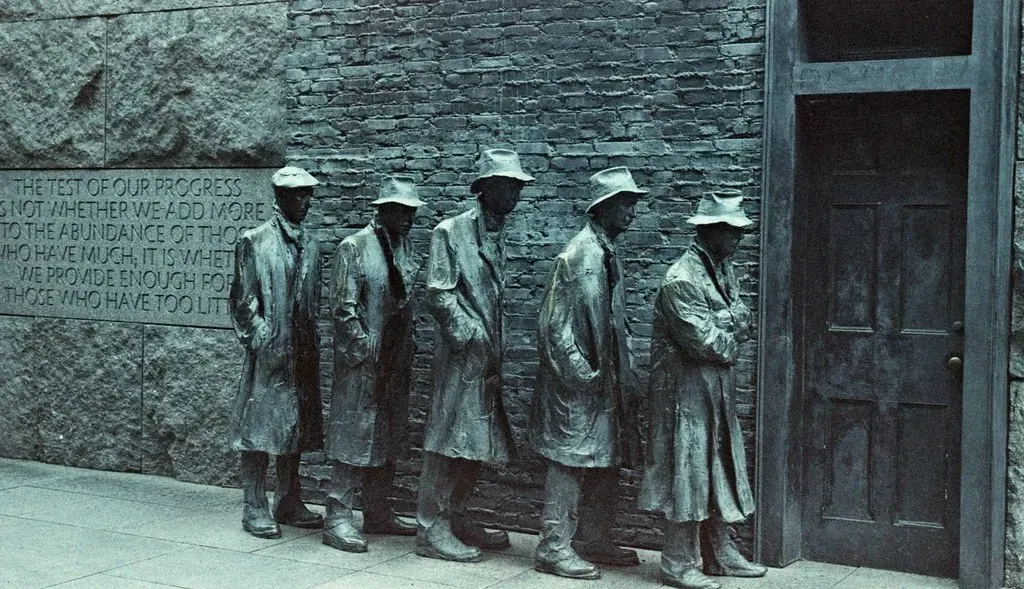
Few books hit as hard in as few pages as this one. Published in 1937, this novella is about the complex bond between two migrant labourers, a tragic story given poignancy by its objective narrative. George and Lennie are men who dream of owning a piece of land, a place to call their own, a future that feels almost within reach.
It is only 30,000 words in length. Think about that for a moment. Steinbeck broke your heart in fewer words than most people put into a first novel draft. Steinbeck’s story is a parable about what it means to be human, revealing the nature of dreams, dignity, loneliness, and sacrifice.
Steinbeck based the novella on his own experiences as a teenager working alongside migrant farm workers, and the title is taken from Robert Burns’ poem “To a Mouse.” Although the book is taught in many schools, it has been a frequent target of censorship and book bans, and consequently appears on the American Library Association’s list of the Most Challenged Books of the 21st Century.
2. Flowers for Algernon by Daniel Keyes (1966)


Here’s the thing about this book. It starts simply, almost awkwardly, and then it does something almost no novel ever does: it makes you feel the loss of intelligence happening in real time. Both the novelette and novel are presented as a series of journal entries written by the protagonist, Charlie Gordon, and the style, grammar, spelling, and punctuation of these reports reflect changes in his mental and emotional growth.
Charlie Gordon is a 37-year-old man with an IQ of 68 who works a menial job as a janitor, his main “friends” are co-workers who frequently bully and mock him, and he attends a literacy program in hopes of improving his intelligence, eventually selected to undergo an experimental surgical technique tested first on a laboratory mouse named Algernon.
The novelette was first published in 1959 and won the Hugo Award for Best Short Fiction in 1960, while the expanded novel was published in 1966 and was joint winner of that year’s Nebula Award for Best Novel. Much of the novel’s power comes from the remarkable use of first-person point of view, and the character of Charlie Gordon is a memorable portrait of alienation, of an individual who is at odds with his society and who struggles to have satisfactory relationships with others.
3. Ethan Frome by Edith Wharton (1911)


This is the book I think about when someone asks me about literary pain that doesn’t announce itself loudly. It just settles in and stays. Ethan Frome is a novella by Edith Wharton first published in 1911, an account of emotional isolation and moral despair in a New England farming community.
At the heart of the story is Ethan Frome, a farmer and sawmill operator in his late twenties, intellectually curious but trapped by circumstance. His dreams of becoming an engineer were cut short when he had to return home to care for his ailing parents, and he married Zenobia Frome out of a fear of winter loneliness after his mother’s death.
Mattie, unable to bear the prospect of separation, persuades Ethan to steer their sled into the great elm tree in a suicide pact that will let them remain together forever. Ethan agrees, but the crash does not kill them. Instead, it leaves Mattie paralyzed and disfigured, and Ethan permanently lamed, condemned to live out their days on the Frome farm, now with Zeena as their caretaker. Wharton’s bleak, compressed prose makes Ethan Frome one of American literature’s most powerful studies in entrapment.
4. The Great Gatsby by F. Scott Fitzgerald (1925)

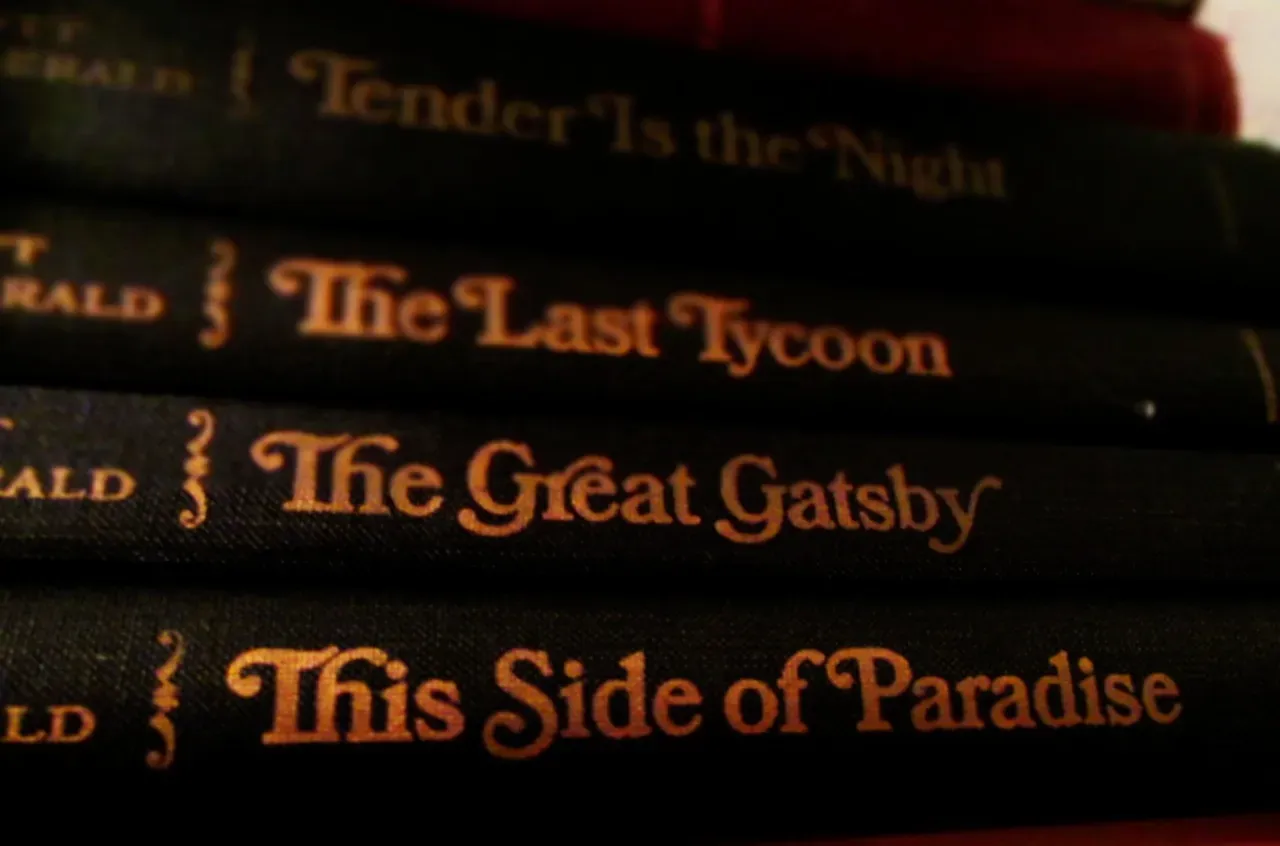
This one tends to get taught so relentlessly in schools that people forget to actually feel it. Strip away the green light symbolism lessons and the essay prompts, and what you have is a devastatingly short novel about longing, illusion, and the American Dream curdling in the heat of a Long Island summer. It clocks in at roughly 47,000 words. You can finish it in a single day.
Fitzgerald wrote the entire story through the eyes of Nick Carraway, an outsider looking in at Gatsby’s world with a kind of bemused wonder that slowly curdles into something much sadder. The structure is a trap: you almost root for Gatsby’s impossible dream right up until it collapses. That’s the point.
What makes it land so hard is not the spectacle of the parties or the extravagance of Gatsby’s shirts, but the quietness of the ending. It is a novel about people who cannot stop reaching backward. And honestly, that feeling never gets old no matter when you read it.
5. The Old Man and the Sea by Ernest Hemingway (1952)
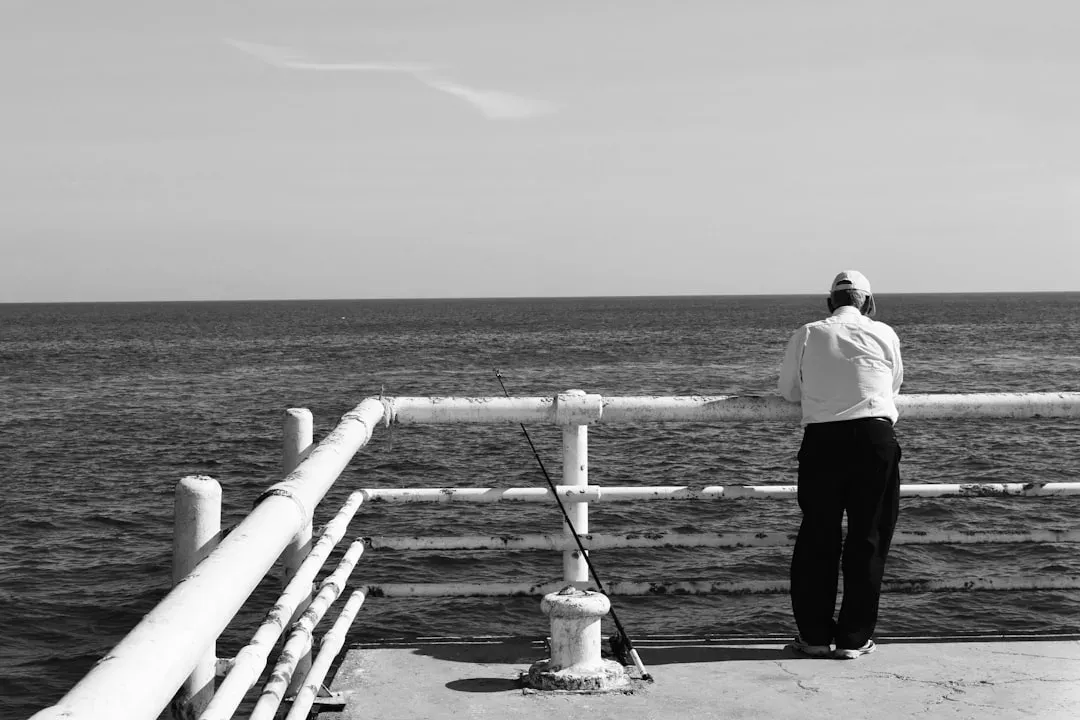
Let’s be real: on the surface, this is a story about an old man trying to catch a fish. It sounds almost boring when you describe it that way. It is not boring. Not even close. At roughly 27,000 words, it is one of the most concentrated meditations on endurance, dignity, and the human will ever committed to paper. Hemingway won the Pulitzer Prize in 1953 partly on the strength of this novella, and the Nobel Prize in Literature followed in 1954.
Santiago, the old fisherman, is on an 84-day losing streak. He goes out alone, hooks a massive marlin, and then spends days locked in an almost cosmic struggle at sea. There are no other characters to speak of. Just a man, a fish, and the open water. The emotional weight the story achieves with so few moving parts is staggering.
Hemingway’s stripped-down prose style is famous, but here it works as something deeper than technique. It becomes a kind of philosophy. The less he says, the more you feel. That is a very difficult trick to pull off, and almost nobody does it as well as he did here.
6. Animal Farm by George Orwell (1945)

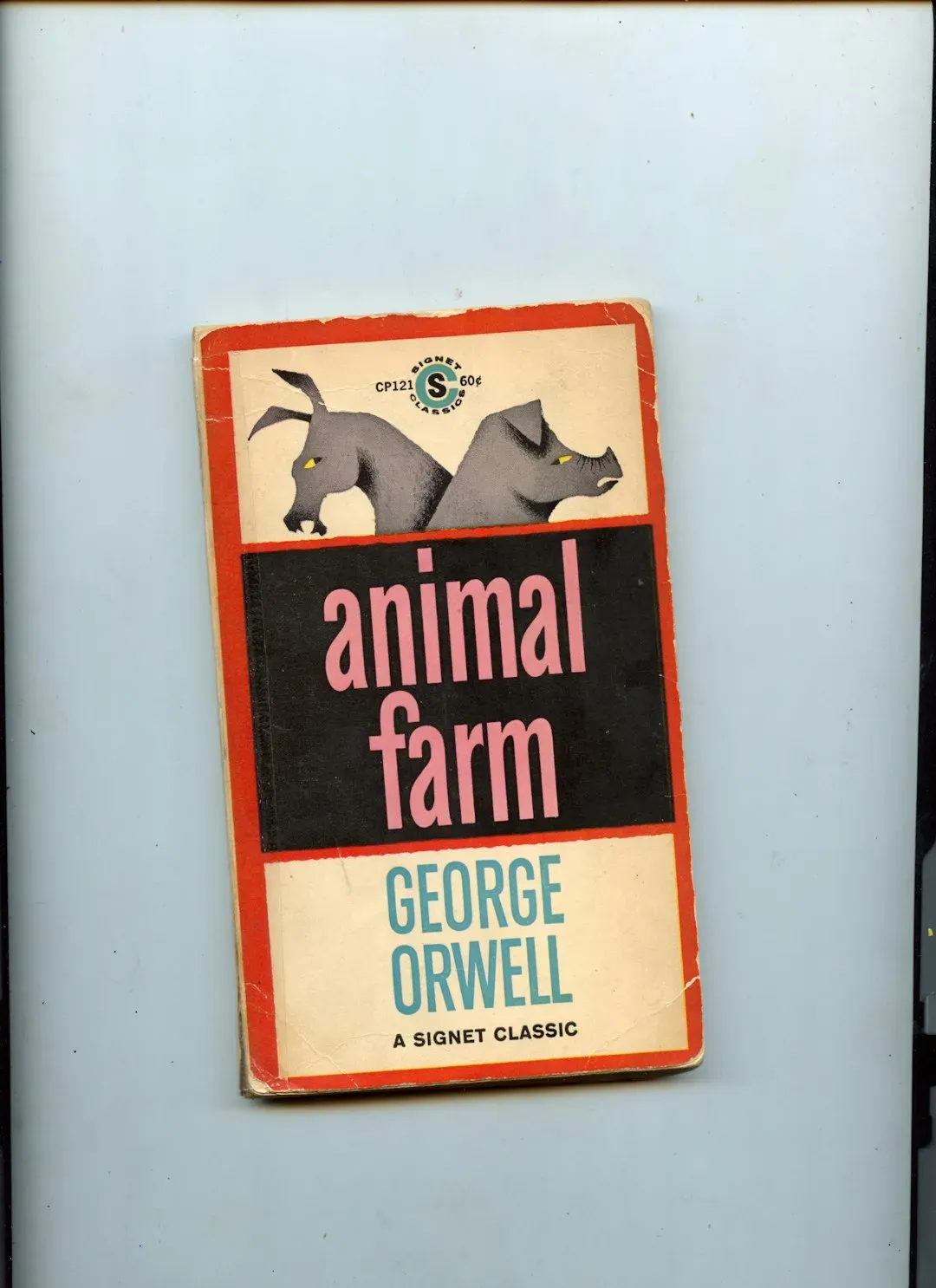
Few books manage to be both a children’s fable and a scathing political nightmare at exactly the same time. Animal Farm is, on paper, about farm animals overthrowing their human master. It is, in reality, a brutal and razor-precise allegory about the corruption of revolutionary ideals and the mechanics of totalitarianism. Orwell wrote it in 1943 and 1944, completing it in just a few months, though it was rejected by several publishers before finally appearing in 1945.
The novella is famously short, around 30,000 words. You could read it in an afternoon. The horror of it is that it starts almost cheerfully. The pigs are clever, the horses are loyal, the sheep are hopeful. Then the pigs become the very thing they overthrew. The famous final scene, where the animals look from pigs to men and can no longer tell the difference, is one of the most chilling endings in all of literature.
What makes it emotionally devastating rather than just politically clever is Boxer the horse. He is loyal, hardworking, and completely betrayed by the pigs he trusted. I know it sounds crazy, but a fictional horse in a 30,000-word book is somehow one of the most heartbreaking characters in the English literary canon.
7. The Pearl by John Steinbeck (1947)


Steinbeck appears twice on this list because he clearly understood something that many longer novelists never grasped: the brutal efficiency of brevity. The Pearl is written as a parable, which allows the reader to interpret its themes in their own way; it can take place in any time period, with any setting, and using any protagonist, as the themes are universal.
The novel focuses on Kino, an unwealthy diver, whose baby gets stung by a scorpion, so he must find a way to pay for a doctor. One day Kino finds the pearl of the world, his first intention being to use it to pay for medical expenses, but the pearl ends up creating many problems for Kino.
Its contrasting portrayal of good and evil creates a clear understanding of themes such as greed, illusions, and humanity and reason versus animalism and instinct. It is barely 90 pages in most editions. Yet it leaves you sitting quietly for a while after the last page, wondering how something that small did something that large to you.
8. The Stranger (L’Étranger) by Albert Camus (1942)
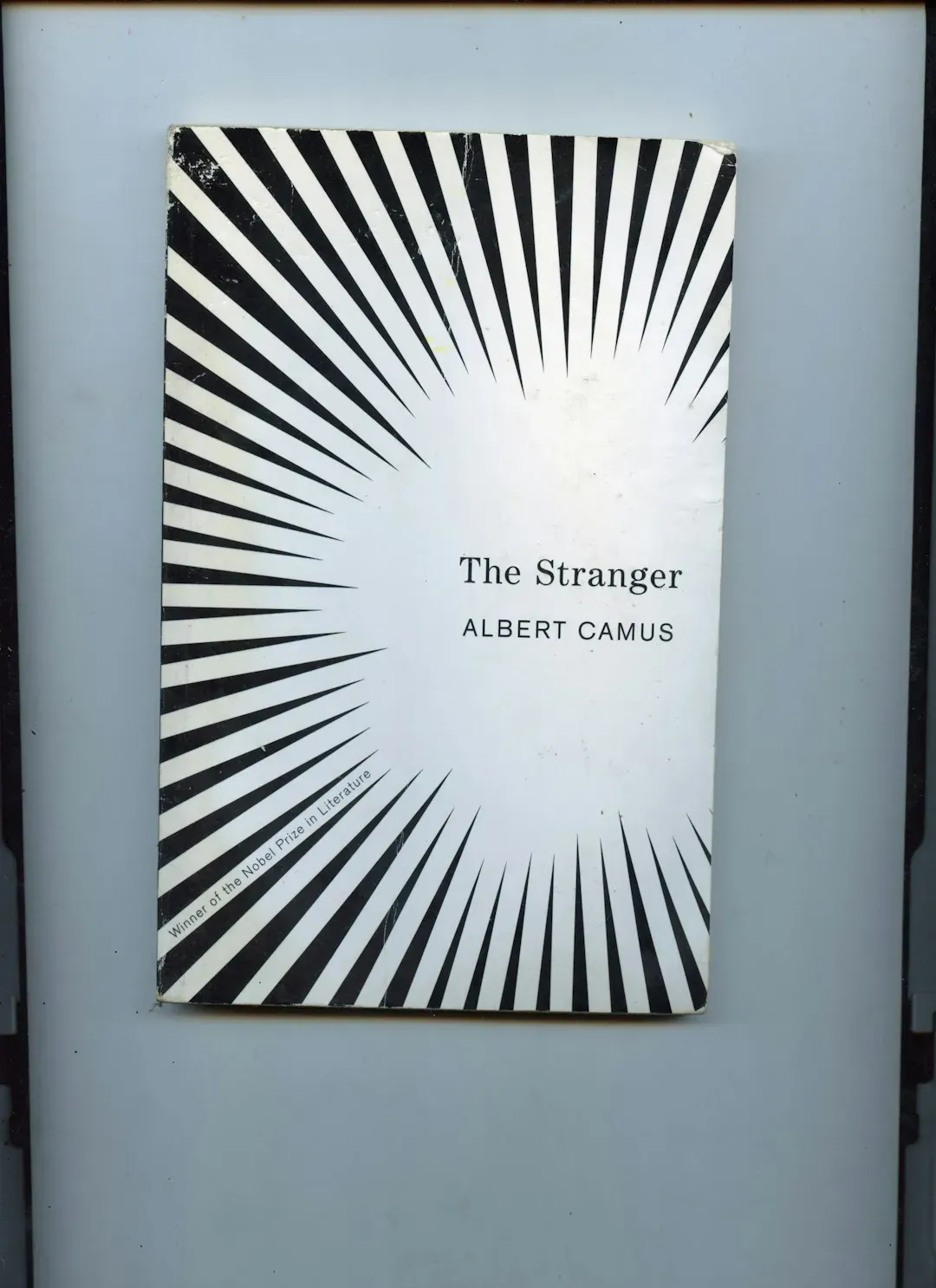
Opening with one of the most famous lines in modern literature, Camus’s short masterpiece drops you into the detached, almost alien consciousness of Meursault, a French Algerian man who kills someone on a beach and seems genuinely baffled by the consequences. The novel runs to roughly 36,000 words in its original French. You can finish it in a morning, but you may spend years unpacking it.
The emotional experience of reading The Stranger is unusual. Meursault famously does not weep at his mother’s funeral. He is not cruel exactly, just eerily indifferent to the emotional codes that hold society together. Camus used him to explore his philosophy of absurdism, the idea that human beings exist in a universe that gives no answers to our search for meaning.
What is surprising is how affecting the novel becomes despite its narrator’s apparent coldness. By the time Meursault faces execution and has his moment of raw clarity under the stars, something genuinely emotional has happened. It crept up on you while you were busy thinking it was just a philosophical exercise. That is the brilliance of it.
9. Giovanni’s Room by James Baldwin (1956)


As with most of James Baldwin’s books, this novel is emotional carnage. Giovanni’s Room is about an American man in Paris named David who is engaged to a woman but falls in love with an Italian bartender named Giovanni. What unfolds is a devastating exploration of shame, self-denial, and the catastrophic cost of refusing to acknowledge who you really are.
The novel is short, roughly 160 pages in most editions. Baldwin reportedly wrote it quickly and furiously. What he produced is one of the most honest and quietly devastating explorations of queer identity, shame, and love ever written. It remains strikingly modern in its emotional intelligence, and reading it in 2026, it feels not like history but like something still urgently relevant.
The ending is not a surprise exactly, but it is still shattering. Baldwin gives you all the pieces early and makes you watch the architecture of tragedy assemble itself, powerless to stop it. The writing is luminous in a way that makes the pain almost beautiful, and that tension never quite lets you go.
10. A Monster Calls by Patrick Ness (2011)


This is the book that will make grown adults cry in public with absolutely no shame. Originally conceived by Siobhan Dowd, who died of cancer before she could write it, and then completed by Patrick Ness, it has a remarkable origin story that itself carries grief in its bones. At around 200 pages with illustrations, it is not long. It does not need to be.
The story follows 13-year-old Conor whose mother is dying of cancer. A monster arrives at his window at midnight, ancient and enormous, and tells Conor it will share three stories, after which Conor must tell the monster a truth of his own. That truth, when it finally comes, is one of the most emotionally raw and courageously honest moments in contemporary fiction.
The book won the Carnegie Medal and the Kate Greenaway Medal simultaneously in 2012, a double honor that had happened only once before. In the digital age, emotionally powerful books offer a unique opportunity for reflection, empathy, and personal growth, reminding us of our shared humanity and the enduring power of literature to touch our hearts and broaden our perspectives. This one does all of that in fewer than 200 pages.
11. Tuesdays with Morrie by Mitch Albom (1997)


Technically a memoir, but its emotional architecture reads like the finest short novel. Mitch Albom reconnects with his old college professor Morrie Schwartz, who is dying of ALS, and visits him every Tuesday until Morrie’s death. The book is a record of those conversations. It is slim, around 192 pages, and bestseller lists globally kept it in place for nearly four years after publication.
What makes it so remarkable is that it does not sentimentalize death. Morrie talks about it the way most people talk about a trip they are planning, with curiosity, acceptance, and even a kind of dark humor. The conversations move through topics like love, work, aging, and forgiveness, and each chapter lands like a small, precise blow to something you had been keeping carefully guarded.
Emotionally powerful literature remains a vital source of connection and emotional healing, offering a unique opportunity for reflection, empathy, and personal growth. Few books illustrate that as simply and effectively as this one does. It is hard to say for sure, but I think most people who read it end up calling someone they love afterward.
12. Foster by Claire Keegan (2010)

Foster by Claire Keegan, if you have seen the Irish film “The Quiet Girl,” is that movie in book form. Originally published as a long short story in The New Yorker, it was expanded slightly for standalone publication and runs to just around 90 pages. Those may be the most quietly powerful 90 pages in recent Irish literature.
A young girl is left for the summer with relatives while her parents manage a new baby. The Kinsellas, the couple she stays with, are generous and calm in a way she has never experienced. Nothing dramatic happens. There is no villain, no plot twist, no explosive climax. Just a child slowly understanding what it feels like to be genuinely cared for, and the grief of knowing that summer will end.
Some believe the short form actually requires more of authors, not less, as they have to tell a full story in a much smaller space. Keegan proves that thesis with every restrained, perfectly chosen sentence in this book. The ending does not announce itself. It arrives quietly, like dusk, and then you realize you are sitting completely still, not quite ready to go back to the rest of your life.
Conclusion


The books on this list share one thing. They trust the reader. They do not overstay their welcome, do not pad themselves out to meet some arbitrary page count expectation. They arrive, deliver something real and human, and then they leave. What makes these works special is small page counts paired with outsized emotional impact for the reader.
Short novels are not lesser novels. They are a different discipline entirely. More precise, more demanding, more honest. If you have been circling any of these titles for a while, now is the time. Pick one up, clear an afternoon, and see what a hundred-odd pages can really do to you.
Which of these have you already read, and which one are you planning to start first? Tell us in the comments.