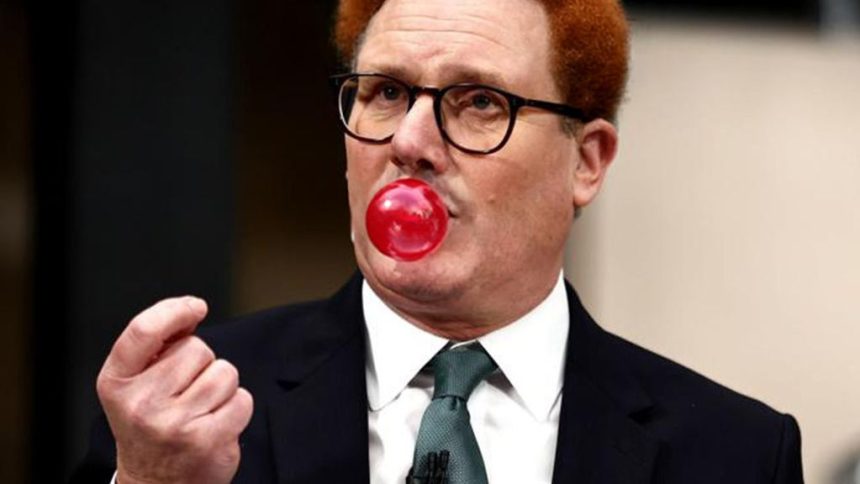

Starmer May Survive, But His Moves Signal Decline – Image for illustrative purposes only (Image credits: Flickr)
London – Keir Starmer faces a narrowing path to remain prime minister after local election setbacks triggered open dissent inside his own party. More than 100 Labour MPs have signed a statement urging colleagues to reject any leadership challenge, yet the very need for such a document underscores how much ground the prime minister has already lost. The moves designed to stabilise his position instead highlight the fragility that now defines his leadership.
Rebellion Spreads Through Labour Ranks
Dozens of MPs, including some from Starmer’s 2024 intake, have pressed for clarity on his departure timeline. Several cabinet members joined the chorus, turning private frustration into public pressure. The prime minister responded by vowing to fight on and even suggested he could serve two full terms. That defiance has not quelled the unrest. Analysts at Eurasia Group raised the odds of Starmer being removed this year to 80 percent. The most probable route, they noted, involves MPs forcing a leadership contest by September. An orderly handover or immediate ballot also remain live possibilities. Each scenario carries its own risks for party unity and government stability.
Partner offer

Defensive Tactics Signal Deeper Trouble
In steadier times, no one would circulate letters insisting it is “no time for a leadership contest.” The fact that more than 100 MPs felt compelled to do so reveals the depth of concern. Their support rests less on enthusiasm for Starmer’s agenda and more on fear of what might follow if he departs abruptly. Every defensive step Starmer takes now carries the same paradox. Actions meant to shore up his position instead expose how much influence he has already surrendered. The prime minister’s insistence that he will not walk away has bought time, but it has not restored confidence among restless backbenchers.
What Comes Next for the Government
– A leadership election triggered before the summer recess
– An agreed transition that allows Starmer to set his own exit date
– Continued low-level rebellion that weakens legislative progress
– Fresh local or by-election losses that accelerate the timeline These possibilities now dominate internal conversations. The coming weeks will test whether Starmer can convert his public resolve into renewed loyalty or whether the erosion of authority proves irreversible. The longer the uncertainty lingers, the harder it becomes for ministers to focus on day-to-day governance. Voters, meanwhile, watch a government that appears more preoccupied with its own survival than with the challenges facing the country.
Partner offer
Planning a trip to Vegas?
Compare hotel rates and show tickets on VEGAS.com.