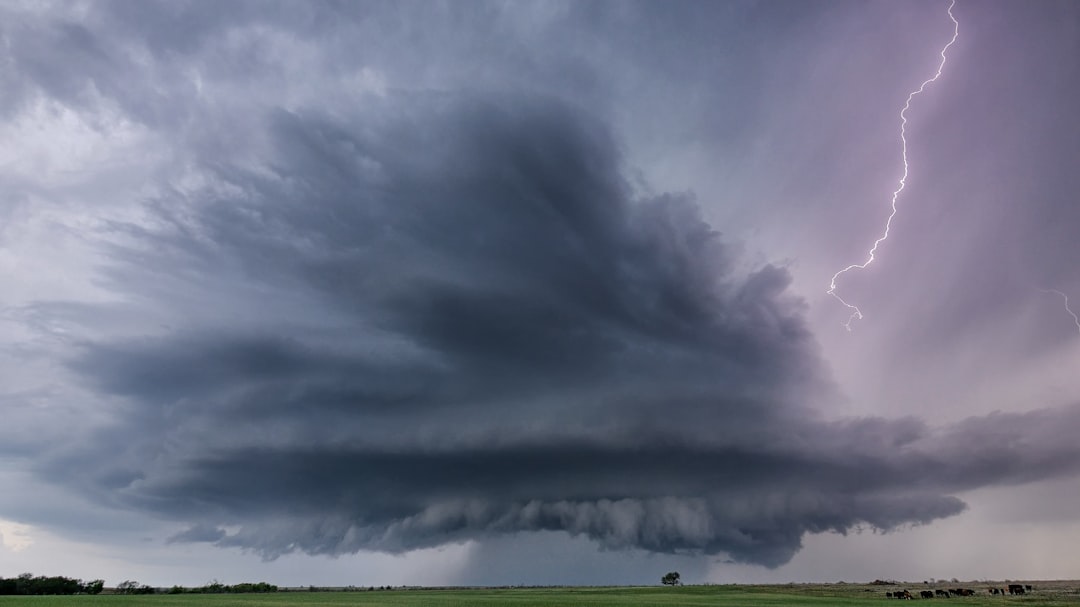
DAY 1 SLIGHT SEVERE WEATHER RISK FROM THE SOUTHERN PLAINS INTO THE LOWER MISSISSIPPI VALLEY/MID-SOUTH…OHIO VALLEY…AND LOWER GREAT LAKES…FORECAST SYNOPSIS…ISSUED MAY 19, 2026…12:30 P.M. EDT – Image for illustrative purposes only (Image credits: Unsplash)
The Storm Prediction Center placed a slight risk of severe thunderstorms across a broad swath of the central and eastern United States on May 19. The area stretched from the southern Plains through the lower Mississippi Valley and Mid-South, then northeastward into the Ohio Valley and lower Great Lakes. Forecasters highlighted damaging winds and hail as the main concerns, with the strongest potential for very large hail focused over west-central Texas.
Why the Outlook Matters Now
Residents in the outlined zones faced the possibility of scattered severe storms throughout the afternoon and evening hours. The setup combined a southward-moving cold front with daytime heating and ample moisture, creating conditions ripe for organized thunderstorm clusters. Even modest wind shear was enough to support damaging gusts and isolated supercells in the most unstable pockets.
Early activity across central and eastern Oklahoma, northwest Arkansas, and southern Missouri was already underway by mid-morning, though much of it remained north of the front and posed only limited immediate threats. Regeneration along the boundary later in the day was expected to shift the focus southward and eastward.
Regional Breakdown of Threats
Across the southern Plains and lower Mississippi Valley, forecasters anticipated loosely organized clusters and bowing line segments capable of producing scattered damaging winds. Parts of west-central Texas stood out for steeper mid-level lapse rates and greater instability, raising the chance for sustained supercells and hailstones reaching or exceeding two inches in diameter.
Partner offer
Farther northeast, stronger instability developed across the Ohio Valley during the afternoon. Multicell clusters and bowing segments were the primary mode, with damaging winds again the leading hazard and isolated hail possible in the strongest cores. The activity was forecast to spread into the lower Great Lakes by evening before weakening across the Northeast overnight.
Atmospheric Setup and Key Indices
Model guidance showed surface-based CAPE values ranging from 2000 to 4500 J/kg within the slight-risk area, with mixed-layer CAPE between 1000 and 4000 J/kg. Effective shear of 30 to 40 knots supported organized storms, while 0-1 km storm-relative helicity values of 225 to 350 m²/s² indicated modest rotation potential.
Supercell composite parameters reached 2 to 8 across the southern risk zone, while significant tornado parameters remained below 1 in most locations. These numbers aligned with expectations for primarily non-tornadic supercells and a low overall tornado threat, limited to weak EF0 or EF1 events if any formed.
What Matters Now
Monitor local National Weather Service updates and have a safe shelter plan ready if storms approach. Damaging winds and large hail remain the most likely impacts through late evening.
The forecast center noted that any changes to the outlook would appear in subsequent updates issued at 1630Z. Residents were advised to follow official sources for the latest watches, warnings, and radar trends rather than relying solely on earlier guidance.
With the Atlantic hurricane season set to begin June 1, attention will gradually shift toward tropical systems, yet severe-weather updates will continue for any slight or higher risks that develop in the coming weeks.
Partner offer
Planning a trip to Vegas?
Compare hotel rates and show tickets on VEGAS.com.