Most of these writers weren’t trying to forecast anything. They were wrestling with the anxieties of their own era, turning social tensions and technological change into story. The eerie part is how often the future showed up anyway, sometimes with unsettling precision, as if the act of paying close enough attention to the present was all the prophecy anyone needed.
What separates the truly prescient authors from the merely imaginative is a quality closer to rigorous observation than mysticism. The writers in the sci-fi pantheon combine a heightened awareness of the concerns of their own eras with a certain genuine prescience about things to come. These ten authors stand as the most striking examples of that rare combination.
1. Jules Verne – The Engineer of Tomorrow

Verne lived in the era of steam ships and telegraphs, but was able to imagine technologies that wouldn’t be invented for over a century. His secret wasn’t magic. More of a futurist than a prophet, some describe Jules Verne as someone who was paying great attention to the times rather than simply outright prophesying. Verne was well acquainted with the technology of the time and played with ideas of how those technologies could evolve.
His novels didn’t just entertain; they foresaw electric submarines, space travel, video calls, and global media long before these ideas entered public consciousness. Through visionary novels like “Twenty Thousand Leagues Under the Sea,” “From the Earth to the Moon,” and “Journey to the Center of the Earth,” Verne anticipated many of the tools, systems, and scientific breakthroughs we take for granted today. Verne’s spacecraft in “From the Earth to the Moon” was called Columbia, just like the Apollo XI command module. Verne even got the physics right: the speed needed to escape Earth’s gravity, the ballistics of the trajectory, and the ideal launch location, which he placed just 100 kilometers from where Cape Canaveral would later be built.
2. George Orwell – The Cartographer of Control


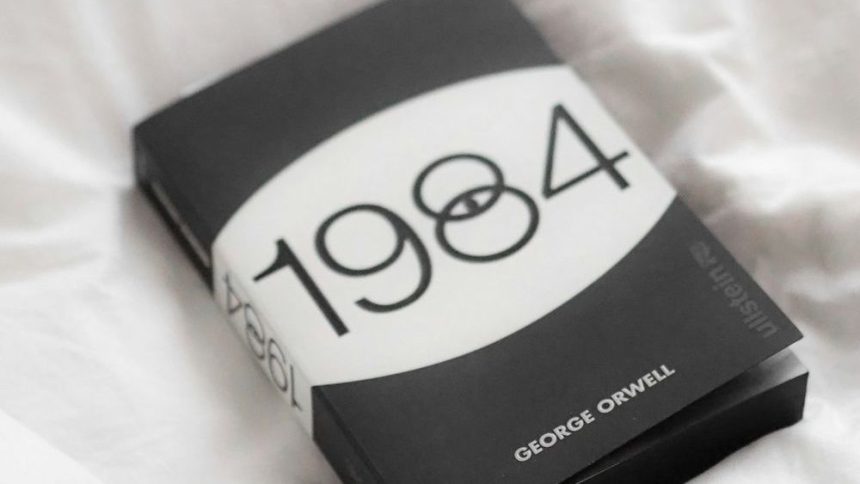
Nineteen Eighty-Four is a dystopian speculative fiction novel by the English writer George Orwell, published on 8 June 1949. Thematically, it centres on totalitarianism, mass surveillance, and repressive regimentation of people and behaviours. What he imagined as fiction has since become a reference point for judges, journalists, and citizens alike. In November 2011, the United States federal government argued before the US Supreme Court that it could continue to use GPS tracking of individuals without first seeking a warrant. In response, Justice Stephen Breyer questioned what that means for a democratic society by referencing Nineteen Eighty-Four.
The themes of surveillance, propaganda, and language control are only a few examples of how 1984’s ideas became a modern reality. The novel popularised “Orwellian” as an adjective, and many terms used in it have entered common usage, including “Big Brother,” “doublethink,” “Thought Police,” “thoughtcrime,” and “Newspeak.” Orwell wrote the book as a warning, not a blueprint. The fact that we still measure the present against it says everything.
3. Aldous Huxley – The Prophet of Pleasant Oppression

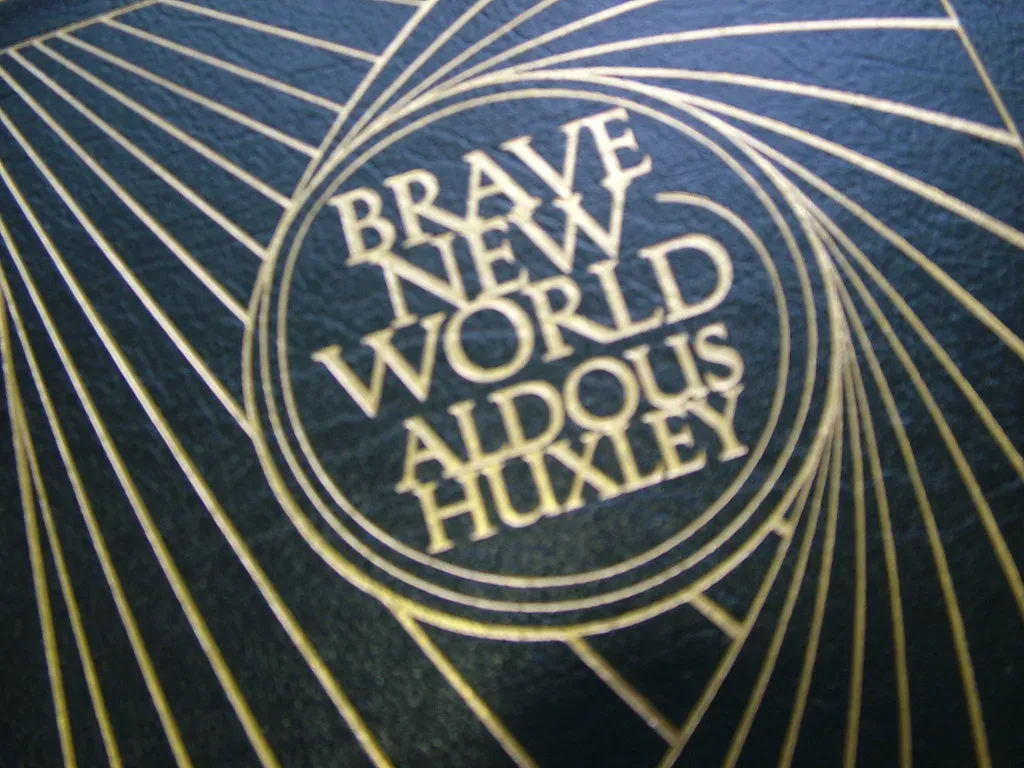
In contrast to Orwell, Aldous Huxley’s “Brave New World” predicts a society seduced by pleasure, consumption, and distraction. People are pacified through constant entertainment, drugs like “soma,” and the suppression of critical thought. The chilling detail is how voluntary it all feels. Huxley’s “Brave New World” offered a glimpse into a society obsessed with pleasure, consumerism, and scientific control over life itself. He imagined mood-altering drugs that keep citizens content – today, antidepressants and anti-anxiety medications are among the most prescribed drugs worldwide. Huxley also described the concept of “test-tube babies” decades before the first successful in vitro fertilization in 1978.
Aldous Huxley’s “Brave New World” was a prediction of a nightmare he thought we would be safe from for at least a few hundred years when he wrote it in 1931. By 1958 he realized he had been very optimistic. Huxley had actually taught George Orwell French at Eton College, making their parallel visions of dystopia one of literature’s more striking coincidences. Two teachers and students, two very different nightmares, both arriving on schedule.
4. H.G. Wells – The Man Who Named the Unthinkable

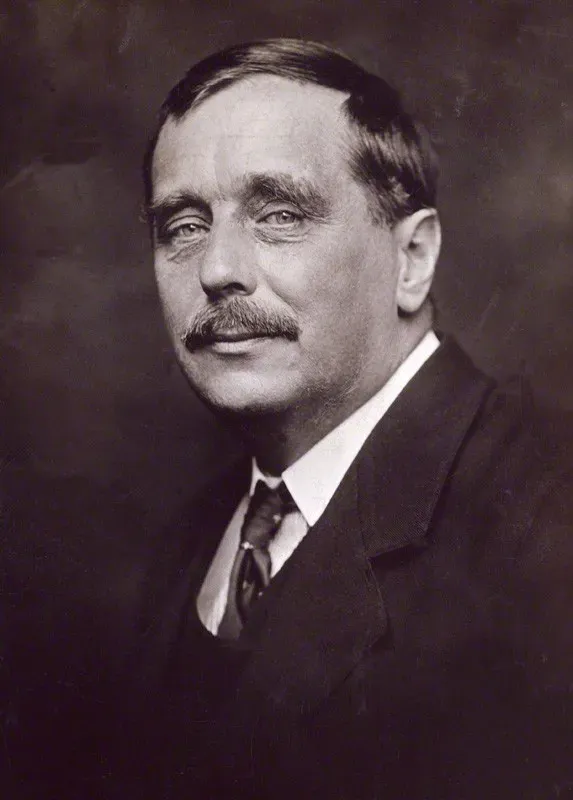
Nuclear weapons, the moon landing, genetic engineering, lasers, and World War II are all predictions that have already come true. His most famous prediction can be found in the book “The World Set Free,” in which he describes the destruction caused by incredibly powerful bombs known as atomic bombs. Wells wrote this in 1914, more than three decades before Hiroshima. In his 1914 novel, Wells predicted that the problem of extracting energy from the atom would be solved in 1933, and in that year, Leo Szilard did, in fact, come up with the idea of a nuclear chain reaction.
In the 19th century, authors like H.G. Wells started to flip the age-old formula on its head, exploring how human development could lead to a distinctly undesirable future. Wells was less a dreamer than a diagnostician, one who saw the worst possibilities of progress more clearly than the optimists of his age. His accuracy wasn’t supernatural. It was the product of a mind that refused to look away.
5. Mary Shelley – The Mother of Ethical Science Fiction
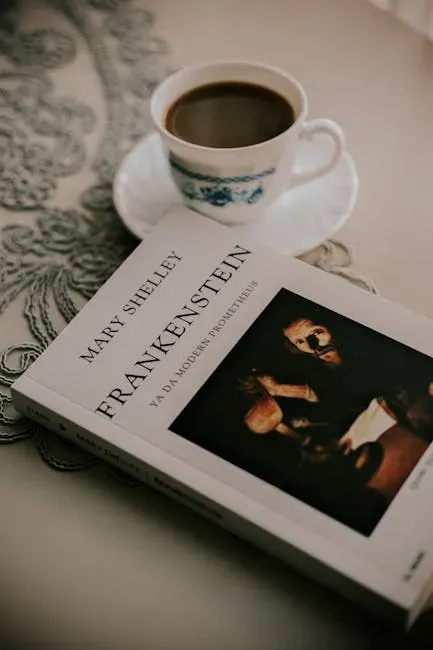
Considered by many scholars to be the first true science fiction novel, Shelley’s book was written when the author was just 18 years old and published anonymously two years later. Shelley’s tale of reanimation, rooted in the galvanic science of the day, anticipates later real-world ideas concerning tissue engineering and regenerative medicine. That’s a remarkable reach for a teenager writing by candlelight during a cold summer in Geneva.
Mary Shelley’s “Frankenstein,” one of the first true science fiction stories, foreshadowed the development of bioelectronics, organ transplants, genetic engineering, and artificial intelligence. On a deeper level, Shelley’s 1818 novel also predicted the inevitable confrontation between science, religion, and ethics – a confrontation that carries on today with no clear end in sight. The central question she posed, of whether the act of creation carries moral responsibility, is now at the heart of AI ethics debates two centuries later.
6. William Gibson – The Architect of Cyberspace

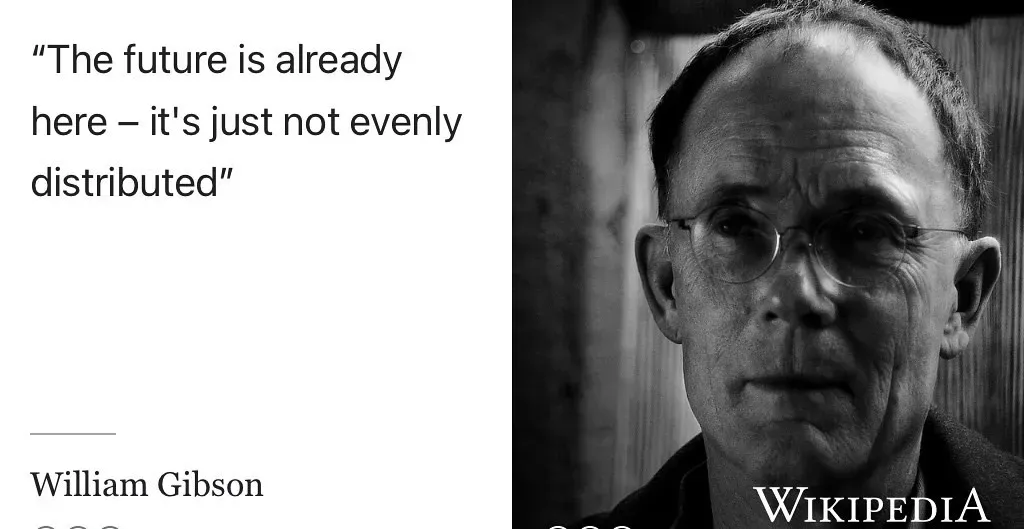
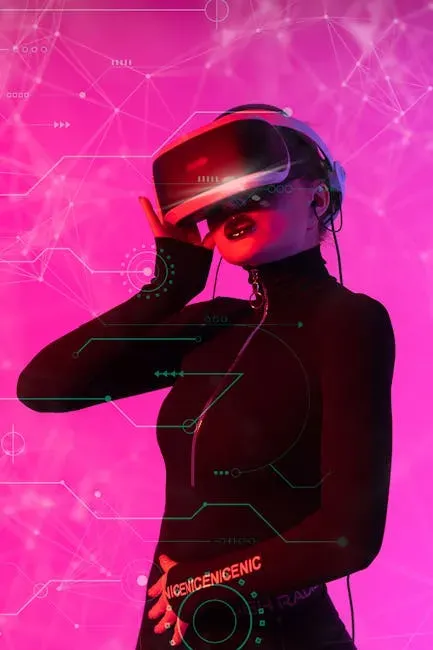
Cyberpunk godfather William Gibson may be the single most prophetic author in the history of the science fiction genre. His breakthrough debut novel introduced the term “cyberspace” and predicted a startling number of specific future developments concerning artificial intelligence, hacker culture, cybernetics, virtual reality, cosmetic surgery, reality TV, and other delights of late-stage capitalism. He wrote “Neuromancer” in 1984, at a time when most people had never touched a personal computer.
Neuromancer is widely regarded as one of the best science fiction books of all time, in part for its eerie accuracy in predicting the Internet and cyberspace. Likewise, it features hacking, corporate world dominance, and cyberattacks. Gibson famously said that the future is already here, it’s just not evenly distributed. Reading “Neuromancer” now feels less like fiction and more like a design document someone lost in 1984 and only recently recovered.
7. Ray Bradbury – The Poet of Distraction

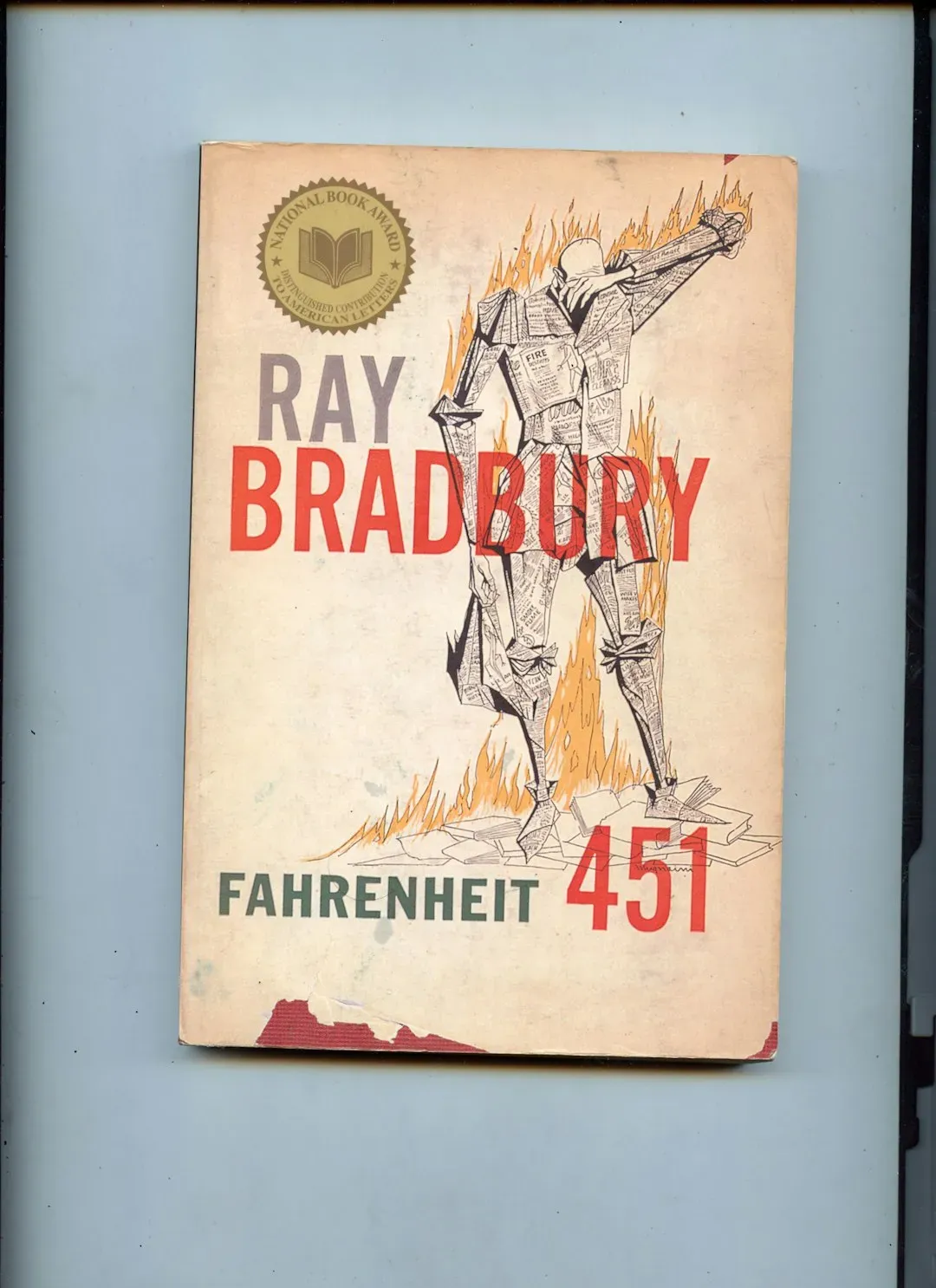
When you turn on your flat screen TV or pop in your earbuds, you’re living out the dystopian vision of Ray Bradbury’s 1953 book “Fahrenheit 451.” In the novel, people bombard themselves with entertainment instead of talking to each other. Much easier to pop your seashell radios in your ears and forget about the books you planned to read. The seashell radios, in particular, read today like a remarkably precise description of wireless earbuds.
Bradbury wasn’t primarily concerned with technology itself. He was worried about what people choose to do with it. Ray Bradbury’s “Fahrenheit 451” predicted a world where massive flat-screen televisions line living room walls. His version of censorship wasn’t enforced by a brutal government alone – it was enabled by a population that had simply stopped wanting to think. That framing feels, if anything, more current in 2026 than it did in 1953.
8. E.M. Forster – The Accidental Prophet of Remote Life

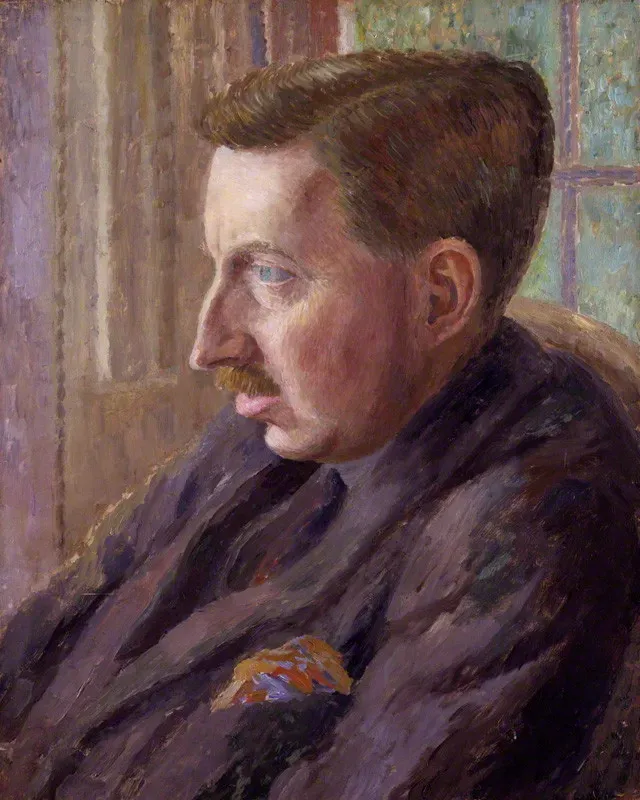
Imagine an information-oriented world where people work from home, communicate via instant messages and videos, and form and maintain friendships electronically. It sounds an awful lot like life in the 2020s. Believe it or not, it’s actually the premise of E.M. Forster’s “The Machine Stops,” a sci-fi short story published in 1909. Forster wrote it as a satire aimed at H.G. Wells. He never intended it as prophecy.
In his 1909 short story, Forster imagined a future in which people live and work exclusively in their own rooms, communicating with one another entirely through electronic means. The rise of smart home devices and personal assistants like Amazon’s Alexa, Google Home, and Siri have become the modern version of the telescreen. What Forster wrote as a cautionary tale about isolation became, for millions during the global pandemic of the 2020s, simply Tuesday.
9. John Brunner – The Forgotten Forecaster


Perhaps more than any other book, “Stand on Zanzibar” has gained notoriety for its sheer accuracy. Set in 2010, the novel imagines a world not that far off from events that transpired in the surrounding decades – long after it was written. Brunner imagined the formation of the EU, the economic decline of Detroit, and the rise in global terrorism. The book was published in 1968. The breadth of those predictions, across economics, politics, and culture, is almost bewildering.
Other cultural predictions show up in the story, like the increasing acceptance of gay marriage and the decline in tobacco use alongside the decriminalization of marijuana. In this book about the future set in 2010, corporate-run governments, mass surveillance, and data profiling are the norm. Likewise, terrorism and mass shootings are a concern for the United States, and China is rising as a world superpower. Brunner doesn’t appear on many bestseller lists today. That’s an oversight worth correcting.
10. Octavia E. Butler – The Voice Who Saw It Coming

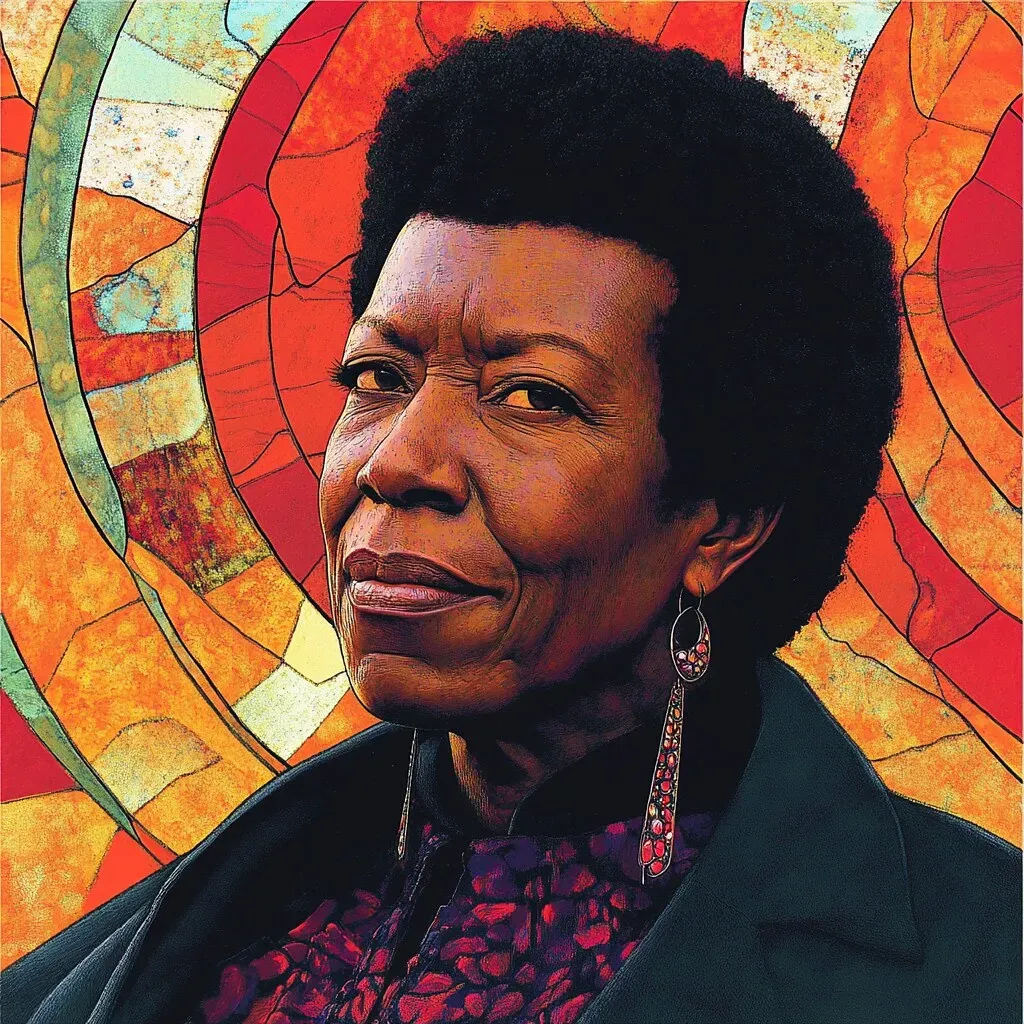
Science fiction writer Octavia E. Butler created a dystopian world in “Parable of the Sower” (1993) and “Parable of the Talents” (1998) that featured the rise of a populist demagogue. While the books were well-received when they were published, they have struck a chord with readers more recently, given some stark similarities between the society Butler created and our reality today, including global warming and social inequality.
The two books touch on all the classic features of a premonitory dystopia: global warming, the rise of fascism, growing corporate influence, and staggering inequality. One detail is exceptionally eerie. The second novel, “Parable of the Talents,” describes a conservative evangelist from Texas who is running for the presidency with a platform to “Make America Great Again.” Butler wrote those words in the 1990s. Her work reminds us that the most powerful kind of prediction isn’t mystical – it’s the result of watching who holds power, and what they tend to do with it.