Think you know American history? Maybe it’s time to reconsider. The story of the United States is far more complicated, painful, and fascinating than what most of us learned in school. Too often, the standard textbooks skip over crucial details or reshape events to fit a certain narrative. The real history is messier, more controversial, and frankly more interesting.
The good news is that historians and writers have been working overtime to fill in those gaps. From the stories of enslaved people fighting for freedom to the architects of our democracy wrestling with impossible contradictions, these books offer a richer, more complete picture of how America came to be what it is today. Here’s a look at ten essential books that tackle U.S. history from angles you might not have encountered before.
1. “A People’s History of the United States” by Howard Zinn

Let’s be real, this one changed everything. Howard Zinn’s 1980 classic, which has been updated through 2003, presents American history from the ground up rather than the top down. The book tells America’s story from the perspective of women, factory workers, African Americans, Native Americans, the working poor, and immigrant laborers. It’s not the sanitized version you got in high school.
What makes Zinn’s approach so powerful is his refusal to accept the “fundamental nationalist glorification of country” that dominates most history books. As of 2025, more than four million copies in English have sold, and the book has been translated into more than a dozen languages. A young adult version was updated and revised in 2023 with new contributions by Latinx scholar Ed Morales.
2. “Stamped from the Beginning” by Ibram X. Kendi

Published in April 2016, Ibram X. Kendi’s book won the National Book Award for Nonfiction. In this deeply researched narrative, Kendi chronicles the entire story of anti-Black racist ideas using the life stories of five major American intellectuals: Puritan minister Cotton Mather, Thomas Jefferson, abolitionist William Lloyd Garrison, W.E.B. Du Bois, and legendary activist Angela Davis.
As Kendi shows, racist ideas did not arise from ignorance or hatred but were created to justify and rationalize deeply entrenched racist policies and the nation’s racial inequities. A graphic novel version, adapted and illustrated by Joel Christian Gill, was published in June 2023. The book has even been adapted into a Netflix documentary, bringing its insights to an even wider audience.
3. “We the People” by Jill Lepore


Jill Lepore’s 700-page history of the U.S. Constitution revolves around a central idea: that this founding charter, written by a group of white men in Philadelphia 238 years ago, was never meant to be a static document. As Lepore, a historian at Harvard University and staff writer at the New Yorker, explains in We the People, Americans came to understand that for a written constitution to endure, it would need to evolve over time.
The book arrived at a particularly fitting moment. In July 2026, the United States will mark the 250th anniversary of its founding, a milestone set to be celebrated across the country. Lepore’s work offers essential context as Americans reflect on what the Constitution means today and how it continues to shape the nation’s trajectory.
4. “The Fate of the Day” by Rick Atkinson

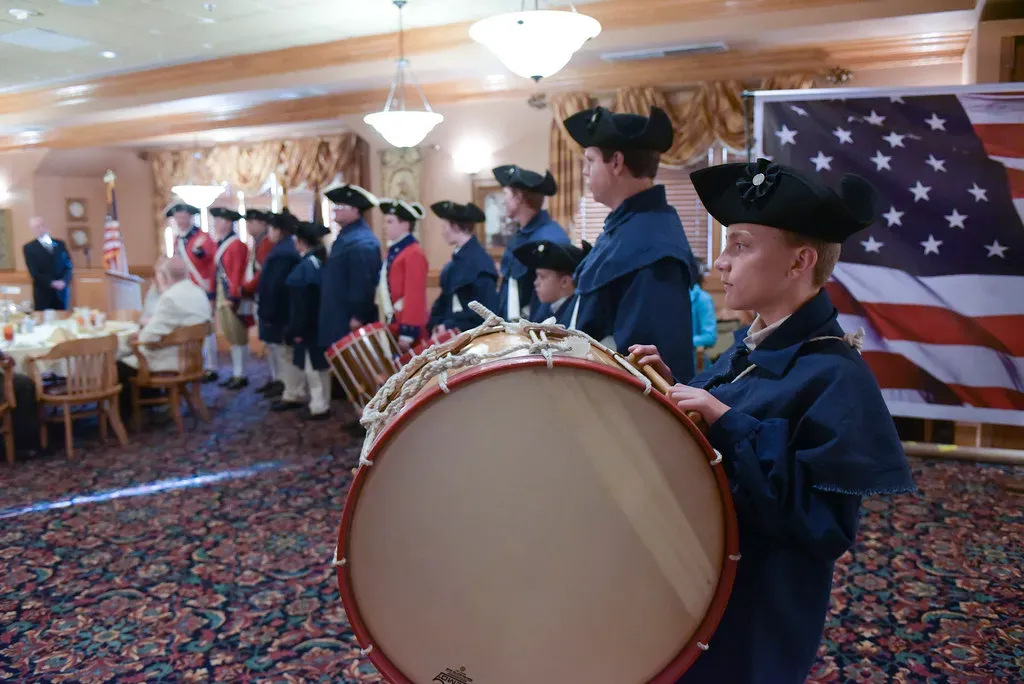
In 2019, Rick Atkinson published The British Are Coming, the first entry in his magisterial trilogy about the American Revolution, covering the first 21 months of the conflict and receiving rave reviews for its humanization of a vast cast of characters. Now, with his second book in the series, The Fate of the Day, Atkinson introduces readers to lesser-known figures such as Frederica Charlotte Louise Riedesel, a German baroness whose husband commanded Hessian troops, while also offering new perspectives on giants like George Washington and Benedict Arnold.
Ostensibly a work of military history focused on the war’s middle years from 1777 to 1780, The Fate of the Day reads more like a novel, capturing readers’ attention over more than 800 pages. Atkinson makes excellent use of letters and diaries, making you feel like you’re in the middle of a battle with all the sights, sounds, and tragedy.
5. “Combee” by Edda L. Fields-Black

Harriet Tubman is best known for her daring escape from slavery in 1849 and heroic trips along the Underground Railroad where she led more than 60 people to freedom, but Combee, winner of the 2025 Pulitzer Prize, sheds light on another brave act that has received far less attention: Tubman’s role as a Union Army leader, spy, and commander in a raid that burned deadly rice plantations along the Combahee River and ultimately freed 756 enslaved people.
This story has been overlooked for far too long. Many of 2025’s most compelling history titles feature authors grappling with the actions of their ancestors and how those choices reverberate today. Fields-Black’s book joins this essential conversation by revealing a lesser-known chapter of Tubman’s incredible legacy.
6. “American Grammar” by Jarvis R. Givens

In this deeply researched book, Harvard University professor of education and African American studies Jarvis R. Givens locates 1819 as a crossroads in the history of education in the United States, when Congress passed the Civilization Fund Act providing funding for assimilative boarding schools for Native American children, and the governor of Virginia signed an anti-literacy law that made it a crime to teach enslaved people to read and write in schools.
Givens’ clear-eyed assessment of American education offers an opportunity to reflect on the long-standing relationships among race, power, and schooling in the U.S. Here’s the thing: education has always been political in America, and Givens proves it with meticulous research that connects historical policies to present-day inequalities.
7. “Medicine River” by Mary Annette Pember

Mary Annette Pember, a citizen of the Red Cliff Band of Wisconsin Ojibwe and a national correspondent at ICT News, grew up in the 1950s and 1960s as her mother’s secret confessor, listening to fairy tale-like stories of the horrors she endured at an assimilative boarding school, and in Medicine River, Pember traces the repercussions of her mother’s maltreatment, situating her family’s story within the United States’ systemic use of education to eradicate Native cultures.
Through an approach that is part journalistic research, part spiritual pilgrimage, Pember provides a cuttingly personal account of the history of federally funded Indian boarding schools and a moving look at how Indigenous traditions and rituals can light the path for healing. It’s hard to say for sure, but this book may be one of the most emotionally powerful on this list.
8. “The Warmth of Other Suns” by Isabel Wilkerson


This pathbreaking book brought to the public outside academic circles the extraordinary story of the Great Migration that unfolded from World War I through the end of the Vietnam War, when six million African Americans fled the Jim Crow South for new opportunities in the North, Midwest, and West. Wilkerson structures the narrative around three individuals whose journeys represent millions of others.
The stories are intimate yet sweeping. Through personal accounts and meticulous research, Wilkerson reveals how this massive demographic shift fundamentally reshaped American cities, culture, and politics. It’s a book that makes you understand how profoundly movement and migration have shaped the nation we live in today.
9. “How the Word Is Passed” by Clint Smith
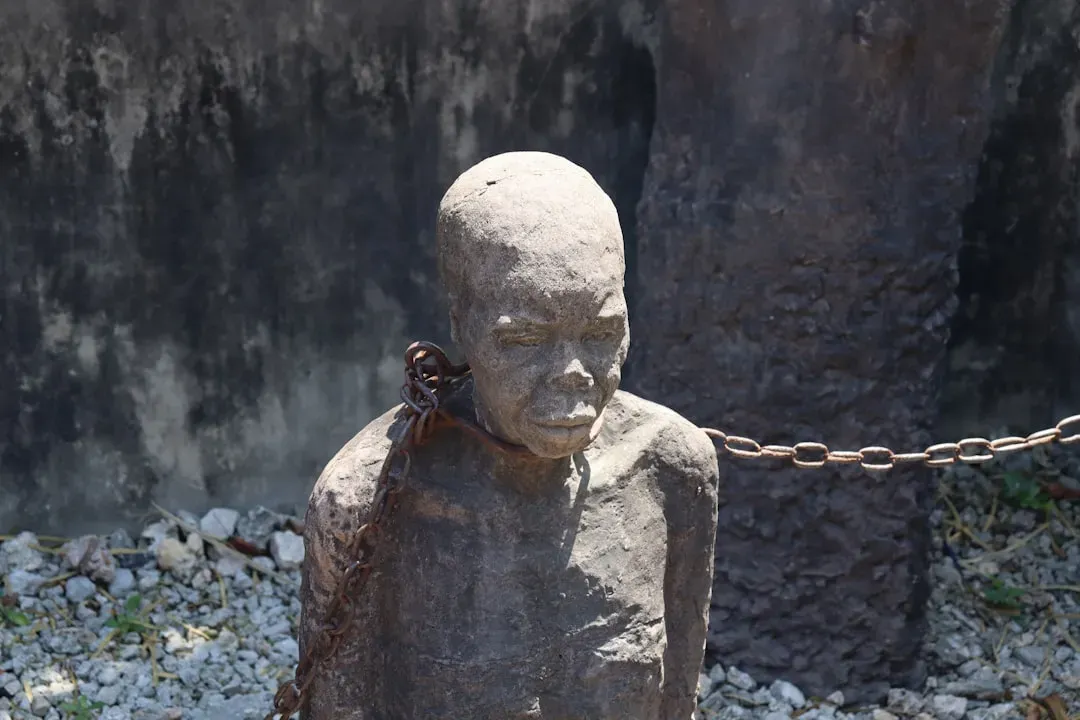
A deeply researched and transporting exploration of the legacy of slavery and its imprint on centuries of American history, How the Word Is Passed illustrates how some of our country’s most essential stories are hidden in plain view, whether in places we might drive by on our way to work, holidays such as Juneteenth, or entire neighborhoods like downtown Manhattan where the brutal history of the trade in enslaved men, women, and children has been deeply imprinted, and Smith’s debut work of nonfiction is a landmark of reflection and insight that offers a new understanding of the hopeful role that memory and history can play in making sense of our country.
Smith visits historical sites across the country and beyond, from Monticello to Angola Prison to Senegal, examining how each location remembers or forgets the history of slavery. His approach is both journalistic and deeply personal, making this complex history feel immediate and relevant.
10. “Lies My Teacher Told Me” by James W. Loewen

To write Lies My Teacher Told Me, James W. Loewen looked at 12 different history textbooks used across the country and found plenty of falsehoods they’ve been perpetuating to students. Loewen’s groundbreaking work debunks common U.S. history myths and serves as an essential fact-check of your own understanding of America’s past.
What’s remarkable about this book is how it systematically exposes the ways American history has been sanitized and distorted in mainstream education. From Christopher Columbus to Helen Keller, Loewen reveals the complex, often uncomfortable truths that textbooks routinely omit or misrepresent. Reading it feels like discovering a secret history that’s been hiding in plain sight all along.
Why These Books Matter Now

These ten books represent a fundamental shift in how American history is told and understood. They refuse to accept simplified narratives or hero worship. Instead, they dig into the messy contradictions, the uncomfortable truths, and the voices that have been silenced for too long. They show us that history isn’t just dates and battles, it’s about people making choices that shaped the world we inherited.
Reading these books won’t give you a feel-good version of American history. They’ll challenge assumptions, provoke difficult questions, and maybe make you rethink what you thought you knew. That discomfort is the point. Real understanding requires wrestling with complexity, acknowledging harm, and recognizing that the past is never really past.
So here’s the question: are you ready to see American history through a different lens? Which of these books will you pick up first?