There’s a quiet argument that the entirety of a great novel lives in its first and last sentences. Everything between them is evidence. The opening line is a contract: here is the world, here is the voice, here is what matters. The closing line is the verdict.
The importance of an extraordinary first line is undeniable, but equally important is the closing sentence. It truly brings the story full circle and leaves readers with a lasting impression. Final lines have the ability to anchor in a reader’s mind long after the book is finished, so it’s a remarkable achievement when authors can create a last line equally as impressive as their first. What follows is a look at ten books where both ends of that bargain are kept with uncommon brilliance.
1. Moby-Dick by Herman Melville (1851)


The opening of Moby-Dick is simply “Call me Ishmael,” and the American Book Review ranked it the single best opening line in fiction. That simple statement has been met with various theories. One suggestion is that Melville wanted to indicate that the narrator may have been hiding something or acting duplicitous. Another is that he wanted to evoke imagery surrounding the biblical figure Ishmael, who was an outcast. A third theory is that Melville is establishing a casual introduction, a call to familiarity.
The brevity and intrigue provided by the opening line give little away about the depth and density of the novel to come, but it gives the reader enough to form several questions: who is this Ishmael, is he even called Ishmael or does he just want us to call him that while protecting his true identity, and why is he talking to us at all? The last line of the novel reads: “It was the devious-cruising Rachel, that in her retracing search after her missing children, only found another orphan,” a sentence the American Book Review ranked among the best closing lines in all of fiction.
2. The Great Gatsby by F. Scott Fitzgerald (1925)


F. Scott Fitzgerald opens his 1925 novel with an introduction to its narrator, Nick Carraway. Within the first few words, we’re able to surmise that he is reflecting back on life, he considers his father to be a wise man, he identifies with privilege, and there are certain life events that have challenged his thinking. This entices the reader to want to know more about what those events may be and what else entrances this mysteriously introduced character.
The Great Gatsby just may have the most famous last line of all, and if you read this classic in school, chances are you discussed it, as it is both beautifully written and conveys the very human struggle that plagued Gatsby and so many others. Fitzgerald nearly left that final sentence out entirely, as early drafts of the novel ended on a very different note. Yet with those beautiful words, he transformed the story of the enigmatic millionaire from a tale of heartbreak into something eternal.
3. 1984 by George Orwell (1949)
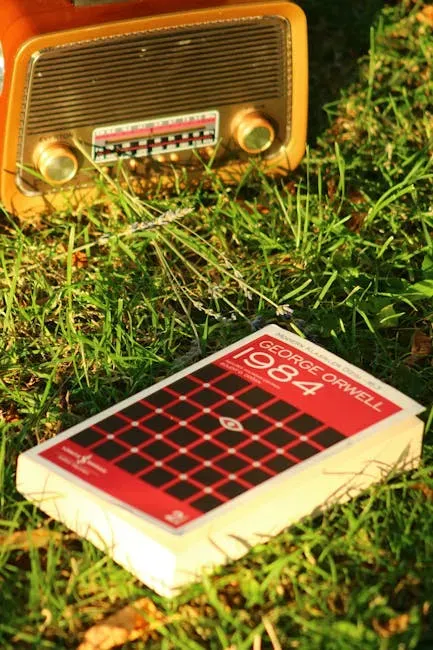
George Orwell’s novel 1984 begins with a relatively simple, well-written statement, but through it, he hooks the reader with a multitude of techniques. What Orwell is hinting at is a society that has taken a dark and troubling turn, one in which individuals live under constant surveillance, in which people are manipulated and controlled by totalitarian masters. A bright cold April day and clocks striking thirteen: two details that should be ordinary but instantly feel deeply wrong.
Orwell’s chilling last line, “He loved Big Brother,” is a gut punch. In six words, he captures the quiet horror of total surrender. The man who once defied authority now worships it, his spirit broken and his will erased. With these words, Orwell expresses how fear and control can reshape the human soul. Decades later, the final line of 1984 still echoes like a cautionary tale: the greatest danger isn’t losing your freedom, but forgetting what freedom felt like.
4. Pride and Prejudice by Jane Austen (1813)

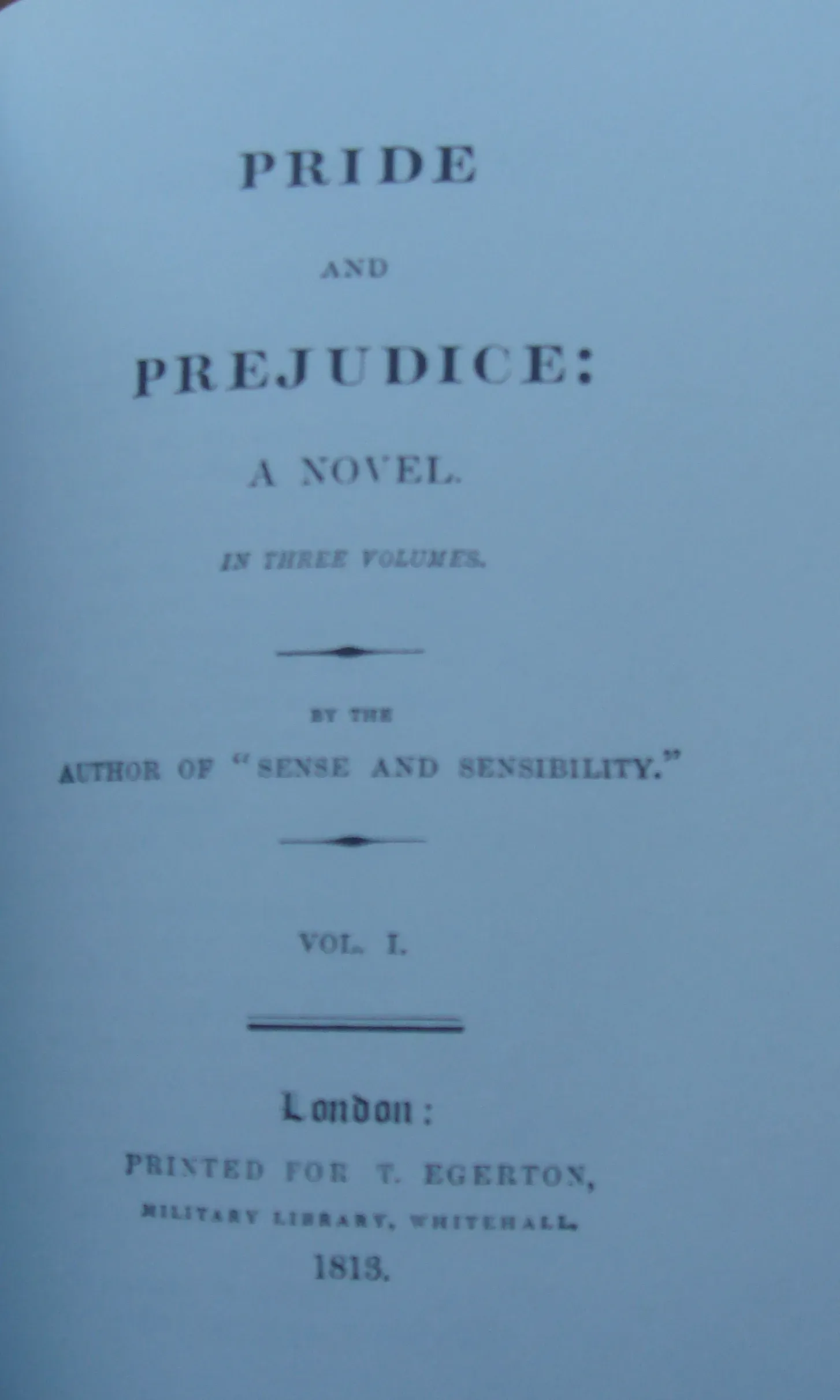
Austen’s novel is set in a world where both expectations and reputation matter, foreshadowed in the novel’s very first line. The book’s final sentiments allow it to come full circle, alluding to outside principles once again, and how marriage’s social impact affects not only the individual partners but the wider community around them. Readers in the United Kingdom ranked Austen’s opening as the “most iconic opening from a novel” in a poll commissioned by Amazon Books UK, ahead of 24 other celebrated opening lines from world literature.
Some two hundred years after first publication, Pride and Prejudice continues to top polls of the most loved books. It is a truth universally acknowledged that Pride and Prejudice has one of the most captivating and quote-worthy opening lines of all time. Whether you are a first-time reader or revisiting these well-worn pages, Jane Austen’s masterpiece is as comical, relatable, and heart-warming as it was over 200 years ago.
5. Anna Karenina by Leo Tolstoy (1878)

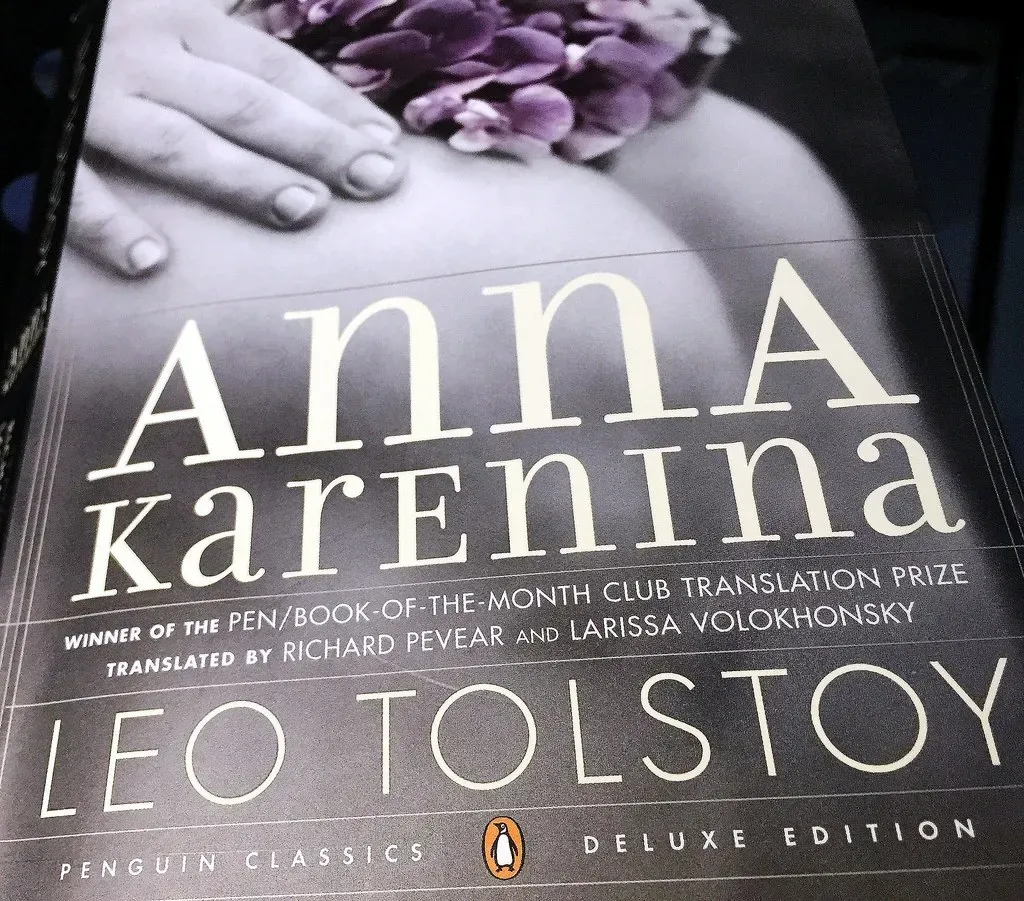
The first lines of Leo Tolstoy’s 1873 novel are some of the most famous of all time. They spark interest by stating a hard truth that seemingly comes from deep within the narrator’s soul. By stating this hard-earned insight and allowing the story to support it, Tolstoy immediately sparks interest. Another aspect that makes the opening sentence particularly compelling is its timeliness. The theme of family values was a frequent target of attack by young Russian liberals during the period, so Tolstoy successfully capitalized on the level of buzz generated around the topic.
The last lines of Anna Karenina reinforce the goal of the novel: to discuss family values. Tolstoy concludes with an abstract philosophical statement that focuses on the self as the center of existence, a theory that was of deep interest during the time this novel was written. The opening line is a masterclass in subtlety. On the surface, it’s a simple observation about the nature of families, but as you read on, you find that it’s actually a cleverly crafted key to unlocking the themes and characters of the entire novel.
6. To Kill a Mockingbird by Harper Lee (1960)

To Kill a Mockingbird opens with: “When he was nearly thirteen, my brother Jem got his arm badly broken at the elbow.” It’s a deceptively domestic sentence. Nothing in it suggests injustice, moral urgency, or what the novel will cost you emotionally. The novel focuses on the childhood chronicles of Scout and Jem as their lawyer father defends a Black man who is falsely accused of a devastating crime, and it is a powerful coming-of-age story that reflects on justice and the consequences of racism and prejudice.
The famous last line reads: “He turned out the light and went into Jem’s room. He would be there all night, and he would be there when Jem waked up in the morning.” It is one of the most quietly devastating endings in American fiction. Atticus, who has argued so publicly for justice, can do nothing now but be present for his child in the dark. The simplicity of that gesture is everything.
7. A Tale of Two Cities by Charles Dickens (1859)

In Charles Dickens’ masterpiece, A Tale of Two Cities, stories of love, loss, and revolution await you. The opening line “It was the best of times, it was the worst of times” is a contrast masterclass, setting the stage for the tumultuous events unfolding. This iconic sentence introduces the central theme of duality, highlighting the contradictions of life during the French Revolution. The line’s rhythmic quality and repetitive phrase structure create a sense of urgency, drawing you in and refusing to let go.
With well over 200 million copies sold, the opening lines of A Tale of Two Cities rank among the most famous in the history of English literature. Set in London and Paris before and during the French Revolution, the novel depicts the plight of the French peasantry in the years leading up to revolution and draws many parallels with life in London during the same time. Originally printed in serialised form in Dickens’ weekly periodical, it cemented the author as a vital social commentator of the times he was living through. The closing line, spoken from the perspective of a man walking to his execution, matches that opening in pure emotional weight.
8. The Catcher in the Rye by J.D. Salinger (1951)

The Catcher in the Rye opens: “If you really want to hear about it, the first thing you’ll probably want to know is where I was born, and what my lousy childhood was like, and how my parents were occupied and all before they had me, and all that David Copperfield kind of crap, but I don’t feel like going into it, if you want to know the truth.” In one long, breathless sentence, Holden Caulfield establishes his voice, his suspicion of convention, and his contradictory desire to tell his story while refusing to tell it.
Popular on school syllabuses across the world for its themes of teenage angst and alienation, The Catcher in the Rye has been translated into almost all of the world’s major languages, and its protagonist has become something of an icon for teenage rebellion. The novel was included in Time magazine’s 2005 list of the 100 best English-language novels written since 1923. The closing line, “Don’t ever tell anybody anything. If you do, you start missing everybody,” lands with the same sardonic sadness the novel has carried throughout, ranked by the American Book Review among the finest last lines in fiction.
9. Frankenstein by Mary Shelley (1818)
Long before anyone dreamed of science fiction as a genre, a teenage Mary Shelley was already writing the future. At just 18, she envisioned a lost creature whose final image reads: “He was soon borne away by the waves and lost in darkness and distance.” That closing image is as haunting as any in the novel. The creature who wanted only to be understood disappears into nothing, unseen and unmourned, swallowed by the same indifferent universe that made him.
The opening of Frankenstein pulls its reader in through the epistolary frame of letters from an Arctic explorer, a structure that immediately complicates questions of who gets to tell a story and who is believed. While first lines set the tone for the story, the last sentence brings the book to a close and leaves readers with a lasting impression. Shelley’s first and last sentences together trace one of literature’s most persistent questions: what obligations do creators owe to what they bring into the world?
10. The Adventures of Huckleberry Finn by Mark Twain (1884)

Mark Twain opens Huckleberry Finn with: “You don’t know about me, without you have read a book by the name of The Adventures of Tom Sawyer, but that ain’t no matter. That book was made by a Mr. Mark Twain, and he told the truth, mainly.” The word “mainly” does an enormous amount of work. It signals immediately that Huck is his own narrator with his own standards of truth, looser and more honest than polite society allows.
The closing line, in which Huck declares his intention to “light out for the Territory ahead of the rest,” is equally revealing. Huck turns his back on “sivilization,” a word as bent as his grin, and slips into the great unknown. No plans, no apologies, just the irresistible pull of freedom. The novel ends, but Huck’s journey keeps running, wild and unpaved, reminding us that sometimes the bravest choice is to keep moving.