Think you really know your classic rock? Your Motown, your British Invasion, your prog, your glam? Plenty of people claim they do. Fewer actually pass a proper deep-dive into the two greatest decades in popular music history. The 1960s and 1970s were not just “good eras” for music. They were something closer to a volcanic eruption, a period where everything changed so fast and so completely that the music still sounds urgent today, more than half a century later.
This is not your average quiz recap. This is a gallery of the eight hardest knowledge zones from those two decades, tested against verified historical facts, real chart data, and some details so obscure that even self-described diehards get them wrong. Let’s find out where you actually stand.
1. The Abbey Road Album: What Even the Biggest Beatles Fans Get Wrong

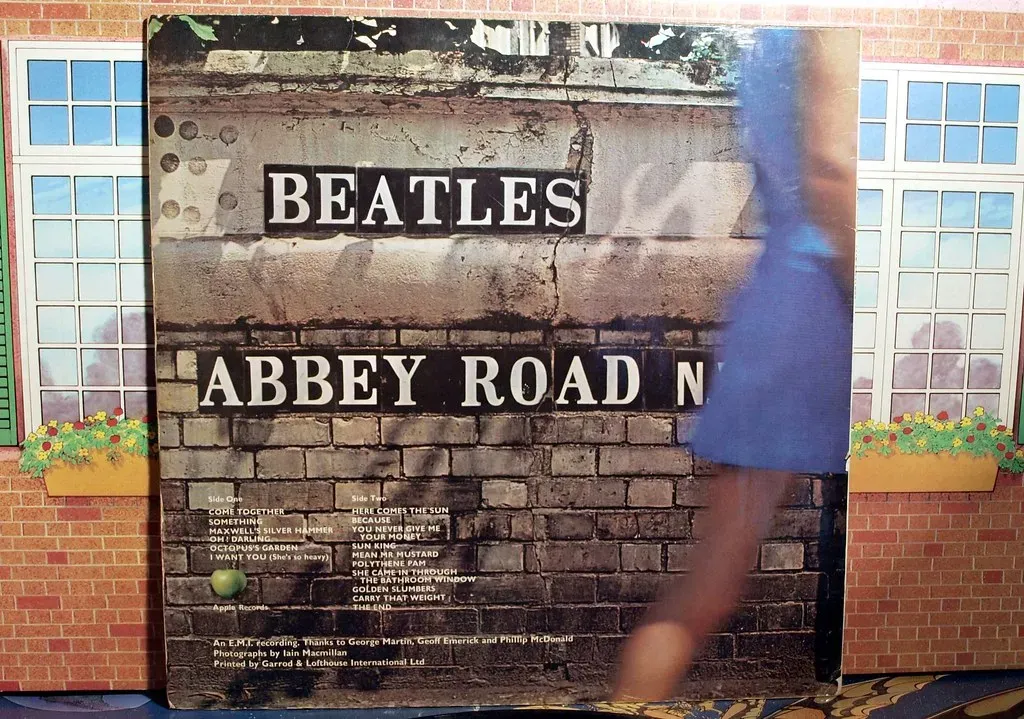
Abbey Road is the eleventh studio album by the English rock band the Beatles, released on 26 September 1969, by Apple Records. Most fans know that much. Here is the part that trips people up: it is the last album the group recorded, although Let It Be (1970) was the last album completed before the band’s break-up in April 1970. Those are two very different things, and confusing them is one of the most common mistakes in Beatles trivia.
Abbey Road racked up 17 weeks at Number 1 in the UK, the first 11 of which were consecutive, starting in October 1969 and running right through to December. It was toppled for one week before returning to the Number 1 slot for a further six weeks through to February 1970. And who knocked it off the top for that one week? It was their old rivals The Rolling Stones, with Let It Bleed. There is a poetic irony in that nobody talks about enough.
The cover was shot on the zebra crossing right outside the studio on 8 August 1969, and it was Paul McCartney’s idea. He sketched out exactly what he wanted. The finished sleeve is famously minimal: no band name, no album title on the front cover, because by 1969, they didn’t need it. Six photographs were taken in total. Most people think there were many more.
2. The Beatles at Woodstock: The Absence That Changed Everything

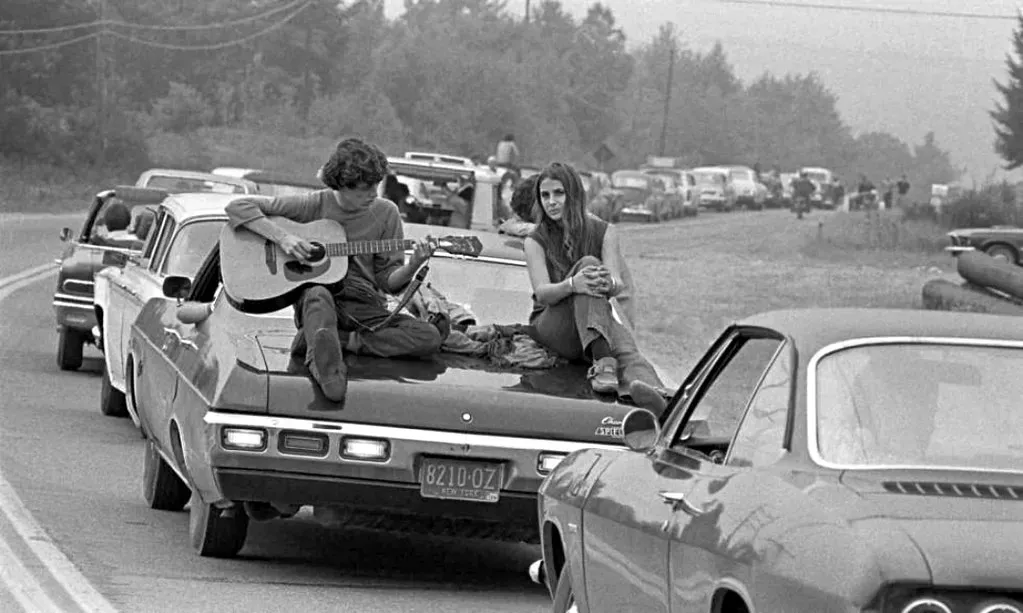
Here is a question that stops most quiz nights cold: why were the Beatles not at Woodstock? It is estimated that more than 400,000 people attended Woodstock festival, which took place between Friday 15 and Monday 18 August 1969. The Beatles were the biggest band on earth at that exact moment. Their absence felt impossible. Honestly, it still does.
The Beatles neither played the event nor had any of its members attend. Promoter Michael Lang wanted the Beatles, but realized that the group would have overpowered the bill and that they had stopped touring. There is more to it though. In May, John was barred from entering the U.S. due to his 1968 arrest in London for possession of marijuana.
As it turned out, August 20, 1969, two days after Woodstock came to a close, was the last day the group recorded as a foursome. Appropriately, the final track they assembled as a group was “The End” for Abbey Road. The irony is almost too perfect. While half a million people gathered in a field for peace and music, the Beatles were quietly finishing their last album together. Few trivia answers land harder than that one.
3. Led Zeppelin’s Record-Breaking Atlantic Records Deal

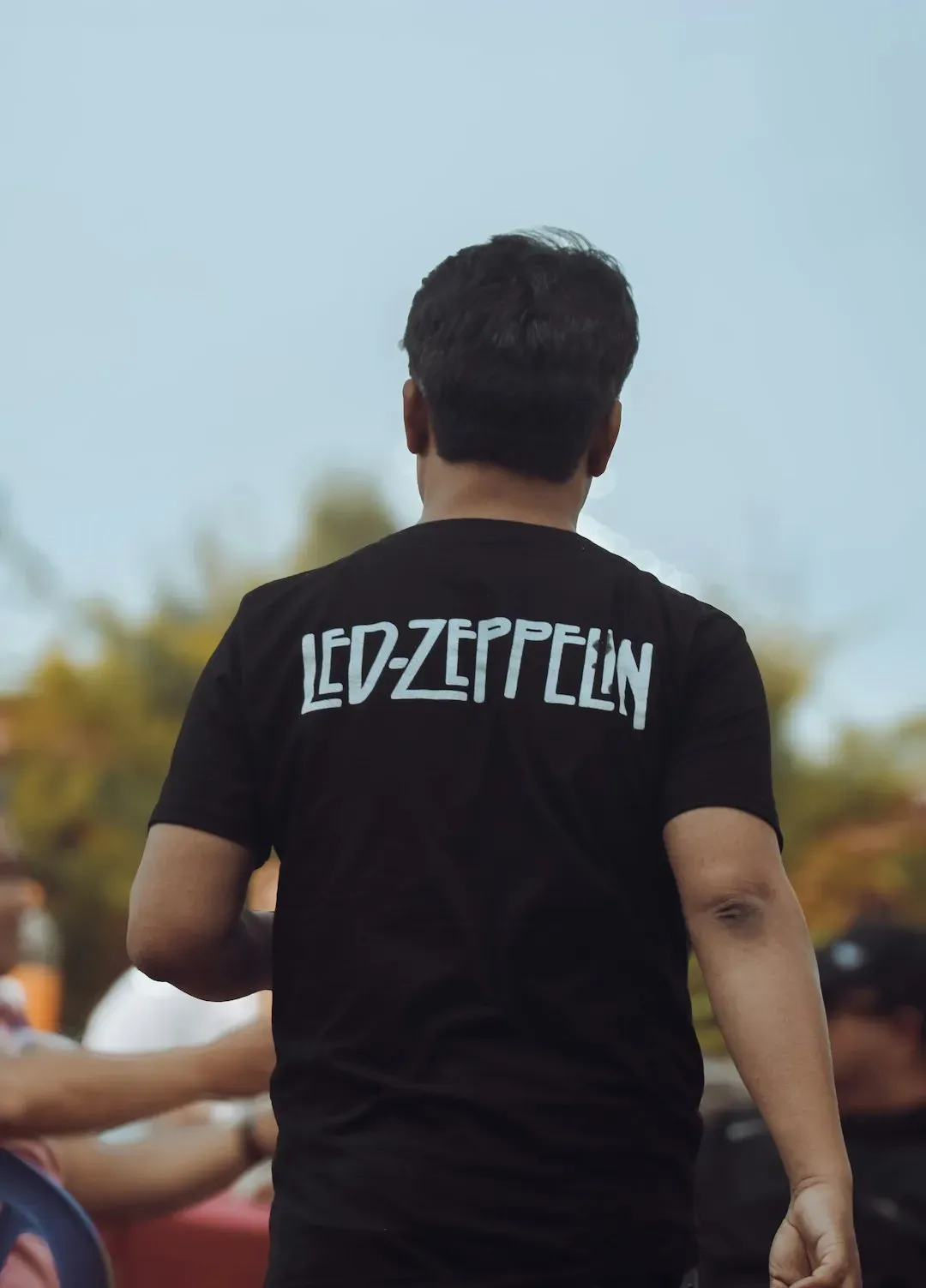
Jimmy Page was the guitarist for Led Zeppelin. While the band was founded in the late 60s, they put out some of their most well-known music, like “Stairway to Heaven,” in the 1970s. Most hardcore fans know all that. Fewer know the financial story behind the band’s launch.
Manager Peter Grant secured a $143,000 advance contract from Atlantic Records in November 1968, at the time the biggest deal of its kind for a new band. At the recommendation of British singer Dusty Springfield, a friend of bassist John Paul Jones, record executives signed Led Zeppelin without having ever seen them. Think about that for a second. One of the biggest record deals in history, and the label had never watched them play a single note live.
Rolling Stone described them as “the heaviest band of all time,” “the biggest band of the seventies,” and “unquestionably one of the most enduring bands in rock history.” They were inducted into the Rock and Roll Hall of Fame in 1995; the museum’s biography states that they were “as influential” in the 1970s as the Beatles were in the 1960s. In 2025, Forbes magazine ranked Led Zeppelin as the best rock band of all time. That ranking is hard to argue with.
4. Black Sabbath: The Name From a Horror Film Across the Street

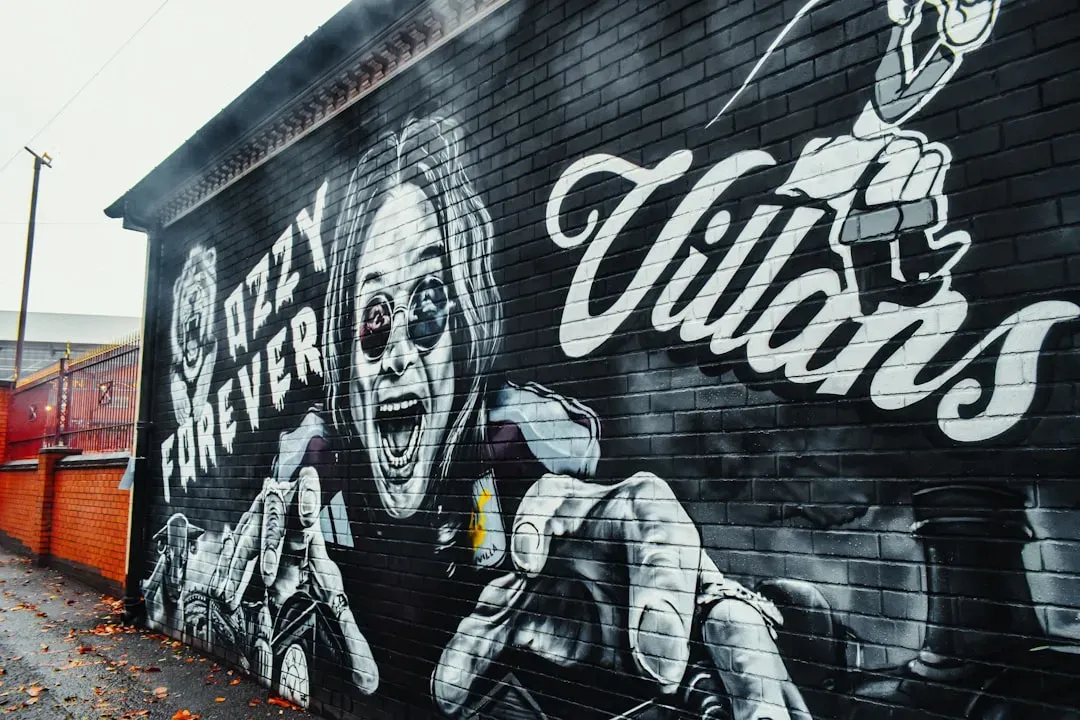
Black Sabbath were an English heavy metal band formed in Birmingham in 1968 by guitarist Tony Iommi, drummer Bill Ward, bassist Geezer Butler and vocalist Ozzy Osbourne. After adopting the Black Sabbath name in 1969, the band were previously named Polka Tulk Blues Band and then Earth. If someone answers “Polka Tulk Blues Band” on a quiz night, buy them a drink immediately.
While playing shows in England in 1969, the band discovered they were being mistaken for another English group named Earth, so they decided to change their name again. A cinema across the street from the band’s rehearsal room was showing the 1963 Italian horror film Black Sabbath, starring Boris Karloff. While watching people line up to see the film, Butler noted that it was “strange that people spend so much money to see scary movies.”
Partner offer

Black Sabbath had sold over 70 million records as of 2013, making them one of the most commercially successful heavy metal bands. Black Sabbath were ranked by MTV as the “Greatest Metal Band of All Time” and placed second on VH1’s “100 Greatest Artists of Hard Rock” list. Rolling Stone magazine ranked them 85 on its “100 Greatest Artists of All Time.” Not bad for four working-class lads from Birmingham who named themselves after a Boris Karloff film.
5. The “Unholy Trinity” of British Hard Rock

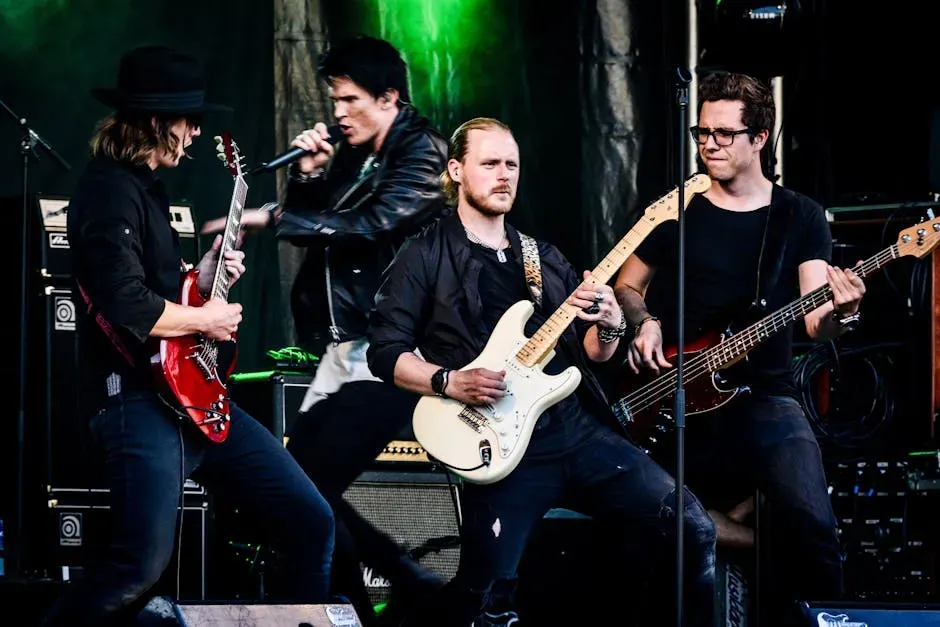
Heavy metal is a genre of rock music that developed in the late 1960s and early 1970s, largely in the United Kingdom and United States. With roots in blues rock, psychedelic rock and acid rock, heavy metal bands developed a thick, monumental sound characterized by distorted guitars, extended guitar solos, emphatic beats and loudness. The trivia question most people fumble: which three bands are specifically called the “unholy trinity” of British hard rock?
Led Zeppelin, together with Deep Purple and Black Sabbath, have been referred to as the “unholy trinity of British hard rock and heavy metal in the early to mid-seventies.” It is not the Rolling Stones. It is not The Who. Those answers come up constantly in quizzes and they are both wrong. The grouping specifically refers to those three bands and their shared role in fusing blues rock into something louder and darker.
In 1968, three of the genre’s most famous pioneers, British bands Led Zeppelin, Black Sabbath and Deep Purple, were all founded. Though they came to attract wide audiences, they were often derided by critics. I think that last part is one of music history’s greatest ironies. The bands that now define “classic rock credibility” were once dismissed by the very critics who would later celebrate them.
6. Creedence Clearwater Revival and the Chart Position Nobody Remembers

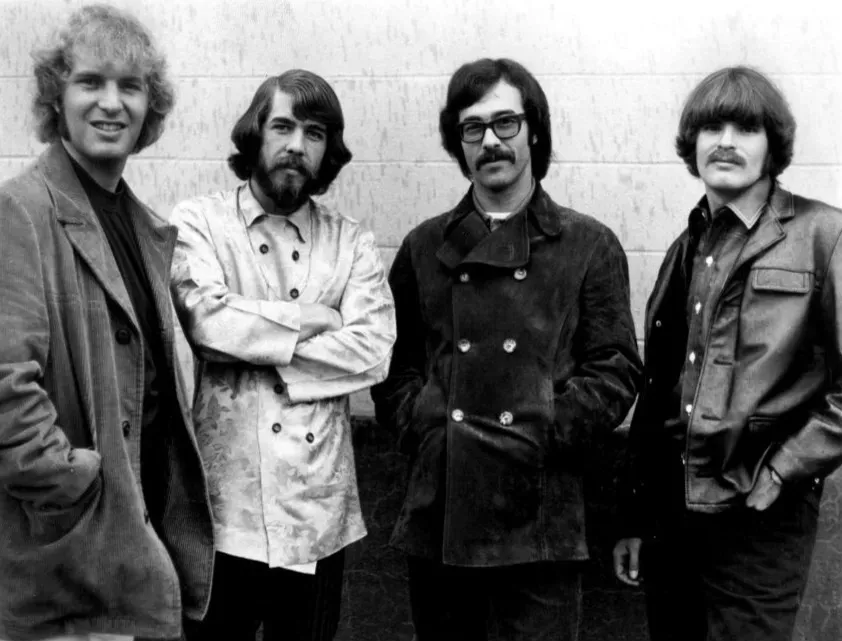
photo front
photo back, Public domain)
Here is a question that genuinely humbles even dedicated rock fans. Most people assume “Proud Mary” was a number one hit on the Billboard Hot 100. It was not. Creedence Clearwater Revival released “Proud Mary” as part of their 1969 album Bayou Country. John Fogerty wrote and sang the song, which became one of their signature hits. It reached No. 2 on the Billboard Hot 100, not number one. That distinction matters enormously in a serious trivia round.
The 1960s produced a staggering volume of landmark releases, and from chart-topping singles to hidden gems, testing this period pushes your memory and your love for 1960s music to the limit. CCR is a perfect example of a band whose legacy has been somewhat flattened by popularity. Everyone knows the big songs. Almost nobody knows the specific chart positions.
The broader point here is that the Billboard Hot 100 data from the late 1960s is a goldmine of quiz material. Songs we all assume were Number 1 often peaked at Number 2 or Number 3. Exploring five questions per year from 1970 to 1979 focused on chart-topping songs can reveal dozens of similar surprises. Truly knowing your charts from this era is a level above simply knowing the songs.
7. The Carpenters, The Eagles, and the Connections Nobody Connects

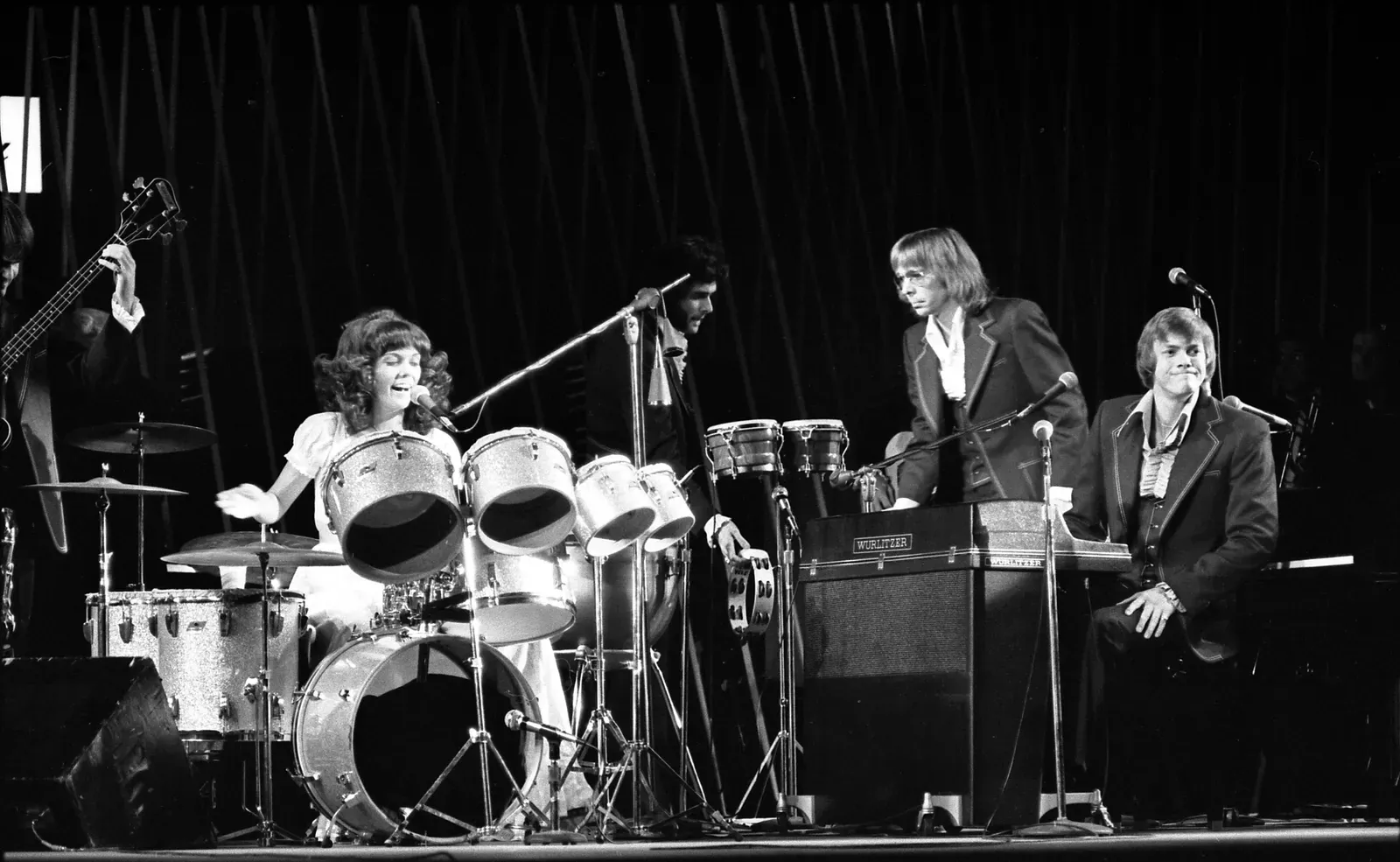
What brother-sister duo had a string of 70s hits including “Close to You” and “Top of the World”? The answer is The Carpenters. That is the easy part of the question. The harder part is knowing that Karen Carpenter had a solo recording as early as 1966. In 1966, when Karen Carpenter was a mere 16 years old she recorded her first 45 RPM record. It was pressed on the Magic Lamp label and was the very first time Karen had anything recorded. Almost nobody gets that one without help.
Then there is the Eagles, whose origin story is far stranger than most fans realize. The four original members of The Eagles, Don Henley, Glenn Frey, Randy Meisner and Bernie Leadon, were already experienced professionals when they were assembled as Linda Ronstadt’s backup band. Their first album debuted in 1972. A band that would define the sound of the 1970s started out as a backup act. That is the kind of detail that separates a real music historian from a casual fan.
After the tumultuous counterculture of the 1960s, music in the 1970s was more relaxing and danceable. Popular music genres included progressive rock, punk and new wave and, of course, disco. The diversity of the decade is exactly what makes it such fertile quiz territory. You can go from The Carpenters to The Eagles to Black Sabbath and still be firmly within the 1970s.
8. The 70s’ Genre Explosion: From Disco to Punk in One Bewildering Decade

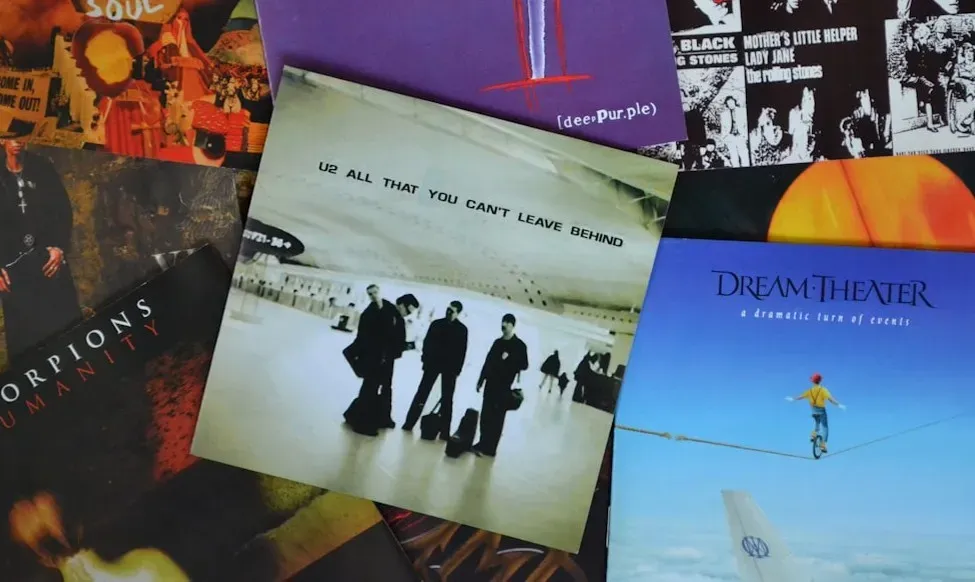
After the stunning explosion of pop in the 1960s, the following decade saw music spiral off into countless different directions. Hard rock and glam. Reggae going global. Prog and its counterbalance punk rock, and the earliest days of hip-hop. Knowing the chronology of these movements is where most trivia players start to crack under pressure.
Take disco. The falsetto Bee Gees, plus stars like Donna Summer, Diana Ross and Gloria Gaynor, all created some of the era’s most iconic disco beats. Donna Summer was known as the “Queen of Disco”, a title that quiz writers love to test. Meanwhile, on the other side of the cultural spectrum, the Sex Pistols had their 70s rebellion right there with “Anarchy in the U.K.,” which was later featured on “Never Mind the Bollocks, Here’s the Sex Pistols.”
Then there is Fleetwood Mac, who somehow managed to bridge everything. Stevie Nicks wrote “Dreams” amidst Fleetwood Mac’s infamous personal upheavals in the 1970s. And “Go Your Own Way” still burns with all the desperation Fleetwood Mac could summon on their 1977 album “Rumours.” A band writing about their own implosion in real time and producing one of the best-selling records of all time. That is the 1970s in one sentence. What other decade could have produced that?
Partner offer
Planning a trip to Vegas?
Compare hotel rates and show tickets on VEGAS.com.