Laws are supposed to keep pace with society. Ideally, they evolve, get updated, and the truly absurd ones quietly disappear into the legislative dustbin. But here’s the thing – that’s not always what happens. Some laws just… linger. They sit forgotten in legal codes, technically valid, theoretically enforceable, and utterly baffling to anyone who stumbles across them.
Scattered throughout the legal systems of the world are relics of the past – laws that, although enacted with serious intent, seem bizarre, humorous, or downright puzzling when viewed through a modern lens. These strange laws often remain in force, unnoticed and unenforced, tucked away in legal texts like forgotten pieces of history. You’d be amazed just how many of them are still sitting there, waiting. Let’s dive in.
1. It’s Illegal to Handle a Salmon “Suspiciously” in the UK


Honestly, I love this one. It sounds made up. It’s absolutely not. Section 32 of the Salmon Act 1986 stipulates that it’s an offence to handle salmon under suspicious circumstances. The wording “suspicious circumstances” has never been precisely defined in the statute, which makes the whole thing even more wonderfully odd.
One particular law that really baffled the nation – the law against holding a salmon under suspicious circumstances – with two thirds of those surveyed believing it to be fake, when in fact it is a real law that has been in place since 1986 under Parliament’s Salmon Act. A primary aim of this act was to update legislation already introduced in the Victorian Era, specifically the 1868 Salmon Fisheries Act. So in a way, this is just an update of an even older fish-related law. Which somehow makes it worse.
2. Being Drunk in Charge of a Cow Is a Criminal Offence in England


Let’s be real – nobody in 2026 is wandering the streets of London with a cow and a bottle of whisky. Yet the law is still technically there. The Licensing Act 1872 forbids people from being drunk while in charge on any highway or other public place of any carriage, horse, cattle, or steam engine.
Sensibly, the act also prohibits people from being drunk when in possession of any loaded firearms. Offenders face a hefty fine or imprisonment for a maximum of one month. If a fine was issued and not paid, then the court may order him to be imprisoned with hard labour. Although the Licensing Act 1872 is rarely enforced and is mainly used when someone is becoming aggressive or dangerous, it is still in place in the UK today. So technically, leave your cattle at home before your Friday night out.
3. Kentucky Politicians Must Swear They’ve Never Fought a Duel


This one is genuinely still happening in 2024. Every time a politician takes office in Kentucky, they must recite an oath that includes a pledge about deadly weapons and dueling. Since 1891, the commonwealth’s officials have had to swear or affirm that they have not fought a duel with deadly weapons within the State or out of it, nor have they sent or accepted a challenge to fight a duel with deadly weapons.
It’s possibly the strangest part of Kentucky’s Constitution, but almost half of the oath for elected officials and attorneys are promises about not fighting in a duel with deadly weapons. It wasn’t until 1849 that dueling was outlawed. The state constitution was updated later on and required government officials to swear they had never participated in a duel. Since then, every Kentucky government official must affirm their lack of dueling experience. You genuinely cannot make this stuff up.
4. Chewing Gum Is Banned in Singapore (And Has Been Since 1992)


Singapore is famously clean and orderly – and this law is a big reason why. The sale of chewing gum in Singapore has been illegal since 1992. Some motivations for the ban included stopping the placement of used chewing gum in inappropriate and costly places, such as the sensors of subway doors, inside lock cylinders, and on elevator buttons.
In 1992, the government passed a law banning the import, sale, and manufacture of chewing gum. Possession wasn’t criminalized – but sellers and importers faced strict penalties. For years, the Housing Development Board had reportedly been spending S$150,000 annually to tidy up gum that had been disposed of on sidewalks, in keyholes, around housing estates, and even on the seats of public transportation. So the ban was less about morality and more about maintenance budgets. Honestly? Makes a kind of ruthless sense.
5. Adultery Was a Crime in New York Until Very Recently


Here’s a jaw-dropping one. For more than a century, cheating on your spouse in New York State could land you in jail. New York was one of just 17 states with an adultery law on the books. Adultery is a crime in New York State. For more than 100 years it was a misdemeanor, punishable by up to 90 days in jail.
She was only the 13th person in New York history to be charged with the crime of adultery. That number tells you everything. Finally, in 2024, New York’s legislature joined the majority of the states and abolished the crime of adultery. New York’s adultery law was put in place by a state government made up entirely of men, twelve years before the first women were elected to the State Legislature in 1919. A law born from a world where women couldn’t even vote. That context is stunning.
6. Carrying a Plank of Wood Down a Street in London Could Be Illegal


Picture yourself hauling a piece of timber home from the hardware store in London. Apparently, you might want to watch out. In certain parts of the UK, you could technically be breaking the law just by walking down the street with a piece of wood. This unusual law comes from section 54 of the Metropolitan Police Act 1839. Its main purpose is to maintain public safety and to avoid injuries or accidents.
Although this law still technically exists today, it is rarely enforced and is mostly used in extreme cases. So, next time you are tempted to carry a plank of wood down the street, maybe think twice, since you might be breaking a two-hundred-year-old law. Sometimes these laws were crafted in response to circumstances that were pressing at the time but are now obsolete. A wooden plank in 1839 London, where pedestrians crowded narrow cobblestone streets, was genuinely a hazard. Today? Less so.
7. In Vermont, Whistling Underwater Is Technically Prohibited


This might be the most physically impossible law on this entire list. One of Vermont’s strangest laws prohibits individuals from whistling underwater. While it’s unclear how this law originated, many believe it was never intended as a serious statute but rather introduced as a joke or placeholder text in local legal codes.
Over time, however, the law was never repealed, leaving it as a curious oddity in Vermont’s legislative history. Interestingly, whistling underwater is practically impossible, which has led many to question why such a law would have been considered necessary in the first place. Despite its absurdity, the rule highlights how even humorous or unintended legal texts can persist for decades. I think this one is less about governance and more about a window into how carelessly laws can just… stick around forever.
8. You Must Eat Fried Chicken With Your Hands in Gainesville, Georgia


If you ever visit Gainesville, Georgia, put down the fork. Seriously. If you’re going to eat fried chicken in Gainesville, Georgia, you might want to do so with your hands – technically, you can be arrested for trying to eat fried chicken with a knife and fork. The ordinance was basically a joke passed in 1961 to drum up publicity for the town as the self-proclaimed Poultry Capital of the World.
Gainesville made it illegal to eat fried chicken in any manner other than by the consumer eating it by hand. The law was enacted as part of a publicity campaign extolling the Georgia community as the premier fried chicken eating community in the United States, but it remains on the books. Back in 2009, Ginny Dietrick was celebrating her 91st birthday at a Gainesville restaurant when a police chief swooped in to arrest her. The officer had been playfully tipped off by one of Ginny’s friends. After the arrest, the town’s mayor, who was part of the set-up, immediately pardoned Ms. Dietrick and ordained her an honorary Georgia Poultry Princess.
9. In Scotland, You’re Legally Entitled to Use a Stranger’s Toilet

I know it sounds crazy, but this one has a real legal basis. If you need the toilet, you can knock on someone’s door and ask to use their bathroom in Scotland – and by law, they cannot deny you. This derives from an extension of old Scottish common law regarding hospitality, and is technically still enforceable today, even though it was never officially authorised by Parliament.
The spirit of this law is actually quite warm. Scottish common law has historically placed a high value on the concept of hospitality and obligation toward strangers in need. Whether you’re likely to find much success upon attempting it, however, might be a different story. Most people would probably be pretty puzzled if you turned up at their front door invoking ancient Scots law. Still, it’s technically within your rights.
10. In the UK, Being Drunk Inside a Pub Is Technically Against the Law


This is the one that genuinely makes people do a double take. A pub, by its very definition, is a place where people go to drink. Yet the UK has had a law on the books for over 150 years that makes it illegal to be drunk in one. In the UK, being drunk in a pub, the very place designed for drinking, is technically against the law.
Sometimes these laws were crafted in response to circumstances that were pressing at the time but are now obsolete. In other cases, they were simply the result of cultural quirks or overzealous lawmakers. While it may seem strange, the law against being drunk in a pub serves a clear role in maintaining public order and responsible drinking. Still, the irony is almost poetic. Generations of British pub-goers have unknowingly been lawbreakers simply by doing what they went in to do.
Why Do These Laws Keep Surviving?

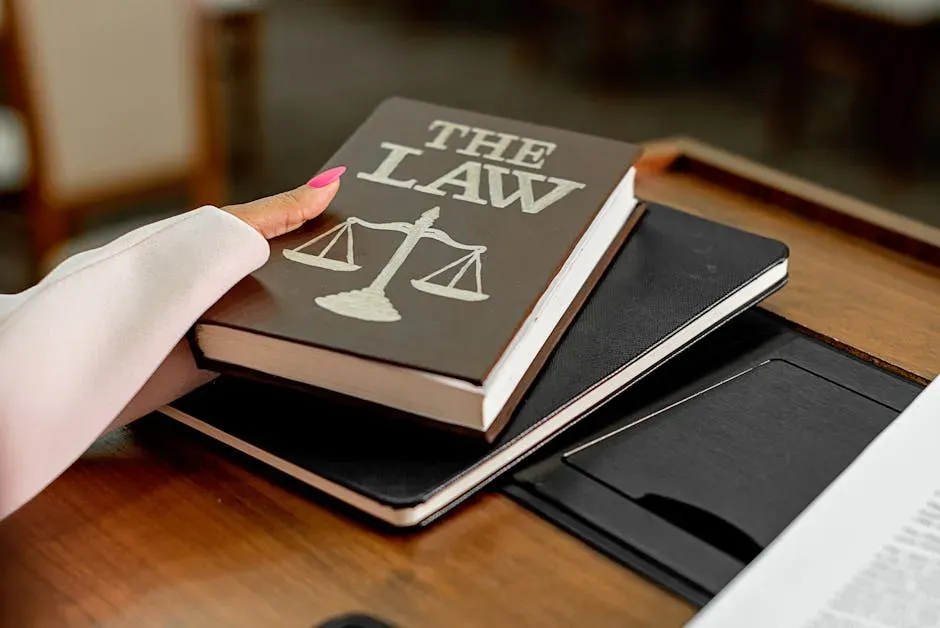
Once written, these laws can be notoriously hard to repeal, leaving us with rules that range from the absurd, like a ban on chewing gum in Singapore, to the oddly specific, such as the prohibition against handling salmon suspiciously in the United Kingdom. Repealing a law requires political will, legislative time, and sometimes the sheer awareness that the law exists at all.
As one law professor explained, it all boils down to the amount of time and money involved. Either a new law would need to be passed that invalidates the existing law, or someone who gets in trouble for breaking one of these laws would have to successfully challenge it in court and have a judge rule it unconstitutional. In other words, the bureaucratic cost of fixing the law is usually higher than the cost of leaving it alone. And so the salmon sits suspiciously in the legal code, decade after decade.
The history of lawmaking is, in many ways, a history of human priorities, fears, and absurdities all tangled together. Some laws reveal how dangerous dueling culture once was. Others show just how seriously a small Georgia town took its fried chicken. What unites them all is a simple, slightly unsettling truth: the legal systems we live under are far older, stranger, and more cobwebbed than most of us ever realize. What would you have guessed was still on the books?