Publishing has always been a strange and slightly ruthless business. A book can sell tens of millions of copies, dominate newspaper bestseller lists, and reshape how people think about the world – and still somehow disappear from cultural memory within a generation. The titles most people cite as all-time classics aren’t necessarily the ones that sold the most. They’re often just the ones that had better luck with timing, marketing, or the loyalty of university syllabuses.
What follows are thirteen books that moved enormous numbers of copies, shaped entire genres, or sparked movements – and yet today draw little more than a blank stare from most readers. Some were buried by cultural shifts, others by more famous imitators. A few were simply forgotten, which might be the strangest fate of all.
1. Jonathan Livingston Seagull by Richard Bach

Initially refused by more than 20 publishing companies, Jonathan Livingston Seagull made it to the top of the bestseller charts with almost no advertising budget once it was finally picked up by Macmillan. Richard Bach’s allegory about a seagull who refused to accept the limits imposed on him by nature and society became the number one best-selling novel of 1972, largely by word of mouth.
Despite selling roughly 40 million copies since 1970, publishers originally thought that a book told from the point of view of a seagull was simply a ridiculous concept. As decades passed, the book’s overt sentimentality started to feel dated. Today’s readers, shaped by a world of pragmatism and skepticism, often see the story as a relic of a gentler, more idealistic time. A book that once covered the front pages of Time magazine is now mostly a punchline about 1970s optimism.
2. The Peter Principle by Laurence J. Peter

The book caused a storm when first published in 1969, battering up the bestseller list to number one and giving the world an answer to the question that nags us all: why is incompetence so maddeningly rampant and so vexingly triumphant? The Peter Principle explained that everyone in a hierarchy, from the office intern to the CEO, from the low-level civil servant to a nation’s president, will inevitably rise to his or her level of incompetence.
Selling over 8 million copies, the book’s concept was so powerful that it became part of the business lexicon. Yet, oddly, the book itself is rarely read today. Its ideas have been absorbed into management speak and office jokes, but new generations don’t know where the phrase comes from. The idea survived. The source did not.
3. The Holy Blood and the Holy Grail by Baigent, Leigh, and Lincoln

The Holy Blood and the Holy Grail was a sensation when it came out, selling millions and captivating readers with its bold claims about the bloodline of Christ. The book’s speculative history found a devoted following and even sparked academic debates. For years, it sat on bookshelves across Europe and North America as the definitive work of alternative historical investigation.
Its thunder was truly stolen by Dan Brown’s The Da Vinci Code, which borrowed heavily from its ideas and catapulted them into blockbuster fame. While Brown’s novel became a household name, the original work slipped into obscurity. Today, most people who are familiar with the “holy bloodline” theory know it only through Brown’s fiction, not the book that started it all. The authors even sued Brown for plagiarism, an ironic twist, considering their work is now largely forgotten outside conspiracy theory circles.
4. The Secret of the Ages by Robert Collier
Robert Collier’s The Secret of the Ages was an early self-help blockbuster, selling millions as it promised readers the keys to health, wealth, and happiness. Published in the 1920s, it laid the intellectual groundwork for what would eventually become the entire positive-thinking industry, decades before anyone else made the concept mainstream.
As the self-help industry ballooned, Collier’s ideas were rebranded and repackaged by successors like The Secret. The language of manifestation and positive thinking became mainstream without crediting the original source. Collier’s work is now a footnote, known only to the most devoted students of personal development. It’s a fitting, if somewhat cruel, irony for a book that promised readers they could have anything they wanted.
5. The Celestine Prophecy by James Redfield

James Redfield spent years trying to interest publishers in his spiritual adventure novel without success. Convinced the book had an audience, he decided to self-publish and sold copies from the trunk of his car in Alabama and neighboring states. Local bookstores began stocking it after customers kept asking for it. Word spread through New Age communities and reading groups until major publishers took notice.
The book eventually sold over 23 million copies worldwide. That figure is almost impossible to square with how rarely the title comes up in contemporary reading circles. Its New Age framing, which felt urgent and revelatory in the mid-1990s, aged poorly in a more cynical cultural climate, and it quietly retreated from the conversation without anyone really declaring it over.
6. The Bridges of Madison County by Robert James Waller

Robert James Waller never intended to write fiction. The economics professor and photographer wrote this short romance novel in just two weeks as a personal challenge. His agent struggled to find a publisher because the story seemed too simple and short for the market. That rejection would prove spectacularly wrong.
The book is one of the best-selling novels of the 20th century, and the fact that it has sold as many as 60 million copies makes it one of the best-selling books of all time as well. Upon its release, the book spent 164 consecutive weeks on the New York Times Bestseller list. Today it’s rarely discussed in serious literary contexts, dismissed as a piece of commercial sentimentality, which is probably unfair given the sheer scale of its reach.
7. Charlotte Temple by Susana Rowson

Before Harriet Beecher Stowe published her book, the best-selling novel in the United States was Susana Rowson’s Charlotte Temple, published in 1794, a book nowhere near as well remembered despite the fact that it appeared in over two hundred editions and remained popular for more than a hundred years. For context, that kind of staying power would be extraordinary even by modern publishing standards.
Partner offer
Charlotte Temple fell out of favor after World War I, as tastes changed and literary scholars turned away from popular literature toward books that were often decidedly unpopular when first published, like Moby Dick. The irony is sharp: a novel that real people actually loved for a century was displaced in the canon by novels that readers had largely ignored. Taste-making and reading are not always the same thing.
8. Babbitt by Sinclair Lewis

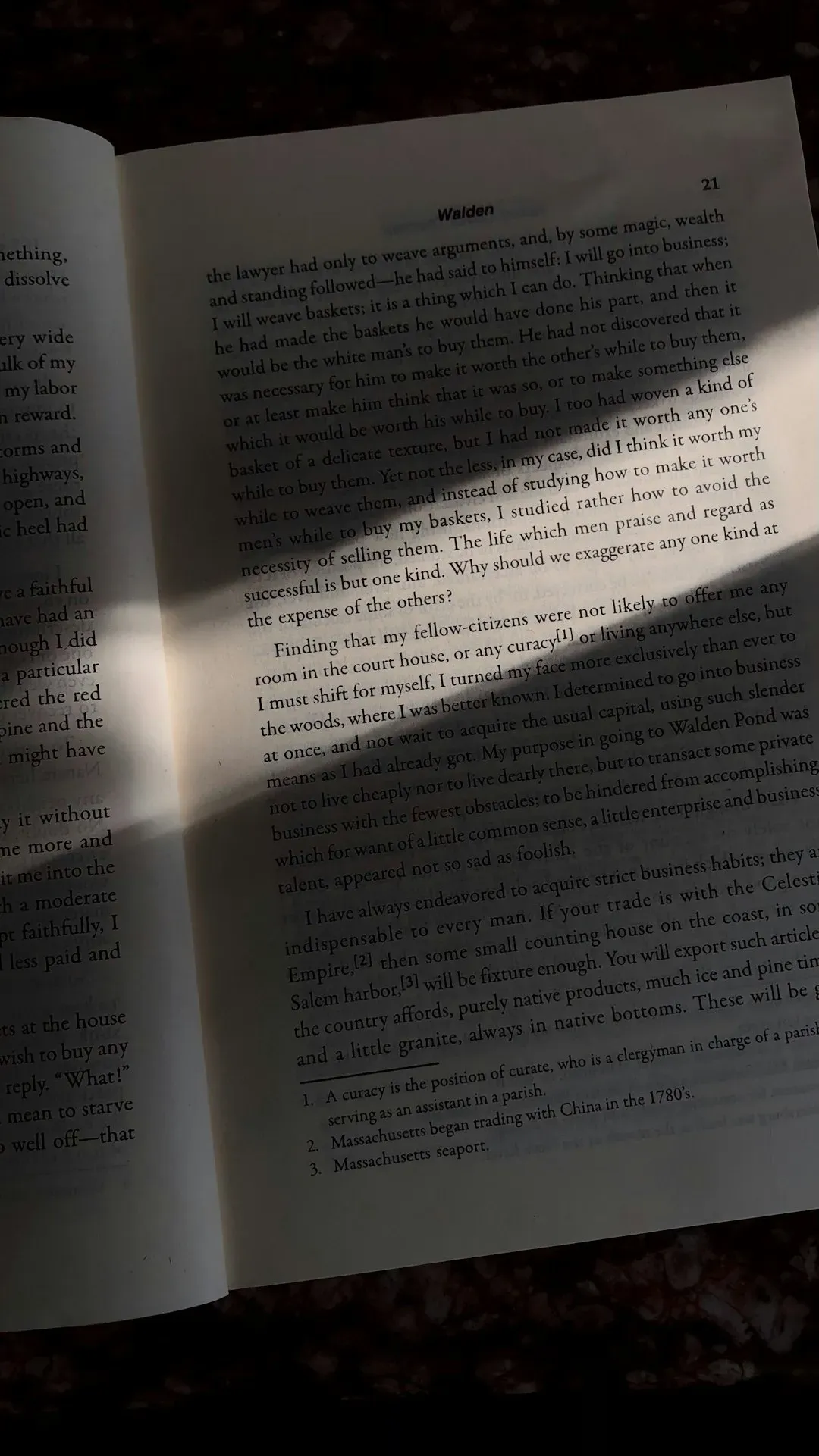
Babbitt sold 130,000 copies its first year, was praised by H.L. Mencken, and won Lewis a Nobel Prize. Calling someone a “Babbitt” was considered an insult and the phrase became a constant topic of conversation in the media and literature. For a brief window in the 1920s, the word “Babbitt” functioned almost like a cultural shorthand for everything hollow about American suburban ambition.
Here we are 80 to 90 years later, and most people have never heard of the term or the book. Perhaps it’s because the biting satire of American suburban middle-class life cuts deeper now than it did then. It doesn’t matter if the book is old – it’s still very funny, and at its core a critique of conformity and what Thoreau called the “life of quiet desperation.” A Nobel Prize could not save it from the shelf.
9. She: A History of Adventure by H. Rider Haggard

She: A History of Adventure by H. Rider Haggard is estimated to have sold 100 million copies. Published in 1887, the novel introduced “Ayesha,” a powerful, immortal queen, and helped define the entire “lost world” adventure genre that later inspired writers from Arthur Conan Doyle to Edgar Rice Burroughs. Its influence on popular fiction over the following century is nearly impossible to overstate.
Today, Haggard’s name draws puzzled looks from most readers, even from people who have consumed dozens of stories that exist only because Haggard imagined them first. The novel’s colonial-era framing has made it uncomfortable to republish or celebrate without substantial context, and that unease has largely pushed it out of circulation. Influence rarely comes with acknowledgment.
10. Think and Grow Rich by Napoleon Hill
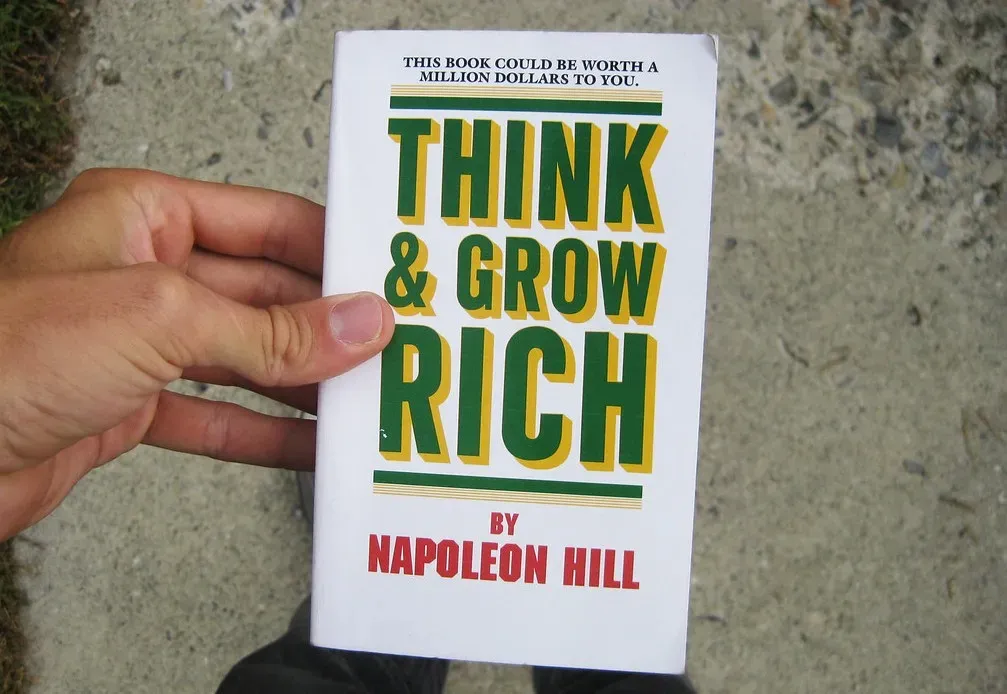
Think and Grow Rich has sold an estimated 70 million copies. Published in 1937, it became one of the most circulated business and self-improvement books of the 20th century, shaping an entire industry of motivational speakers, coaches, and wealth-building seminars that persist to this day. Many readers who follow modern success gurus have unknowingly encountered its central ideas dozens of times over.
The book’s complicated legacy, including serious questions about the accuracy of several anecdotes Napoleon Hill used to illustrate his principles, has dimmed its reputation in more critically minded circles. Forgotten bestsellers can show us the ways in which the world has changed, offering a glimpse into what makes us different from the readers of the past, how tastes and habits have altered, how publishing practices have shifted. Few books demonstrate that shift more clearly than this one.
11. Vardi Wala Gunda by Ved Prakash Sharma

Vardi Wala Gunda by Ved Prakash Sharma has sold an estimated 80 million copies. That puts it alongside The Da Vinci Code and ahead of most Western canonical classics, yet the title is essentially unknown outside of India, where it belongs to the Hindi pulp fiction genre that generated enormous readership through affordable, accessible paperbacks sold at railway stations and roadside stalls.
The book’s invisibility in global literary conversation points to something worth sitting with: the publishing world’s idea of a bestseller is almost entirely shaped by English-language markets and Western reporting. Hundreds of millions of readers across South Asia consumed fiction at staggering scale, and that history simply doesn’t register on most “all-time” lists. The oversight says more about who compiles those lists than about the books themselves.
12. When God Winks by SQuire Rushnell

When God Winks sold millions, drawing readers with its heartwarming tales of coincidence and divine intervention. The book built a devoted following through word of mouth in faith communities, where its core concept – that meaningful coincidences are small signs from a higher power – resonated deeply with readers navigating personal hardship. It spawned a series of sequels and a television film.
Outside those communities, the book barely registered. Publishers aimed it at a specific readership and hit the target precisely, which paradoxically kept it from ever breaking into broader cultural conversation. A book can be enormously successful and almost entirely invisible at the same time, depending entirely on which circles it moves through. Rushnell’s work is a case study in that quiet, compartmentalized kind of phenomenon.
13. The Dream of the Red Chamber by Cao Xueqin

The Dream of the Red Chamber by Cao Xueqin is estimated to have sold 100 million copies. Written in 18th-century China, it is considered one of the four great classical novels of Chinese literature and has been studied, adapted, and debated continuously for nearly three centuries. Entire academic fields exist specifically to examine it, and its cast of characters runs into the hundreds.
In the West, it remains almost entirely unknown, tucked behind the language barrier and the general tendency of English-speaking markets to treat translated fiction as peripheral. These books, often out of print and available mainly on sites like Project Gutenberg and in used bookstores, present a unique vantage from which to observe the reading habits of a particular moment. The Dream of the Red Chamber sold more copies than nearly anything a Western reader could name, and it did so before most of those readers’ great-grandparents were born.
There’s a pattern running through every book on this list. Sales figures are not the same as cultural memory. A book can move millions of copies and still be quietly edged out by a newer voice, a changing mood, a more famous imitator, or simply the indifferent passage of time. The bestseller list has always been a photograph, not a portrait – it captures a moment, not a legacy. What gets remembered is shaped by critics, classrooms, and algorithms, none of which are especially fair judges of what people actually read and loved.
The books buried here weren’t failures. Most of them did exactly what books are supposed to do: they found readers, changed minds, and left a mark. The fact that the mark faded is worth remembering the next time someone claims a book is important because it’s famous, or unimportant because it isn’t.
Partner offer
Planning a trip to Vegas?
Compare hotel rates and show tickets on VEGAS.com.