Some paintings do far more than decorate a wall. They shift how entire generations see the world, challenge the limits of what art can say, and echo across centuries in ways their creators never could have imagined. The six works gathered here are not simply beautiful or technically impressive – they are cultural landmarks, each one a turning point in the story of human expression. From Renaissance Florence to war-torn Spain, these canvases changed everything.
1. Mona Lisa – Leonardo da Vinci (c. 1503–1519)
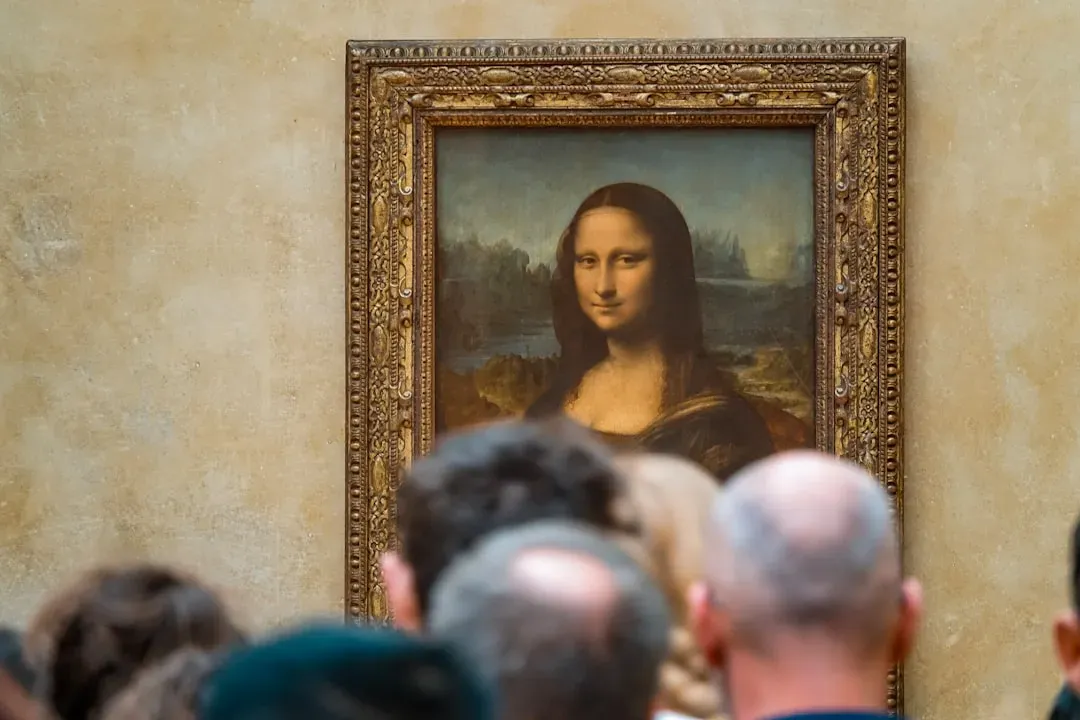
The Mona Lisa is an oil painting on a poplar wood panel by Leonardo da Vinci, probably the world’s most famous painting. It was painted sometime between 1503 and 1519, when Leonardo was living in Florence, and it now hangs in the Louvre Museum in Paris, where it has remained an object of pilgrimage in the 21st century. Its pull on visitors is almost impossible to overstate. The painting is the museum’s biggest attraction, drawing between 20,000 and 30,000 visitors a day, while roughly 8 to 10 million people visit the Louvre each year, making it the world’s most visited museum.
The Mona Lisa has been described as “the best known, the most visited, the most written about, the most sung about, and the most parodied work of art in the world.” Its financial value is equally staggering. On permanent display at the Louvre in Paris, the Mona Lisa was assessed at $100 million on 14 December 1962, and taking only inflation into account, that value would be around $1.1 billion in 2025. French President Emmanuel Macron recently announced that the Mona Lisa would receive a dedicated space as part of the Louvre’s decade-long “New Renaissance” renovation. Its influence on art history is equally foundational – the Mona Lisa began influencing contemporary Florentine painting even before its completion, and Raphael, who had visited Leonardo’s workshop several times, promptly used elements of the portrait’s composition in several of his own works.
2. The Starry Night – Vincent van Gogh (1889)
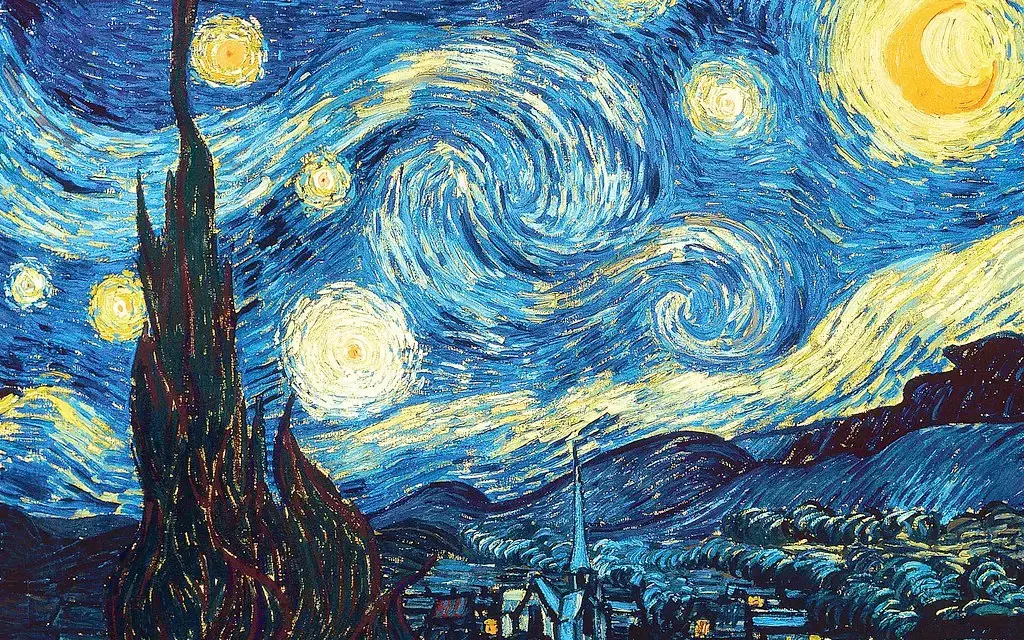
The Starry Night is an oil-on-canvas painting by the Dutch Post-Impressionist painter Vincent van Gogh, painted in June 1889. It depicts the view from the east-facing window of his asylum room at Saint-Rémy-de-Provence, just before sunrise, with the addition of an imaginary village. Van Gogh painted the scene under extraordinary circumstances. He painted The Starry Night during his 12-month stay at the Saint-Paul-de-Mausole asylum, several months after suffering a breakdown in which he severed part of his own ear. While at the asylum, he painted during bursts of productivity that alternated with moods of despair.
Described as a “touchstone of modern art,” The Starry Night has been regarded as one of the most recognizable paintings in the Western canon. It has been in the permanent collection of the Museum of Modern Art in New York City since 1941, acquired through the Lillie P. Bliss Bequest. Though he is seen today as one of the most influential painters in Western art, Vincent van Gogh was not commercially successful during his lifetime. Since the early 20th century, however, his masterful paintings have been prized for their expressive emotion, filled with dramatic brushstrokes and bold color – a roadmap to modern art. Since its creation in 1889, this painting has become a classic in global art history and has had a profound influence on subsequent artists and art movements.
3. Las Meninas – Diego Velázquez (1656)
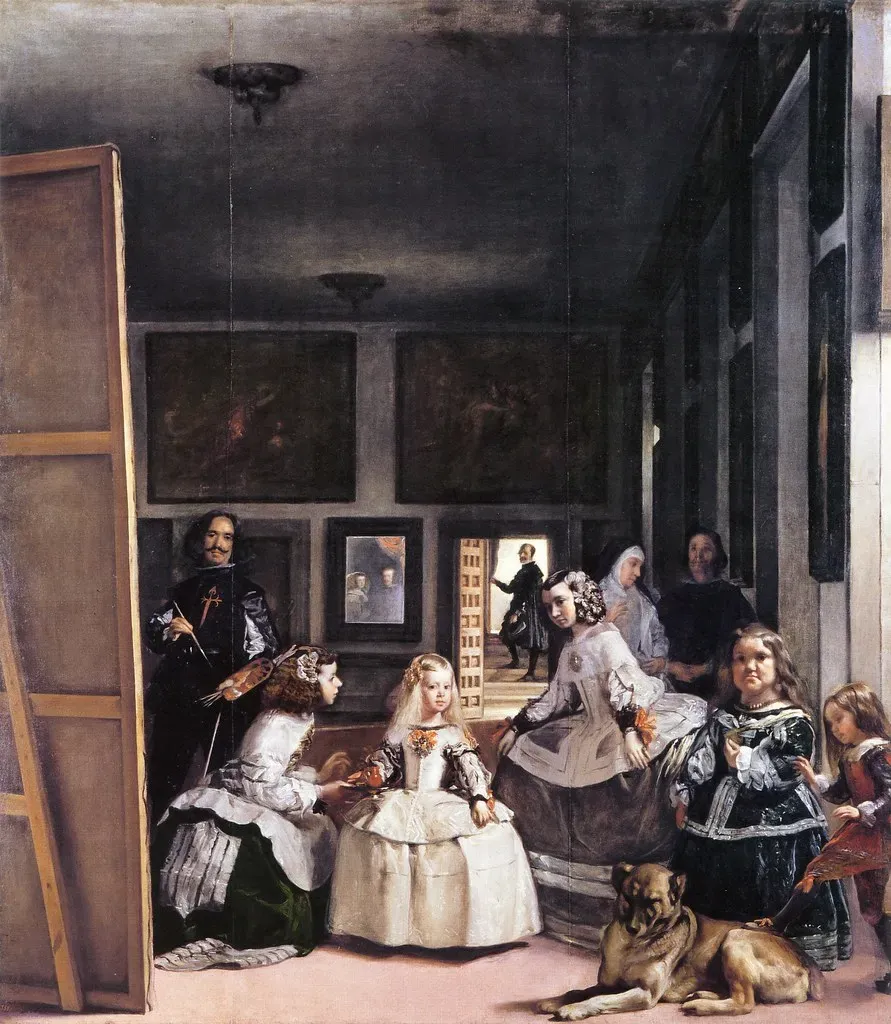
Las Meninas is a complex oil painting by Diego Velázquez – an incredibly nuanced depiction of life in the court of King Philip IV of Spain. Perhaps one of the most important paintings in all of Western art history, this masterpiece from 1656 continues to influence artists today. The title, which translates to Ladies in Waiting, is a turning point in art history for the way in which Velázquez broke from the stiff formal portraits that typically defined royalty. The five-year-old Infanta Margaret Theresa is surrounded by her entourage of maids of honour, a chaperone, a bodyguard, and two dwarfs. Just behind them, Velázquez portrays himself working at a large canvas. Velázquez looks outwards beyond the pictorial space to where a viewer of the painting would stand. In the background there is a mirror that reflects the upper bodies of the king and queen.
Las Meninas has long been recognised as one of the most important paintings in the history of Western art. The Baroque painter Luca Giordano said that it represents the “theology of painting.” Velázquez is also known for his bold and expressive brushstrokes, which made him an inspiration to many 19th-century Realist and Impressionist painters, as well as 20th-century Cubists and Surrealists such as Pablo Picasso and Salvador Dalí, both of whom paid tribute to Velázquez by creating their own versions of his iconic paintings. Between August and December 1957, Pablo Picasso painted a series of 58 interpretations of Las Meninas and related figures, which currently fill the Las Meninas room of the Museu Picasso in Barcelona, Spain.
4. The Creation of Adam – Michelangelo (c. 1508–1512)
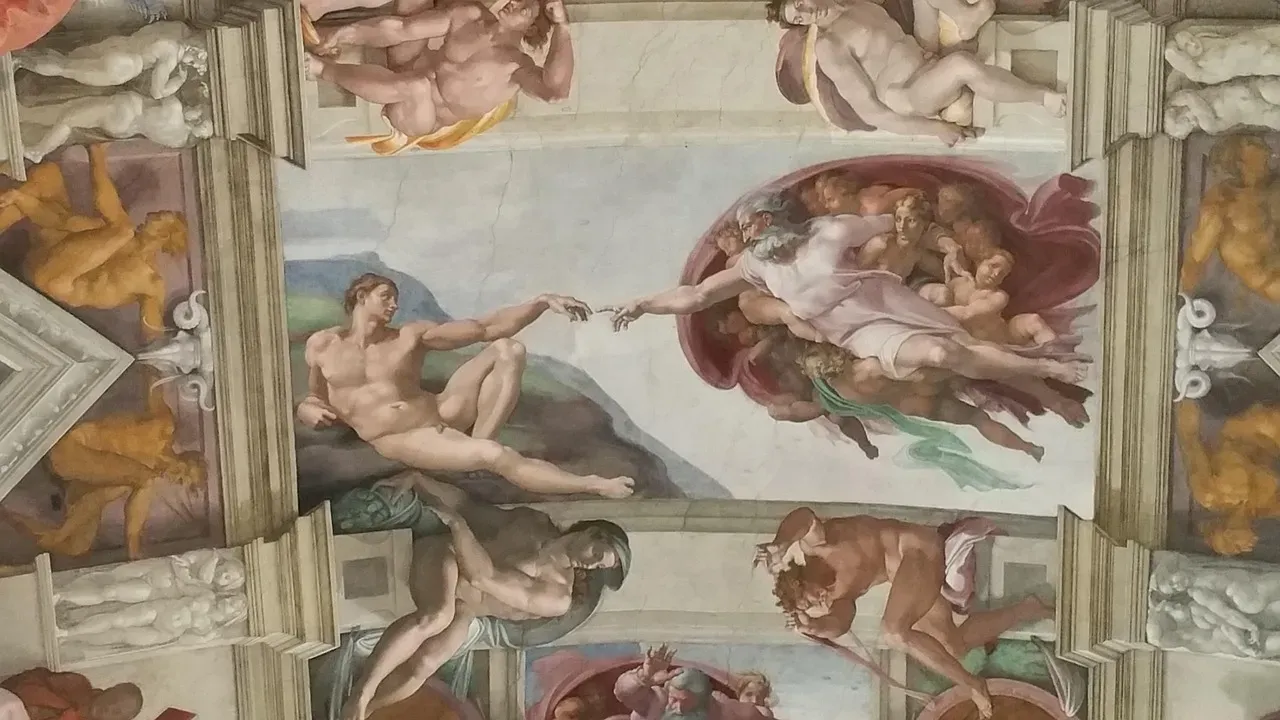
Michelangelo’s fresco The Creation of Adam, which adorns the ceiling of the Sistine Chapel in the Vatican Palace, is the fourth of the nine famous art pieces of the central composition dedicated to scenes from the Book of Genesis. The fresco illustrates an episode of the first human being’s creation by God, and in addition to depicting ideal human forms, it is one of the first attempts in the history of art to depict God himself. Renaissance artist Michelangelo spent four years painting the ceiling of the Sistine Chapel for Pope Julius II, and it is renowned not only for its incredible scale but also for its complex composition and Classical inspirations.
This vast fresco, produced by an artist known as “the Divine One,” showing God and Adam’s fingers almost touching, is one of the most reproduced works in Western art. Michelangelo was reportedly reluctant to take up the job. When asked by Pope Julius II to paint the ceiling, he made it very clear that he hated painting and preferred sculpture – he even wrote a poem expressing his frustrations. A major restoration completed between 1980 and 1999 revealed brighter colors and sparked ongoing debate, while Michelangelo’s influence on movements from Baroque to Romanticism established enduring standards. The Creation of Adam is frequently parodied and reproduced in pop culture, often used to celebrate a creator – with figures like Jim Henson or Shigeru Miyamoto replacing the God figure, and their beloved creations replacing Adam.
5. Guernica – Pablo Picasso (1937)
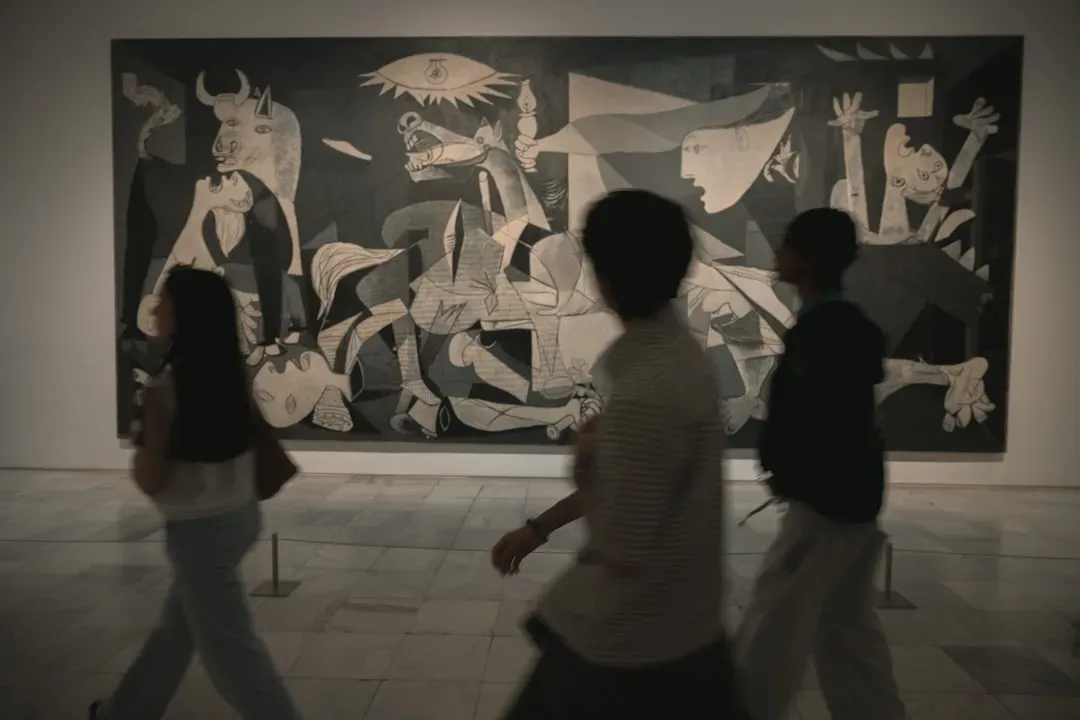
Probably Picasso’s most famous work, Guernica is certainly his most powerful political statement, painted as an immediate reaction to the Nazi’s devastating bombing of the Basque town of Guernica during the Spanish Civil War. This work has gained a monumental status, becoming a perpetual reminder of the tragedies of war, an anti-war symbol, and an embodiment of peace. Picasso’s Guernica is a huge canvas, measuring 349 by 776 centimetres, painted in black, white, and grey in a Cubist-Surrealist style. Picasso produced the work in just three weeks.
With Guernica, Picasso transcends a set theme by way of a language of symbols – the horse, the bull, the woman with dead child – to turn historical fact into a universal message. A full-sized tapestry of Guernica was hung in the entrance to the United Nations’ Security Council room in New York from 1985 until February 2021, and a mosaic of the work stands in Guernica’s main square. Guernica was brought to the Metropolitan Museum of Modern Art in New York for safekeeping during World War II. Picasso requested an extension of its stay until democracy returned to Spain, and in 1981, six years after the death of long-time Spanish dictator General Francisco Franco, it finally returned to Madrid.
6. The Birth of Venus – Sandro Botticelli (c. 1484–1486)
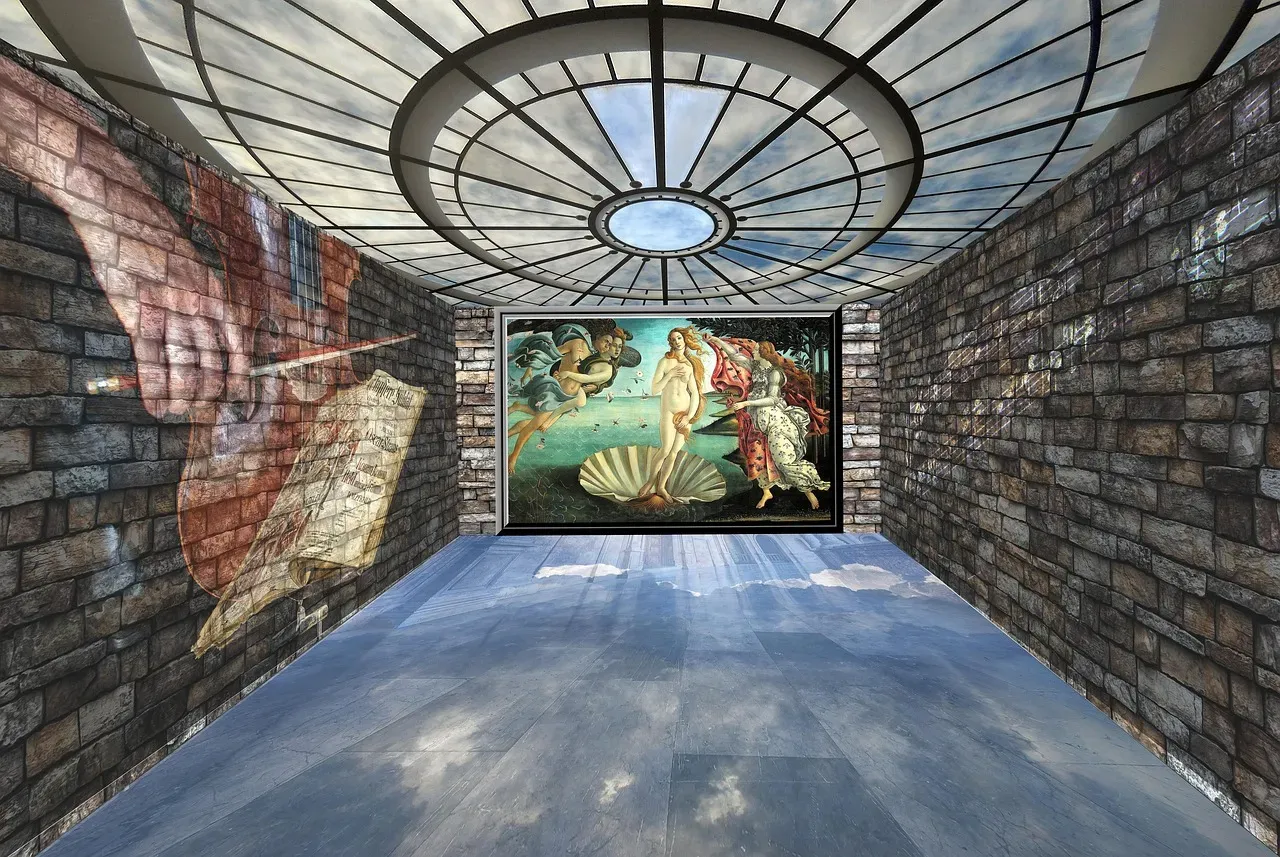
The Birth of Venus is a painting by the Italian artist Sandro Botticelli, probably executed in the mid-1480s. It depicts the goddess Venus arriving at the shore after her birth, when she had emerged from the sea fully grown. The painting is in the Uffizi Gallery in Florence, Italy. They are among the most famous paintings in the world and icons of Italian Renaissance painting. As depictions of subjects from classical mythology on a very large scale, they were virtually unprecedented in Western art since classical antiquity, as was the size and prominence of a nude female figure in the Birth.
Botticelli’s The Birth of Venus was the first full-length, non-religious nude since antiquity. The Birth of Venus is well preserved thanks to the fact that Botticelli applied a protective layer of egg yolk to the painting. Botticelli depicted the Neoplatonic concept of divine love as a naked Venus. Venus seemed to have two facets for Plato and thus for the Florentine Platonic Academy: she was a corporeal deity who stimulated humans to physical affection, or she was a celestial divinity who influenced scholarly love in them. Venus attracted the ire of Savonarola, the Dominican monk who led a fundamentalist crackdown on the secular tastes of the Florentines. His campaign included the infamous “Bonfire of the Vanities” of 1497, in which “profane” objects – cosmetics, artworks, books – were burned on a pyre. The Birth of Venus was itself scheduled for incineration, but somehow escaped destruction.